On this page
- How the Highland Climate Actually Works
- March–April and July–August: The Clearest Windows
- October to December: Rain Season Realities
- May–June and September: The Underrated Shoulder Months
- School Holidays and Malaysian Public Holidays: When Crowds Spike
- Best Time for Specific Activities
- What Has Changed in 2026
- Festivals and Events Worth Timing Around
- 2026 Budget Reality: How Season Affects Cost
- Practical Tips for Any Season
- Frequently Asked Questions
💰 Click here to see Malaysia Budget Breakdown
💰 Prices updated: August, 2026. Budget figures are estimates — always verify before travel.
Exchange Rate: $1 USD = RM4.03
Daily Budget (per person)
Shoestring: RM100.00 – RM200.00 ($24.81 – $49.63)
Mid-range: RM180.00 – RM400.00 ($44.67 – $99.26)
Comfortable: RM450.00 – RM1,300.00 ($111.66 – $322.58)
Accommodation (per night)
Hostel/guesthouse: RM20.00 – RM70.00 ($4.96 – $17.37)
Mid-range hotel: RM100.00 – RM350.00 ($24.81 – $86.85)
Food (per meal)
Budget meal: RM15.00 ($3.72)
Mid-range meal: RM35.00 ($8.68)
Upscale meal: RM100.00 ($24.81)
Transport
Single metro/bus trip: RM2.00 ($0.50)
Monthly transport pass: RM150.00 ($37.22)
Cameron Highlands is one of the few places in Malaysia where you genuinely need to think about timing. Unlike Kuala Lumpur, which you can visit any month and largely ignore the weather, the highlands punish poor planning. Roads flood, trails close, and the famous rolling tea terraces disappear behind thick mist for days at a stretch. In 2026, with the new Simpang Pulai–Blue Valley road corridor now handling heavier tourist traffic and the Cameron Highlands Authority rolling out a revised visitor quota system for key trekking zones, getting your dates right matters more than ever.
How the Highland Climate Actually Works
Cameron Highlands sits at elevations between roughly 1,100 and 1,800 metres above sea level. That altitude is everything. While the rest of Peninsular Malaysia swelters between 28°C and 35°C, temperatures here typically range from 14°C at night to around 25°C during the day. It rarely feels truly hot, and after dark in December or January, a light jacket becomes a necessity, not an accessory.
The highlands experience two distinct monsoon influences, but neither hits with the same ferocity as on the coast. The northeast monsoon (November to March) brings the wettest conditions, particularly in November and December. The southwest monsoon (May to September) is gentler at this altitude, though afternoon thunderstorms build reliably from around 2pm during its peak months. What this means practically: mornings are almost always your best window, regardless of the month.
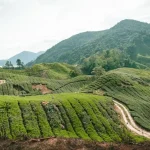
Humidity hovers between 75% and 90% year-round. Mist is a constant companion — it rolls in from the valleys with very little warning. This isn’t always a negative. The tea plantations at Boh or Cameron Valley look genuinely otherworldly when low cloud wraps the rows of trimmed bushes. But for hiking, persistent mist reduces visibility and makes trail surfaces slippery for hours after rain.
One climatic quirk that surprises first-time visitors: a sunny morning can flip to a cold, heavy downpour within 30 minutes. Locals call it the highland switch. Experienced highland travelers build their days around mornings and treat afternoons as flexible.

March–April and July–August: The Clearest Windows
If you want the best odds of dry, clear conditions, two windows stand out: late March through April, and July through mid-August.
March and April sit between the tail end of the northeast monsoon and the build-up of the southwest monsoon. Rainfall drops noticeably, mornings are crisp and clear, and the air carries that cold sharpness that makes walking through the tea estates genuinely invigorating — you can smell the earth and the vegetation in a way that humid lowland Malaysia rarely offers. Strawberries are typically in good supply during March, and the farms along Kea Farm Road tend to be well-stocked without the crush of the August school holiday crowd.
July and August deliver similar conditions. Afternoons can still bring brief showers, but they tend to be sharp and fast rather than the prolonged grey drizzle of November. This period coincides with Malaysia’s school holiday in August, which means more visitors — but also more of the seasonal markets, night bazaars, and farm festivals that make the highlands feel lively rather than quiet.
These two windows are widely considered peak travel season, and accommodation prices and availability reflect that. Book at least three to four weeks ahead for any mid-range or higher-end lodging if your dates fall in these windows.

October to December: Rain Season Realities
The northeast monsoon arrives in full force by November, and December can see several consecutive days of rain. October is a transitional month — often warm and partly overcast, with rain picking up toward the end of the month.
This doesn’t mean Cameron Highlands shuts down. The tea estates are lush and deeply green during this period, and the landscape takes on a dramatic quality that dry-season photographs simply can’t replicate. If you’re interested in photography, a misty morning in November at the Boh Tea Estate’s upper terraces, where the mist sits so thick you can barely see 20 metres ahead and the air smells of wet earth and fresh-cut tea leaves, produces images that look nothing like the standard tourist shot.
What you do need to accept: trail closures happen more frequently. The Department of Wildlife and National Parks suspends access to select trails after sustained rainfall, and this can happen with short notice. Landslide risk on the main road (Route 59 from Tapah) increases, though major road closures have become less frequent since the Simpang Pulai route was upgraded in late 2024 and now provides a reliable alternative approach.
Indoor and sheltered activities actually work well in this season — the Rose Centre, the butterfly farms near Kea Farm, and the Cameron Highlands Museum in Tanah Rata are all worth your time and don’t require dry skies. Strawberry picking in sheltered greenhouse farms continues regardless of rain. And accommodation prices drop meaningfully, sometimes 30–40% below peak rates.
May–June and September: The Underrated Shoulder Months
Ask a Cameron Highlands regular when they prefer to visit and many will say May or September without hesitation.

May sits at the very start of the southwest monsoon’s influence, but at highland altitude this translates to warm, clear mornings, lower-than-average rainfall, and smaller crowds than the July–August peak. School holidays haven’t started yet, which means the strawberry farms, tea plantation tours, and trail heads are noticeably quieter. Accommodation prices are mid-range — not wet-season cheap, but considerably more reasonable than August rates.
June is complicated by the school holiday that typically runs from late May into mid-June, which pushes visitor numbers up sharply. If June is your only option, aim for the first week of June before the school break fully kicks in.
September is arguably the single best shoulder month. The August school holiday crowd has cleared, rainfall hasn’t yet ramped up to November levels, and temperatures are very comfortable — cool nights, warm mornings. Vegetable farms along the Kea Farm–Kuala Terla corridor are actively harvesting, and you’ll see the roadside stalls piled with fresh corn, cabbages, and the enormous highland leeks that locals call daun bawang Cameron. It’s a genuinely pleasant time to be on the roads without buses blocking every layby at BOH.
School Holidays and Malaysian Public Holidays: When Crowds Spike
Cameron Highlands is overwhelmingly a domestic tourism destination. That means Malaysian school holidays and public holidays drive visitor surges far more than international travel seasons do.
The key high-pressure periods to know for 2026:
- Chinese New Year (late January 2026): Roads into the highlands become severely congested on the eve and first two days. Many Kuala Lumpur families drive up for the cool air. Brinchang and Tanah Rata feel genuinely packed.
- School holidays (May–June and August): August is the single busiest month of the year. Plan around it or book very early.
- Hari Raya Aidilfitri: The timing shifts each year, but the three-day holiday brings another wave of domestic visitors. In 2026, Hari Raya falls in late March — check specific dates and avoid the first two days if you want empty trails.
- Year-end school holidays (mid-November to early January): Overlap with the wettest period, which somewhat limits the surge. Still, December school break brings families up regardless of rain.

If your schedule has any flexibility at all, avoiding the first and last day of any Malaysian school holiday will save you significant frustration on the roads and at every popular attraction.
Best Time for Specific Activities
Trekking and Nature Trails
March–April and July are the strongest months. Trails dry out between rainfall events, and the Mossy Forest at Gunung Brinchang — where the gnarled trees are draped in hanging moss and the air feels genuinely cold and ancient — is accessible by road to 2,031 metres and then a short boardwalk. The forest is at its most atmospheric just after a light morning shower when the mist is low but the trail is still walkable. Avoid November through January for serious trekking unless you’re comfortable with unpredictable trail conditions.
Strawberry Farms
Strawberries are grown in greenhouse environments year-round in Cameron Highlands, so you can visit any time. However, production peaks between March and May, when yields are highest and the fruit is at its plumpest and reddest. During the August crowd surge, farm visits become less pleasant — queues for picking plots can run 40 minutes at popular farms near Kea Farm during weekends.
Tea Plantation Tours
Boh Tea Estate’s visitor centre at Habu and the newer Cameron Valley Tea Experience (which expanded its tour capacity in 2025) both operate daily regardless of weather. But the views from the upper terraces — rolling green rows dropping into valley mist — are best captured in the morning between 8am and 10am in the dry months. July and August mornings frequently deliver clean blue skies before the clouds build. November mornings give you dramatic mist photography at the cost of visibility.

Birdwatching
September and October are considered the best months by serious birdwatchers. The trails around Gunung Jasar and the Bertam Valley see highland specialty species — Mountain Tailorbird, Chestnut-capped Laughingthrush, Malayan Whistling Thrush — more actively in the cooler transitional period. Early mornings, as always, are when the birds are most active.
What Has Changed in 2026
A few developments in 2025 and early 2026 directly affect when and how you visit.
The Simpang Pulai route (from the North-South Expressway via Ipoh) was fully resurfaced and widened at critical pinch points in late 2024. It’s now the recommended primary route and handles heavy traffic significantly better than the older Tapah road in wet conditions. Journey time from Ipoh is approximately 70 kilometres and around 1.5 hours, compared to about 80 kilometres via Tapah.
The Cameron Highlands Visitor Quota System, piloted in 2025 for the Mossy Forest zone, expanded in early 2026 to include the Robinson Falls trail and the Gunung Jasar summit approach. Permits are mandatory on weekends and Malaysian public holidays for these three zones. Weekday visits to all other areas remain unrestricted.
The EV charging infrastructure at Tanah Rata’s main car park and at Brinchang town square was completed in late 2025, with six fast-charging bays now operational. This matters for the growing number of Kuala Lumpur visitors making the drive in electric vehicles — it removes range anxiety that previously discouraged EV owners from the highland trip.
The Cameronian Inn and several older budget guesthouses in Tanah Rata have undergone renovation, and two new mid-range highland lodges opened in the Kuala Terla area in 2025, adding accommodation capacity that had genuinely been lacking outside the school holiday crunch.

Festivals and Events Worth Timing Around
Cameron Highlands doesn’t have a dense festival calendar the way Penang or KL does, but a handful of annual events genuinely add to a visit rather than just complicating traffic.
Cameron Highlands Flower Festival: Held annually in April, typically over a long weekend, this event at Kea Farm draws highland farmers displaying their ornamental flower crops alongside local produce stalls. The scale is modest but the setting — cool air, flower-lined market lanes — is charming. 2026 dates are expected in mid-April.
BOH Anniversary Open Days: BOH Tea, Malaysia’s largest tea producer, occasionally opens its estate for special guided walks and tasting sessions beyond the standard visitor centre hours. These aren’t announced far in advance but are usually flagged on BOH’s social media two to three weeks before the date. They typically fall in the dry months.
Deepavali Market at Brinchang: The Indian Tamil community has been farming in Cameron Highlands since the British colonial era, and Deepavali (in October or November, depending on the year) brings a vibrant market atmosphere to Brinchang’s main street in the evenings — flower garlands, sweet stalls, and the smell of freshly fried murukku cutting through the cold night air. In 2026, Deepavali falls in late October.
Chinese New Year: While the traffic is brutal, the atmosphere in Brinchang’s Chinatown-style shophouse strip during Chinese New Year is genuinely festive. If you’re not driving and can take the ETS train to Ipoh and then a bus or Grab up, it’s actually a memorable time to visit — just book accommodation two months ahead.
2026 Budget Reality: How Season Affects Cost
Prices in Cameron Highlands are directly tied to school holidays and weekends. Here’s what you can realistically expect in 2026:

Accommodation (per night, double room)
- Budget: MYR 80–130 (guesthouses, basic rooms in Tanah Rata) — off-peak weekdays. Rises to MYR 130–180 on peak weekends and MYR 200+ during August school holidays.
- Mid-range: MYR 180–320 off-peak. MYR 300–450 peak season. Properties in Kuala Terla and the newer Brinchang lodges sit in this range.
- Comfortable/upper-range: MYR 400–700 off-peak. MYR 600–900+ during August and Chinese New Year. The Strawberry Park Resort and the handful of boutique highland retreats occupy this tier.
Daily Spending (excluding accommodation)
- Budget traveler: MYR 60–90 per day. Hawker meals at Tanah Rata’s night market, bus transport, free trail access, farm entry tickets around MYR 5–10.
- Mid-range: MYR 150–250 per day. Mix of restaurants and hawker stalls, Grab for some trips, guided tea estate tour (MYR 50–80), strawberry farm entry and produce purchases.
- Comfortable: MYR 350–600 per day. Resort dining, private guided hikes, full tea plantation experiences, afternoon tea at the BOH visitor centre café.
The practical takeaway: visiting in May, June (early), or September can save you 25–40% on accommodation compared to August, while giving you weather that’s nearly as good or better.
Practical Tips for Any Season
Packing
Layers are non-negotiable. Bring at least one fleece or light down jacket — evenings below 15°C genuinely happen in January and February and are common year-round in Brinchang at 1,800 metres. A waterproof jacket (not just an umbrella) is essential for any trail walking between June and December. Waterproof trail shoes or sturdy walking shoes matter more than fashion footwear on the highland paths.
Road Conditions and Driving
The Simpang Pulai route is the preferred approach in 2026. If heavy rain has been reported, check the Jabatan Kerja Raya (JKR) Malaysia traffic alerts before departing. The old Tapah road (Route 59) narrows significantly near the summit and can be single-lane after landslip remediation work. Drive slowly on highland roads — fog and steep drops with no guardrails are a real combination, not a cliché.

Booking Lead Times
For August: book accommodation 4–6 weeks ahead minimum. For Chinese New Year: 6–8 weeks. For shoulder months: 1–2 weeks is generally sufficient, though specific properties with strong reputations fill up faster. Last-minute deals are genuinely available in November and early December.
Getting Up There
The most straightforward route from Kuala Lumpur in 2026 combines the ETS train to Ipoh (approximately 2 hours, MYR 35–50 depending on class) followed by a public express bus from Amanjaya Bus Terminal in Ipoh to Tanah Rata (approximately 1.5 hours, MYR 12–15). The entire journey including transit time runs around 4 hours. Grab is available at Ipoh station. Direct buses from KL’s Terminal Bersepadu Selatan (TBS) to Tanah Rata also operate — journey time approximately 4.5 hours, fares around MYR 30–40.
Water and Food Safety
Tap water in highland areas is generally not recommended for drinking without boiling. Bottled water is cheap and widely available. Food safety is generally good — the highland night markets in Tanah Rata and the hawker stalls around Brinchang serve fresh produce and are popular with locals, which is always a reliable quality indicator.
Frequently Asked Questions
What is the best month to visit Cameron Highlands?
March, April, July, and August offer the most reliable dry weather. March and April have smaller crowds than August, making them particularly attractive. If you’re flexible, late September is also excellent — the school holiday crowd has cleared, rain is moderate, and the vegetable farms are in active harvest season.
Does it rain a lot in Cameron Highlands?
Yes, but rarely all day. Even during the wet months of November and December, mornings are typically clear before rain builds in the afternoon. Year-round, plan your outdoor activities before noon. The annual rainfall is high — roughly 2,600mm — but it falls in concentrated bursts rather than continuous drizzle, except in the heart of the northeast monsoon.

Is Cameron Highlands worth visiting in December?
Yes, with adjusted expectations. December is wet and some trails close after sustained rain. But accommodation is cheaper, crowds are smaller on weekdays, the landscape is lush and dramatic, and the cool temperatures make it genuinely refreshing. Focus on farm visits, tea estate tours, and the town atmosphere rather than serious trekking.
How cold does Cameron Highlands get at night?
Night temperatures typically range from 14°C to 18°C year-round, dropping to around 11°C to 13°C in Brinchang at higher elevation during January and February. This is genuinely cold by Malaysian standards. Pack a proper jacket, especially if you’re coming from the coast or KL where your body has adapted to 28°C+ nights.
How far in advance should I book for a Cameron Highlands trip?
For August (school holiday peak) and Chinese New Year, book accommodation 4–6 weeks ahead, longer for popular properties. For shoulder months like May and September, 1–2 weeks is usually sufficient. In 2026, also book Mossy Forest and Robinson Falls trekking permits via the MyTrek portal at least 14 days ahead for weekend and holiday visits.
Explore more
Your Perfect 1-Day Cameron Highlands Itinerary: Must-See Sights
Your Ultimate 3-Day Cameron Highlands Itinerary: Tea, Trails & Strawberries
Where to Go After Dark in Cameron Highlands: Top Bars & Venues
📷 Featured image by Bryan Heng on Unsplash.