On this page
- The Three Pillars: Who Malay, Chinese, and Indian Malaysians Actually Are
- Greetings, Names, and First Impressions Across Cultures
- Home Visits and Hospitality Customs You Need to Know
- Places of Worship: What to Do (and Not Do) at Mosques, Temples, and Shrines
- Food Culture as Social Currency — Sharing Tables Across Ethnic Lines
- Festivals as Open Doors: Participating Respectfully in Celebrations
- Dress Codes That Actually Matter in Multi-Cultural Settings
- Language Bridges: Malay, Mandarin, Tamil, and the Glue of Manglish
- 2026 Budget Reality: What Cultural Experiences Cost in Malaysia
- Frequently Asked Questions
Malaysia’s population in 2026 sits at around 34 million people, roughly 70 percent of whom identify across three major ethnic communities: Malay, Chinese, and Indian. For first-time visitors — and even returning travellers who’ve only ever seen the surface — this diversity can feel genuinely complex to navigate. The risk isn’t offending people deliberately. It’s the small, well-meaning mistakes: wearing the wrong thing to a temple, using the wrong hand to pass food, or assuming that what’s polite at a Chinese kopitiam works the same way at a Malay kampung gathering. This guide cuts through the generalisation and gives you real, practical cultural fluency for the Malaysia you’ll actually encounter in 2026.
The Three Pillars: Who Malay, Chinese, and Indian Malaysians Actually Are
Malaysia’s ethnic makeup isn’t simply “three groups living side by side.” Each community carries a distinct historical trajectory, and understanding that context makes every subsequent interaction richer.
Malay Malaysians make up approximately 55 percent of the population and are constitutionally defined as Muslim, speaking Bahasa Malaysia and practising Malay customs. The term “Bumiputera” (sons of the soil) extends to Malay Malaysians and the indigenous peoples of Sabah and Sarawak. Malay culture is deeply rooted in the concept of adat — a body of traditional customs and social norms passed through generations. Hospitality, communal harmony, and a strong sense of familial obligation sit at the core of Malay social life.
Chinese Malaysians account for roughly 23 percent of the population, with roots tracing back primarily to 19th and early 20th-century migration from Fujian, Guangdong, and Hakka regions of southern China. This explains the striking internal diversity within the community — Hokkien, Cantonese, Teochew, Hakka, and Hainanese dialects all co-exist, each carrying its own culinary traditions and cultural quirks. Chinese Malaysians tend to identify strongly with their dialect group alongside their broader Malaysian identity.
Indian Malaysians represent about 7 percent of the population, with the majority tracing ancestry to Tamil Nadu in South India — brought over during British colonial rule to work rubber estates and build railways. Smaller communities include Malayali, Punjabi, Sikh, and Telugu Malaysians. Tamil culture and Hinduism form the backbone of the community’s identity, though there are significant Muslim Indian and Christian Indian communities as well. The differences between a Tamil Hindu family’s customs and a Punjabi Sikh family’s traditions are as substantial as any cross-ethnic comparison.

Knowing this texture before you arrive helps you avoid treating any community as monolithic — one of the most common mistakes visitors make.
Greetings, Names, and First Impressions Across Cultures
How you greet someone sets the tone for everything that follows. Get this right and you immediately signal respect — get it wrong and you’ve created awkwardness before the conversation has even started.
Malay Greetings
The standard Malay greeting is Assalamualaikum (peace be upon you), responded to with Waalaikumussalam. Non-Muslims are not expected to use this, and Selamat pagi (good morning) or Selamat datang (welcome) work perfectly well. The salam handshake — where both hands briefly clasp the other person’s hands, then are drawn back to the heart — is the traditional Malay greeting between same-gender individuals. Importantly, conservative Malay Muslims, both men and women, may not shake hands with someone of the opposite gender. If a Malay woman doesn’t extend her hand to a male visitor, don’t take offence — simply nod and smile. This is standard practice, not a personal slight.
Chinese Malaysian Greetings
A firm handshake is standard for Chinese Malaysians in formal settings. Among older Chinese Malaysians, a slight nod is appreciated as it acknowledges seniority. Addressing elders and seniors by their title (Uncle, Auntie — used broadly as respectful terms even for strangers of a certain age) is common and shows good upbringing. Chinese Malaysians’ names typically place the family name first — so Tan Wei Jian would be addressed as Mr Tan, not Mr Jian.

Indian Malaysian Greetings
A handshake is widely used among Indian Malaysians in urban settings. The vanakkam greeting (Tamil, similar to “namaste” — pressed palms, slight bow) is appreciated among Tamil Indians, particularly in more traditional contexts. Indian Malaysian names often don’t use family surnames in the Western sense — instead, many Tamil Malaysians use their father’s name. Rajendran s/o Murugan means Rajendran, son of Murugan. In formal settings, ask how someone prefers to be addressed rather than guess.
Home Visits and Hospitality Customs You Need to Know
Being invited into a Malaysian home — regardless of ethnicity — is a significant gesture. The way you respond to that invitation communicates volumes.
At a Malay Home
Remove your shoes at the front door without being asked. This is non-negotiable. When seated, avoid pointing the soles of your feet toward your host or toward any religious objects. If you’re offered food or drink, accept it. Refusing repeatedly is considered rude — the correct etiquette is to accept, even if you only take a small amount. Food will almost certainly be halal, so you won’t need to ask about pork, but asking about allergies is fine. Eat with your right hand if eating with hands; the left is considered unclean in Malay custom. If you bring a gift, avoid alcohol entirely — and avoid wrapping gifts in white, as white is associated with mourning.
At a Chinese Malaysian Home
Shoes off at the door applies in most Chinese Malaysian homes too, though it’s less strictly enforced than in Malay homes — follow your host’s lead. Bringing a gift is appreciated, and fruit (especially oranges), cakes, or biscuits are always well-received. Avoid gifting clocks (clocks are associated with death in Chinese culture), pears (the Cantonese word for pear sounds like “separation”), or anything in sets of four (the number four sounds like the word for death in Cantonese and Mandarin). Sets of eight are auspicious. Food in Chinese Malaysian homes may include pork, so if you have dietary restrictions, mention them politely ahead of the visit.

At an Indian Malaysian Home
Remove shoes at the entrance — this is especially important when visiting a home with a small altar or prayer room, which most Hindu Tamil homes have. If you’re invited to a meal, eating with the right hand from a banana leaf (in traditional Tamil households) is the correct way — the left hand stays in your lap. Don’t be surprised by the fragrance of incense and fresh jasmine garlands near the entrance. These are daily offerings and part of the rhythm of a Hindu Tamil household’s morning. Avoid bringing leather goods as gifts to a strictly Hindu household, as cows are sacred.
Places of Worship: What to Do (and Not Do) at Mosques, Temples, and Shrines
Malaysia’s places of worship are active spiritual spaces, not tourist attractions — even when they happen to be architecturally stunning and widely photographed. Behaving appropriately isn’t about ticking boxes; it reflects whether you’re treating the space with genuine respect.
Mosques
Non-Muslims are welcome at most Malaysian mosques outside of prayer times, though several prominent mosques require you to register at an information desk. Remove shoes before entering. Women must cover their hair with a headscarf — many mosques provide these at the entrance. Both men and women should wear clothing that covers shoulders, arms, and knees; mosque-provided robes are often available for those who aren’t appropriately dressed. During Friday prayers (roughly 12:30–14:30), non-Muslims are generally asked not to enter the main prayer hall. Speaking loudly, using flash photography near worshippers, and walking in front of people who are praying are all considered disrespectful.

Hindu Temples
Shoes come off before you enter the main sanctum. Dress modestly — no shorts, no sleeveless tops. Many temples require women to cover their shoulders. Photography is typically permitted in outer areas and during festivals but not in the inner sanctum where the deity is enshrined. When approaching a deity statue, move in a clockwise direction — this is standard in Hindu temple practice. If a priest offers you sacred ash (vibhuti) or blessed water (theertham), accepting with your right hand cupped under your left is the respectful way to receive it. You are not obligated to accept, but a polite refusal is better than taking it and discarding it.
Chinese Temples and Buddhist Shrines
Chinese temples in Malaysia blend Buddhist, Taoist, and folk religion traditions — don’t worry about distinguishing between them, as the etiquette is similar across all. Remove shoes if instructed, or if you see others doing so. Dress modestly. Incense burning is central to Chinese temple practice — if you’re offered incense sticks, hold them with both hands, bow slightly toward the altar, and plant them upright in the incense urn. Don’t point at deities, and avoid stepping on the raised threshold at a temple entrance — it’s considered disrespectful. Photography of the main altar is typically fine, but photographing worshippers at prayer is not.

Food Culture as Social Currency — Sharing Tables Across Ethnic Lines
In Malaysia, the table is one of the most powerful sites of cross-cultural connection. But eating together across ethnic communities carries specific dynamics that are worth understanding.
The single most important practical issue is halal and non-halal food. For Muslim Malaysians, halal certification isn’t just a preference — it’s a religious requirement. A Muslim Malaysian cannot eat at a restaurant that serves pork or alcohol, even if they personally order a pork-free dish. This is why the separation between Malay/halal restaurants and Chinese/non-halal restaurants is so clearly delineated in Malaysia. When organising a group meal with mixed-ethnic friends, always choose a halal restaurant unless you’ve specifically confirmed that the Muslim members of your group are comfortable with an alternative. Assuming is where the social friction starts.
Indian vegetarianism is another layer. Many Tamil Hindu Malaysians are vegetarian — not all, but a significant portion — and beef is avoided by virtually all Hindu Malaysians regardless of whether they eat other meat. Punjabi Sikh Malaysians avoid beef and many also avoid pork.
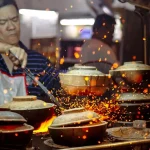
The mamak stall — a Tamil Muslim-run restaurant serving roti canai, mee goreng, and teh tarik — is one of Malaysia’s great equalising spaces. It’s halal, affordable, and operates late into the night. You’ll find Malay, Chinese, and Indian Malaysians all eating side by side at mamak tables, which is something that doesn’t happen automatically in other restaurant categories. The warm, slightly smoky air of a mamak at midnight, thick with the smell of frying dough and spiced curry, is as authentically Malaysian an experience as any landmark.
Festivals as Open Doors: Participating Respectfully in Celebrations
Malaysia’s festival calendar is genuinely extraordinary — Hari Raya Aidilfitri, Chinese New Year, Deepavali, Thaipusam, and many smaller community celebrations occur throughout the year. The “open house” tradition, common during all major Malaysian festivals, means these events are often deliberately inclusive.

Hari Raya Aidilfitri, marking the end of Ramadan, is the year’s biggest celebration for Malay Muslim Malaysians. Families open their homes — rumah terbuka (open house) — to guests of all backgrounds. If you’re invited to an open house, dress modestly (long pants, covered shoulders). Wish your hosts Selamat Hari Raya and accept whatever food is offered. Green packets (duit raya) containing money are given to children and younger family members — as a guest, you’d give these only if you’re close to the family.
Chinese New Year involves 15 days of celebration. Open houses are common here too. Wear red or bright colours — avoid black and white, which carry mourning associations. The greeting Gong Xi Fa Cai (wishing you prosperity) is appropriate. Red packets (angpow) are given by married adults to children and unmarried younger people — as a visitor, simply receiving one is fine.
Deepavali (Festival of Lights) involves homes decorated with oil lamps and kolam (rice flour patterns) at the entrance. If visiting an Indian Malaysian home during Deepavali, complement the decorations, accept the sweets offered, and wear bright colours. The festival marks the triumph of light over darkness — Iniya Deepavali Nalvazhthukkal is the formal Tamil greeting.
Thaipusam, held at Batu Caves in January or February, is one of the most visually intense Hindu festivals in the world — devotees carry elaborate kavadi frames as acts of devotion. This is an active religious event, not a performance. Dress conservatively, don’t touch devotees or their kavadi, and maintain quiet respect near the main temple during prayers.
Dress Codes That Actually Matter in Multi-Cultural Settings

Malaysia is a warm country and casual dress is the norm in most urban environments. But “casual” carries limits in several contexts, and misreading those limits creates genuine awkwardness.
In government buildings, courthouses, and formal offices, long pants and covered shoulders are expected regardless of gender. At traditional Malay events — weddings, formal gatherings, anything involving the sultans or the royal family — baju kurung (for women) or a batik shirt with long pants (for men) is the appropriate level of dress. You won’t be expected to wear traditional Malaysian clothing as a visitor, but a neat, modest appearance signals respect.
At Chinese Malaysian formal events like weddings and business dinners, smart casual to formal wear is appropriate. Avoid wearing entirely white — Chinese funeral rites use white, and wearing it to a wedding or celebratory dinner can be read as a bad omen. Dark red, gold, and bright colours are auspicious choices.
For Indian Malaysian temple visits and religious events, neutral, modest colours are best. Avoid wearing leather to a Hindu religious context (as mentioned — cows are sacred). At Sikh gurdwaras, heads must be covered — scarves are provided at the entrance.
The general practical rule across all contexts: if in doubt, cover your knees and your shoulders. This works in every ethnic and religious setting in Malaysia without exception.
Language Bridges: Malay, Mandarin, Tamil, and the Glue of Manglish
Malaysia is a genuinely multilingual country, and the way language works here reflects the complexity of its social fabric.
Bahasa Malaysia is the national language and the common tongue across all communities. Saying terima kasih (thank you) or selamat pagi (good morning) to any Malaysian — regardless of ethnicity — will always land well. Bahasa Malaysia is relatively phonetic and accessible for English speakers, and Malaysians genuinely appreciate any effort to use even basic phrases.

Mandarin and Chinese dialects remain the primary home languages for most Chinese Malaysian families, with Hokkien being particularly dominant in Penang and among older generations. A simple Ni hao (hello) or Xie xie (thank you) in Mandarin will get a warm response from Chinese Malaysian elders who may not speak fluent English.
Tamil is the main language of Tamil Malaysian communities, and vanakkam (hello/welcome) or nandri (thank you) in Tamil shows genuine effort and cultural awareness.
Then there’s Manglish — Malaysian English, a creole blend of English, Malay, Hokkien, Tamil, and Cantonese particles that functions as Malaysia’s unofficial shared language. Expressions like lah (softening particle), can or not? (asking if something is possible), already (to indicate completion — “eaten already?”), and so the (intensifier — “so the spicy!”) are constant in everyday Malaysian speech. Don’t try to force Manglish if it feels unnatural — but recognising it when you hear it will help enormously.
One important note for 2026: with the expansion of Malaysia’s digital economy and the influx of regional professionals particularly in Greater Kuala Lumpur, English fluency is high in urban areas. But in rural kampungs, on the East Coast, and in parts of East Malaysia, Bahasa Malaysia is essential. Download a Bahasa Malaysia translation app before you travel outside major cities.
2026 Budget Reality: What Cultural Experiences Cost in Malaysia
Most of Malaysia’s genuine cultural experiences cost very little or nothing. The richness of the country’s multi-ethnic life isn’t locked behind admission fees — it’s in the streets, the festivals, the food stalls, and the homes of people who are genuinely hospitable toward respectful visitors.
Free and Low-Cost Cultural Experiences
- Attending a mosque during open hours: Free (donation boxes available)
- Visiting a Chinese temple: Free
- Visiting a Hindu temple: Free (small donation appreciated)
- Attending a public festival open house event: Free
- Thaipusam at Batu Caves: Free (transport to Batu Caves via KTM Komuter from KL Sentral: MYR 2–4 each way in 2026)

Budget Cultural Spending (per person)
- Meal at a mamak stall: MYR 7–15
- Meal at a Chinese kopitiam: MYR 8–18
- Banana leaf rice at an Indian restaurant: MYR 12–20
- Cultural heritage tour (guided, 3–4 hours): MYR 60–120
Mid-Range Cultural Experiences
- Batik-making workshop: MYR 80–150
- Traditional Malay cooking class: MYR 150–250
- Wayang kulit (shadow puppet) performance ticket (when available at cultural centres): MYR 30–80
Comfortable Spending
- Private multi-cultural heritage tour (full day, including meals): MYR 350–600
- Traditional Malay wedding photographer access/experience package (select cultural tourism programmes): MYR 200–400
One 2026 change worth flagging: Malaysia introduced an updated Tourism Tax framework in late 2025, which now applies to certain guided cultural experiences and some heritage site-linked programmes. This adds between MYR 5–15 per booking to selected activities. Budget accordingly when booking through tour platforms.
Frequently Asked Questions
Is it disrespectful to take photos at Malaysian festivals and cultural events?
It depends entirely on the context. At public street celebrations like Chinese New Year parades or Deepavali light displays, photography is welcomed. At active religious ceremonies — particularly inside temples, during prayers, or at Thaipusam kavadi rituals — always ask permission first and avoid using flash. If in doubt, put the camera down and be present instead.
Can non-Muslims enter mosques in Malaysia?
Yes, at most mosques in Malaysia during non-prayer hours. Both men and women must dress modestly, and women must cover their hair. Many prominent mosques — including the National Mosque in Kuala Lumpur — provide robes and headscarves at the entrance. Avoid visiting during Friday prayer time (approximately 12:30–14:30) as access to the main hall is restricted.
How do I know if a restaurant is halal in Malaysia?

Look for the official JAKIM halal certification logo displayed at the entrance or on the menu. In 2026, most halal-certified restaurants also list their certification number on their food delivery app profiles. Mamak stalls, Malay restaurants, and many Indian Muslim restaurants are reliably halal. Chinese restaurants and kopitiam typically are not. If you’re organising a meal for a mixed group, always confirm before booking.
What’s the biggest cultural mistake tourists make in Malaysia?
Treating Malaysia’s multi-ethnic society as one homogeneous culture. Assuming that what’s appropriate in one ethnic context automatically transfers to another causes the most friction. The second biggest mistake is refusing food or hospitality — in all three main cultures, food is a gesture of welcome, and repeated refusal reads as rudeness rather than politeness.
Do I need to speak Malay or any local language to get by in Malaysia?
English works well across most of Malaysia’s cities and major tourist areas in 2026. However, learning five to ten basic Bahasa Malaysia phrases makes a significant difference — Malaysians respond warmly to any effort. In rural areas and smaller towns, particularly on the East Coast and in Sarawak and Sabah, Bahasa Malaysia is far more useful than English. A translation app as backup is always a sensible idea.
📷 Featured image by Kelvin Zyteng on Unsplash.