On this page
- Langkawi’s Signature Dishes You Should Not Leave Without Trying
- Best Hawker Centres and Night Markets on the Island
- Best Restaurants for a Proper Sit-Down Meal
- Where to Have Breakfast in Langkawi
- Seafood Restaurants and Jetty Dining
- Food Costs in Langkawi: 2026 Budget Breakdown
- Drinking in Langkawi: The Duty-Free Advantage
- Practical Tips for Eating Well in Langkawi
- Frequently Asked Questions
💰 Click here to see Malaysia Budget Breakdown
💰 Prices updated: August, 2026. Budget figures are estimates — always verify before travel.
Exchange Rate: $1 USD = RM4.03
Daily Budget (per person)
Shoestring: RM100.00 – RM200.00 ($24.81 – $49.63)
Mid-range: RM180.00 – RM400.00 ($44.67 – $99.26)
Comfortable: RM450.00 – RM1,300.00 ($111.66 – $322.58)
Accommodation (per night)
Hostel/guesthouse: RM20.00 – RM70.00 ($4.96 – $17.37)
Mid-range hotel: RM100.00 – RM350.00 ($24.81 – $86.85)
Food (per meal)
Budget meal: RM15.00 ($3.72)
Mid-range meal: RM35.00 ($8.68)
Upscale meal: RM100.00 ($24.81)
Transport
Single metro/bus trip: RM2.00 ($0.50)
Monthly transport pass: RM150.00 ($37.22)
One frustration travellers keep raising in 2026 is arriving in Langkawi expecting a simple beach-and-seafood destination, then feeling completely lost when it comes to eating well beyond the tourist strip in Pantai Cenang. The island has a genuinely layered food scene — Malay kampung cooking, Thai-influenced dishes from the northern border proximity, fresh seafood that arrived in the water that morning — but finding it requires knowing where to look. This guide cuts through the resort menus and tells you exactly what to eat and where to find it.
Langkawi’s Signature Dishes You Should Not Leave Without Trying
Langkawi has its own culinary personality, shaped by its position near the Thai border and its fishing heritage. These are not dishes you will find on every menu across Malaysia — some exist almost exclusively here.
Nasi Campur Berlauk
This is the island’s everyday meal. Steamed rice piled with a rotation of freshly cooked lauk — braised beef rendang, stir-fried kangkung with shrimp paste, fried tempeh, a curl of salted fish — served on a small tray at any decent warung. The smell alone, that deep caramelised coconut and toasted belacan waft coming from an open kitchen at noon, tells you this is the real thing. Expect to pay MYR 7–12 for a full plate.
Gulai Ikan Merah
Red snapper cooked in a rich, turmeric-heavy gulai is Langkawi’s answer to fish curry. The gravy is looser and more aromatic than Penang-style, with lemongrass and torch ginger flower giving it a distinctly northern character. Order it at any kampung restaurant outside the main tourist zones.
Char Koay Teow Langkawi Style
You will find char koay teow across Malaysia, but the version on Langkawi uses larger, plumper local prawns and is fried with more wok hei than the average stall. Several stalls in Kuah town have been running the same recipe for decades. The noodles arrive with a slight char, cockles that are just barely cooked through, and a subtle sweetness from fresh soy.
Apam Balik & Lempeng Kelapa
These are street snack staples. Apam balik — the thick, soft peanut-and-corn pancake — is sold at night markets and roadside stalls from around 5pm. Lempeng kelapa, a flat coconut pancake eaten with banana or anchovies, is a breakfast find at morning markets. Both cost MYR 2–4.
Best Hawker Centres and Night Markets on the Island
These are the spots where Langkawi residents actually eat. No theatrical lighting, no tourist markups, just consistent food at honest prices.
Pasar Malam Kuah (Kuah Night Market)
Kuah town’s weekly night market runs on Thursdays along the main road near the ferry terminal area. It is one of the more authentic night markets in Langkawi — heavy on Malay home cooking, grilled fish wrapped in banana leaf, otak-otak, fried chicken, and desserts like putu piring and onde-onde. If your ferry arrives on a Thursday evening, go straight here before your hotel. Stalls set up from around 5:30pm and wind down by 9:30pm.
Pekan Rabu Market, Kuah
This indoor market in Kuah is more of a daily provisions market than a food court, but several stalls on the ground floor sell cooked food throughout the day — nasi lemak in the morning, nasi campur from noon onwards. It is a good reference point for prices: if your guesthouse restaurant charges double what you see here, you know where to redirect your meals.
Padang Matsirat Area Stalls
Locals from the interior of the island tend to eat around the Padang Matsirat area, near the airport. A cluster of roadside stalls and small restaurants here serves no-frills Malay food at kampung prices. The stalls near the padang (field) are particularly busy on Friday evenings. This is the part of Langkawi that does not appear in any resort brochure, and it is better for it.
Cenang Mall Food Court
If you are based in Pantai Cenang and need a break from resort prices, the food court at Cenang Mall offers a range of local options — nasi goreng, mee goreng, ayam penyet, rojak — at MYR 8–15 per dish. It is not the most atmospheric setting, but it is honest and convenient for families with children.
Best Restaurants for a Proper Sit-Down Meal
When you want a table, cold drinks, and dishes that arrive in a particular order, these places across the island’s main zones deliver without overcharging for the experience.
Pantai Cenang Dining Strip
Jalan Pantai Cenang is lined with restaurants ranging from Thai to Western to local Malay. The quality varies enormously. For Malay food, look for restaurants that display their lauk in front rather than handing you a glossy picture menu — that visible display is a reliable indicator of a kitchen that cooks fresh daily. Several Malay restaurants along this strip offer dinner seafood sets (grilled whole fish, prawns, vegetables, rice) for MYR 45–80 for two, which is reasonable given the beachside position.
Teluk Baru Restaurants, Pantai Tengah

Pantai Tengah, just south of Cenang, has a calmer cluster of restaurants that tend to do better seafood than the main Cenang strip. The atmosphere is less frantic, tables are often right at the water’s edge, and the kitchens get more regular local patronage — always a reliable quality signal.
Ulu Melaka and Interior Langkawi Warungs
Drive inland towards Ulu Melaka or Air Hangat village and you find the kind of Malay home-cooking restaurants that charge MYR 10–20 for a full meal. These places have no Wi-Fi passwords or Instagram handles — just ceiling fans, plastic chairs, and rice that was cooked this morning. The gulai and rendang here are consistently better than anything on the beach strip.
Where to Have Breakfast in Langkawi
Langkawi’s mornings are worth waking up for, particularly if you know where to find a proper meal before the heat builds.
Kuah Town Morning Market (Pasar Pagi Kuah)
The morning market near the Kuah town square operates from around 6am to 11am. This is the best breakfast stop on the island for those willing to make the drive. Nasi lemak wrapped in banana leaf — fragrant coconut rice, a half-boiled egg, fried anchovies, thick sambal — costs MYR 2–3.50 per pack. Vendors also sell kuih, roti canai, and hot drinks. The whole place smells of pandan and fresh coconut milk by 7am. Go early; the best packs sell out by 9am.
Kopitiam in Kuah Town
A handful of old-school kopitiam operate around Kuah’s main commercial streets. These Chinese coffee shops serve kopi-o (black coffee with sugar) or teh tarik alongside roti bakar (charcoal toast with kaya and butter), half-boiled eggs, and sometimes dim sum-style items on weekends. The pace is slow and unhurried — the opposite of a resort breakfast buffet.
Pantai Cenang Breakfast Options
Most cafes along Pantai Cenang open from 8am and serve Western breakfast sets (toast, eggs, coffee) at MYR 18–35. If you want something local, the small Malay stalls that set up along the side roads off the main beach road offer nasi lemak and roti canai from around 7am for a fraction of that price.
Seafood Restaurants and Jetty Dining
Langkawi’s location means seafood is genuinely fresh — boats head out daily and supply directly to restaurants. The key is finding the places that buy local rather than imported frozen stock.
Jeti Kuah Seafood Row
Near the main ferry terminal in Kuah, a row of seafood restaurants has operated for years facing the water. These are mid-range to comfortable-tier restaurants where you pick your fish, prawn, or crab live from a tank or displayed on ice, choose a cooking style (steamed with soy and ginger, butter prawn, grilled with chilli), and it arrives at the table within 20 minutes. Pricing is by weight — whole fish typically MYR 35–60 per kg depending on species, tiger prawns MYR 55–80 per kg in 2026. Go for dinner between 6:30pm and 8pm for the freshest stock.
Restaurants Near Telaga Harbour
Telaga Harbour, on the northwest coast near the cable car area, has a marina-side strip of restaurants that handle seafood well without the Kuah crowds. The setting — boats moored in the marina, evening light on the water — makes it worth the drive from Cenang. Several restaurants here do a decent Thai-Malay fusion menu reflecting the island’s northern border proximity.
Beras Basah Island Seafood (Day Trip Lunch)
If you take a boat island-hopping tour, Beras Basah is a frequent stop. Some tours include a lunch of grilled fish, rice, and sambal eaten on the beach. This is not a restaurant — it is a portable kitchen set up for groups — but the grilled grouper cooked fresh at the water’s edge, eaten with your feet in the sand, is one of those meals that stays with you.
Food Costs in Langkawi: 2026 Budget Breakdown
Langkawi has a wider price range than most Malaysian destinations because the tourist zone and the local zone operate almost independently. Here is what daily food spending actually looks like in 2026.
Budget Tier (MYR 30–60 per day)
Eating entirely from morning markets, hawker stalls, night markets, and kampung warungs. Breakfast nasi lemak MYR 3–5, lunch nasi campur MYR 8–12, dinner at a night market MYR 10–18. Drinks from mamak stalls MYR 2–4 per cup. Completely achievable if you have transport (a rented motorcycle or car) to reach local eating spots.
Mid-Range Tier (MYR 80–150 per day)
A mix of local stalls for breakfast, a casual restaurant for lunch, and a seafood dinner at one of the Kuah jetty restaurants or Pantai Tengah spots. Includes one or two cold drinks at a beach bar. This is the most common spend pattern for independent travellers in 2026.
Comfortable Tier (MYR 200–400+ per day)
Resort breakfasts, hotel pool lunches, and evening meals at the better Pantai Cenang restaurants or Telaga Harbour dining. Add duty-free wine or imported beer at a beach bar. At this tier, you are paying significantly for the setting and service rather than the food itself.
Drinking in Langkawi: The Duty-Free Advantage
Langkawi’s status as a duty-free island is one of the most practical advantages for travellers who drink alcohol. In 2026, this distinction remains significant — prices for beer, wine, and spirits here are substantially lower than on the Malaysian mainland or in Singapore.
A can of Tiger Beer at a 7-Eleven or duty-free shop in Langkawi costs MYR 5–8. The same beer in Kuala Lumpur at a bar costs MYR 18–25. Bottles of wine that would retail for MYR 80–120 in KL supermarkets sell for MYR 35–55 at duty-free outlets in Langkawi. If you are travelling onward to the mainland, you are permitted to bring a limited quantity duty-free — check current customs allowances, which as of 2026 remain at one litre of spirits and one litre of wine per adult.
Beach Bars and Where to Drink
Pantai Cenang has the highest concentration of beach bars on the island. Several operate open-air right on the sand, playing music from around 5pm onwards. For a more relaxed sundowner, the bars and cafes at Pantai Tengah tend to be quieter. Telaga Harbour has a more upmarket marina bar scene. If you want cold beers at local pricing, buy from a duty-free shop and drink at your accommodation — several guesthouses explicitly allow this.
Note that Langkawi, while a duty-free island, is still a predominantly Muslim destination. Alcohol is available at non-Halal licensed premises, but you will not find it at Malay warung or night market stalls. Respect this without it becoming a complication — there is no shortage of places to drink if that is your preference.
Practical Tips for Eating Well in Langkawi
A few things that will save you confusion and money on the ground.
Timing Your Meals
Langkawi follows a mid-morning lull in the local food scene. The best breakfast stalls run from 6am–10am. Lunch at local places peaks from noon–2pm. Night markets and dinner spots are busiest from 6:30pm–9pm. Arriving outside these windows at a popular local stall often means the kitchen has run out of the better dishes.
Halal and Dietary Awareness
The vast majority of Malay and Muslim-run food stalls and restaurants in Langkawi are fully Halal. Pork is not served at these establishments. Chinese kopitiam and non-Halal restaurants are clearly distinguishable and tend to be concentrated in Kuah town’s older commercial areas. Vegetarians and vegans will find options limited outside of Western-oriented cafes in Pantai Cenang — most Malay cooking uses shrimp paste (belacan) as a base, even in vegetable dishes.
Transport Makes the Difference
The single most important factor in eating well in Langkawi is having your own transport. Without a rented car or motorcycle, you are effectively limited to the Pantai Cenang tourist strip for most meals. A motorcycle rental costs MYR 35–55 per day in 2026 and unlocks the entire island’s food scene. Car rental runs MYR 100–180 per day. Both are widely available near the ferry terminal and along the Cenang strip.
Frequently Asked Questions
What is the most famous food in Langkawi?
Gulai ikan merah (red snapper curry) and fresh grilled seafood are the dishes most closely associated with Langkawi. The island’s duty-free status also makes it known for cheap alcohol among Malaysian travellers. For a quick street snack, apam balik and lempeng kelapa are local staples found at markets and roadside stalls.
Where do locals eat in Langkawi?
Locals eat in Kuah town, around Padang Matsirat, and in the interior kampung areas — not on the Pantai Cenang tourist strip. The Kuah morning market, Pekan Rabu, and the warungs around Ulu Melaka and Air Hangat are all genuinely local eating spots with prices that reflect it: MYR 7–15 for a full meal.
Is food in Langkawi expensive compared to the rest of Malaysia?
In the tourist zones, yes — Pantai Cenang restaurants charge 20–40% more than comparable spots in Penang or KL. Away from the tourist zones, Langkawi’s local food is as affordable as anywhere in northern Malaysia. The gap between tourist and local pricing is wider here than in most Malaysian cities, which makes transport essential for value eating.
Can you find vegetarian food in Langkawi?
Strictly vegetarian options are limited at traditional Malay stalls, where shrimp paste appears in most dishes. Western cafes in Pantai Cenang offer clearer vegetarian menus. Indian Muslim (mamak) restaurants in Kuah town have roti canai and dhal options that are often vegetarian-friendly. Dedicated vegetarian restaurants are rare on the island in 2026.
Is it safe to eat street food in Langkawi?
Yes. Street food and market stalls in Langkawi follow the same general food safety standards as elsewhere in Malaysia. Busy stalls with high turnover are your safest bet — fresh ingredients cycle through quickly. Drink bottled or filtered water rather than tap, avoid pre-cut fruit left in the sun for extended periods, and you will have no issues eating your way across the island.
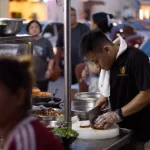
📷 Featured image by Hongwei FAN on Unsplash.