Thaipusam 2026 falls on 11 February, and if you’ve been searching whether it’s safe to attend as a tourist, you’re not alone. The Festival draws over a million people to Batu Caves in a single day — making crowd management, heat, and cultural sensitivity real concerns worth addressing before you go. The short answer is yes, it’s safe for tourists who prepare properly. The longer answer is what this article is for.
What Thaipusam Actually Is
Thaipusam is a Tamil Hindu festival celebrated during the Tamil month of Thai, which falls in January or February each year. It honours Lord Murugan, the Hindu god of war and victory, and commemorates the moment his mother Parvati gave him a vel — a divine lance — to defeat evil. In Malaysia, where Tamil Hindu communities form a significant part of the Indian population, this is one of the most deeply felt celebrations of the year.
The festival is not simply a procession. It is an act of devotion, gratitude, and penance. Devotees spend weeks — sometimes months — in spiritual preparation: fasting, abstaining from meat and alcohol, praying daily, and maintaining celibacy. The physical acts you witness on the day are the culmination of that private, intense spiritual journey.
Malaysia hosts one of the largest Thaipusam celebrations outside India. The main site is Batu Caves in Selangor, just north of Kuala Lumpur, where a 272-step limestone staircase leads to the Murugan temple inside a cathedral-sized cave. A 42.5-metre golden statue of Lord Murugan stands at the base, and the air around it on festival day carries the sharp sweetness of marigold garlands and incense smoke — smells that hit you the moment you step off the train.
The Safety Question Answered Honestly
Crowd-related incidents are the primary concern for first-time visitors, and they deserve a straight answer. Thaipusam at Batu Caves brings over a million devotees and tourists into a relatively contained area over roughly 24 hours. The Malaysian government and Selangor state authorities have coordinated crowd control systems for decades, and serious injuries are rare.
That said, there are real risks to manage:
- Heat exhaustion — The festival runs through the night and into midday heat. Temperatures at the base of Batu Caves can reach 34–36°C by 10:00, with humidity well above 80%. Staying hydrated is not optional.
- Crowd compression — Peak hours near the staircase (roughly 06:00–10:00) produce dense crowds that move slowly. If you have claustrophobia or anxiety in tight spaces, know this before you commit to climbing the stairs during peak time.
- Pickpocketing — Any high-density event carries this risk. Keep phones and wallets in front pockets or a zipped bag worn across the chest.
- Uneven terrain — The limestone steps vary in height, and the surrounding grounds can be wet from ritual water-pouring. Wear shoes with grip.

Medical aid stations are positioned at multiple points along the route and at the base of the stairs. Malaysian Red Crescent volunteers are present throughout the event. In 2026, the Selangor state government has also deployed an increased number of crowd monitoring cameras with real-time management capability, following the expanded crowd safety protocols introduced at major public events after 2024.
Understanding the Kavadi — What You’ll Witness
The kavadi is a physical burden carried by devotees as an act of sacrifice and thanksgiving. The word means “burden” in Tamil, and that is exactly what it represents — voluntarily shouldering a weight for Lord Murugan.
There are several forms of kavadi:
- Paal kudam — A pot of milk carried on the head or in the hands, offered to the deity. This is the most accessible form and often carried by women, children, and first-time devotees.
- Kavadi aattam — A large semicircular peacock-feather structure attached to the body, often decorated with flowers and small images of Murugan.
- Vel kavadi — The form that shocks most first-time visitors. Steel skewers are pierced through the cheeks, tongue, and skin of devotees. Some carry elaborate metal frameworks attached to their bodies through multiple piercings. Hooks pierce the back, with ropes or miniature chariots suspended from them.
This is not performance. Devotees enter a trance state facilitated by rhythmic chanting, drumming, and the weeks of spiritual preparation beforehand. Trained assistants called kavadi carriers help guide devotees and manage the physical process. Many pierced devotees report feeling no pain and show minimal bleeding — a phenomenon documented but not fully explained by medical science.
As a tourist observer, understand that you are watching something deeply private made public as an act of faith. Reactions of shock or amusement are understandable on a human level, but keep them internal.
Getting There Without Losing Your Mind
Transport is where many tourists make their first mistake — attempting to drive or take a taxi. Both options will leave you stranded in traffic kilometres from the site. Do not do this.
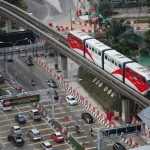
The only practical way to reach Batu Caves for Thaipusam is the KTM Komuter train on the Batu Caves line, which terminates directly at the Batu Caves station — a five-minute walk from the temple base. For Thaipusam 2026, KTM is running extended overnight services and increased train frequency, with trains running from approximately 22:00 the evening before through to midnight on festival day. Check the KTM website for the confirmed Thaipusam 2026 schedule, which is typically published two to four weeks before the event.
From central KL, you can connect to the Batu Caves line via:
- KL Sentral — Direct KTM Komuter connection, approximately 30–35 minutes
- Titiwangsa — Accessible via LRT (Ampang/Sri Petaling lines) or MRT (Putrajaya Line), then transfer to KTM
- Kepong Sentral or Kepong — Options for those staying in the north of KL
Expect trains to be extremely full during peak morning hours. Standing in a packed train carriage for 30 minutes is part of the experience for most attendees. If that’s not manageable, aim for the very early morning or afternoon services.
What to Wear, Carry, and Leave Behind
Thaipusam is a religious event at an active Hindu temple. Dress accordingly.
- Wear — Lightweight, modest clothing that covers shoulders and knees. Light cotton works best in the heat. Bright colours (yellow and orange are associated with the festival) are welcomed but not required.
- Shoes — Closed-toe, grippy footwear. You will remove shoes if you enter the temple, so slip-on shoes or sandals with back straps are practical. Flip-flops are risky on wet stairs.
- Carry — 1.5–2 litres of water per person, sunscreen (SPF 50+), a small snack, your phone charged to 100%, and cash in small denominations (MYR 1–10 notes for offerings, food stalls, and donations).
- Leave behind — Large backpacks (they become crowd hazards), alcohol, and any attitude that this is primarily a photo opportunity.
Photography is generally permitted in the public areas and along the procession route. Before photographing any individual devotee, especially those in trance or undergoing piercing, observe whether their attendants or family members indicate discomfort with cameras. Some do, some don’t. A nod or a slight raise of the camera before shooting is enough to communicate respectful intent.
Respecting the Sacred Space
Batu Caves is a working Hindu temple complex, not a heritage attraction. The rules that apply on any other day still apply during Thaipusam, amplified by the scale of the event.
Remove your footwear before entering any temple structure. This includes the cave temples at the top of the stairs and any smaller shrines along the base. Designated shoe storage areas exist near the entrance to the cave — use them. Leaving shoes outside on your own will result in them being moved or lost.
Do not touch the kavadi carriers, their offerings, or any ritual items without explicit invitation. The spiritual significance of these objects means that interference — even well-intentioned — disrupts something important. Similarly, do not attempt to walk through a procession path. Wait for a natural break, or follow the guidance of the volunteer stewards in orange vests.
Menstruating women are traditionally asked not to enter the inner sanctum of the cave temple — this is a longstanding Hindu custom observed at Batu Caves. Signage is posted at the temple entrance in multiple languages.
The noise level is intense: the deep thud of urumi drums, the brass-bright crash of cymbals, chanting in Tamil, and the collective sound of a million people in a limestone valley. It doesn’t feel like chaos — it feels like devotion in physical form. Let it wash over you rather than fighting it.
2026 Budget Reality
Thaipusam itself costs nothing to attend. Entry to Batu Caves is free on all days, including during the festival. Here’s where costs actually arise:
- KTM train fare (return from KL Sentral) — approximately MYR 4–6 per person
- Food stalls at the festival grounds — Budget MYR 10–20 per person for snacks and drinks. Vendors sell sugarcane juice, coconut water, roti, and various Indian snacks at reasonable prices.
- Temple donation — Entirely voluntary. MYR 5–20 is common from visitors who wish to contribute.
- Photography permits for professional equipment — MYR 50–150 depending on equipment type. Point-and-shoot cameras and phones do not require permits.
If you’re staying in KL for the festival:
- Budget accommodation (hostel dorm, guesthouses) — MYR 40–80 per night
- Mid-range hotels (3-star, central KL) — MYR 180–320 per night
- Comfortable options (4-star, good location) — MYR 380–600 per night
Book accommodation at least 6–8 weeks in advance for Thaipusam 2026. Hotels within walking distance of any KTM Komuter station see significant price increases in the week surrounding the festival. The closer you are to Titiwangsa, Sentul, or any northbound KTM station, the higher the premium.
Frequently Asked Questions
Is Thaipusam a public holiday in Malaysia?
Yes. Thaipusam is a public holiday in Selangor, Kuala Lumpur, Putrajaya, Penang, and Johor. It is not a nationwide public holiday, so states like Sabah, Sarawak, and others maintain normal business operations. In 2026, Thaipusam falls on 11 February, which means businesses in those states will be open as usual.
Can non-Hindus participate in Thaipusam, or just watch?
Non-Hindus are welcome to observe the festival respectfully. Carrying a paal kudam (milk offering) is technically open to non-Hindus who are invited by a devotee family and have undergone the preparatory rituals, but this is uncommon for tourists. Most visitors attend as respectful observers, and that is entirely appropriate and welcomed by the community.
Is it safe for children to attend Thaipusam at Batu Caves?
Children can attend, but the crowd density and kavadi piercing rituals require parental judgment. Very young children in prams or carriers will struggle in peak crowds. Older children (8 and above) generally manage well if parents brief them on what they will see. Arriving before 05:00 or after 14:00 significantly reduces crowd risk for families.
Are there Thaipusam celebrations outside of Batu Caves?
Yes. Penang hosts a significant Thaipusam procession through George Town, ending at the Waterfall Hilltop Temple in Penang Hill. Ipoh and Johor Bahru also have notable celebrations. These are smaller than Batu Caves but offer a more intimate experience. The Penang celebration is particularly recommended for those who want to see the festival without the extreme crowd volumes of the KL event.
What time does the procession arrive at Batu Caves?
The silver chariot carrying the vel leaves Sri Mahamariamman Temple in Kuala Lumpur the evening before Thaipusam and arrives at Batu Caves in the early morning hours — typically between 01:00 and 04:00. The procession covers approximately 15 kilometres. Exact timing varies each year based on the crowd pace. Check the Sri Mahamariamman Temple’s official announcements closer to the date for the 2026 confirmed departure time.
📷 Featured image by ANNIE HATUANH on Unsplash.