On this page
- Cash and the Ringgit: What to Carry and Why It Still Matters
- ATMs and Money Changers: Getting Cash Without Losing Money
- Contactless Cards and Travel Cards: Your Default in the Cities
- DuitNow QR: How to Pay by Scanning, Step by Step
- Touch ‘n Go eWallet: Setup, Top-Up and Tolls
- Paying for Grab, KTM and Rapid KL: Transport Payments
- Tipping, Service Charge and SST: Reading Your Bill
- 2026 Budget Reality: What Payments Cost You
- Common Payment Mistakes to Avoid
- Frequently Asked Questions
💰 Click here to see Malaysia Budget Breakdown
💰 Prices updated: November, 2026. Budget figures are estimates — always verify before travel.
Exchange Rate: $1 USD = RM4.05
Daily Budget (per person)
Shoestring: RM80.00 – RM160.00 ($19.75 – $39.51)
Mid-range: RM180.00 – RM350.00 ($44.44 – $86.42)
Comfortable: RM500.00 – RM1,000.00 ($123.46 – $246.91)
Accommodation (per night)
Hostel/guesthouse: RM30.00 – RM60.00 ($7.41 – $14.81)
Mid-range hotel: RM110.00 – RM200.00 ($27.16 – $49.38)
Food (per meal)
Budget meal: RM15.00 ($3.70)
Mid-range meal: RM35.00 ($8.64)
Upscale meal: RM100.00 ($24.69)
Transport
Single metro/bus trip: RM2.00 ($0.49)
Monthly transport pass: RM50.00 ($12.35)
You land in Kuala Lumpur with a card in your pocket. The shopping mall takes a tap, but the noodle stall down the road shakes its head and points at a QR code you cannot use. In 2026, Malaysia pulls you in two directions. Cities are going cashless fast, while kampung shops and old-school hawker stalls still run on notes and coins. This guide shows which payment method to use where, so you never get stuck with an empty wallet or a pile of avoidable fees.
Cash and the Ringgit: What to Carry and Why It Still Matters
The local currency is the Malaysian Ringgit (MYR). Banknotes come in MYR 1, 5, 10, 20, 50 and 100. Coins are in sen: 5, 10, 20 and 50 sen, with 100 sen making one ringgit.
Digital payments have grown quickly, but cash is still the safest backup. Many small shops, local eateries and markets outside the big cities take cash only. The same goes for traditional hawker stalls and roadside vendors. Small family-run shops and independent workshops often have no card machine at all.
Picture a morning at a roadside stall. The smell of nasi lemak steams out of a banana-leaf parcel, the coconut rice fragrant and the sambal sharp. You pay with a crumpled MYR 5 note, and no QR code is in sight. That is the moment you want small notes in your pocket.
Keep MYR 100 to 300 on you for emergencies and for places without digital options. Make sure part of that is in small denominations (MYR 1, 5, 10 and 20), because stallholders do not always have change for a MYR 100 note.
ATMs and Money Changers: Getting Cash Without Losing Money
ATMs are easy to find in cities, towns and even some smaller places. The major banks are Maybank, CIMB Bank, Public Bank, Hong Leong Bank, RHB Bank and AmBank.
The catch is the fee. Most Malaysian banks charge international cards a withdrawal fee, typically MYR 12 to MYR 20 per transaction. Your own bank may add foreign transaction or withdrawal fees on top. Exact amounts vary slightly between banks and can change, so check the screen before you confirm. Because the fee is per withdrawal, taking out one larger sum costs less than several small ones.

For larger amounts, licensed money changers are worth a look. They are common in shopping malls and tourist areas, and their rates are often better than banks or airport counters. Compare two or three rates before you commit, and always ask for a receipt.
Contactless Cards and Travel Cards: Your Default in the Cities
In urban and semi-urban areas, tapping a card is usually the easiest option. Visa PayWave, Mastercard PayPass and American Express Contactless are all in use. You will find them at supermarkets such as AEON, Lotus’s and Jaya Grocer, as well as hypermarkets, department stores, malls, major chain restaurants, hotels, petrol stations and larger retail outlets.
Since 2024, card terminals have also spread to more cafes, boutiques and even some larger hawker stalls in prime locations. For transactions above a certain limit, typically MYR 250 to 300, you may need to enter a PIN or sign.
Your own bank may charge a foreign transaction fee, typically 1 to 3%, on top of the exchange rate. Multi-currency travel cards such as Wise and Revolut often offer competitive exchange rates and lower or no foreign transaction fees. You can load them with MYR or let them convert directly. Merchants treat them like any other Visa or Mastercard.
DuitNow QR: How to Pay by Scanning, Step by Step
DuitNow QR is Malaysia’s national QR code standard. It allows instant payments between participating banks and eWallets, so one QR code at a counter works with many different apps. It is accepted in major retail chains, supermarkets, restaurants, cafes and pharmacies, and increasingly in hawker stalls and smaller businesses.
Here is how to pay:
- Open a banking app or eWallet that supports DuitNow QR, such as Maybank MAE, CIMB Clicks, Touch ‘n Go eWallet or GrabPay.
- Select “Scan & Pay” or “DuitNow QR”.
- Scan the merchant’s QR code, usually displayed at the counter.
- Enter the amount if it is not already filled in.
- Confirm with your PIN or biometric authentication.
- Show the confirmation screen to the merchant.
For consumers, domestic DuitNow QR payments are generally free. Merchants pay a small fee, and it is not passed on to you.

Cross-Border Use
- Singapore (PayNow): Fully interoperable, so visitors from Singapore can scan DuitNow QR codes with PayNow-enabled banking apps.
- Thailand (PromptPay): Fully interoperable in the same way.
- Indonesia (QRIS): Expected to be fully interoperable for retail payments by 2026. Check with your bank before relying on it.
- China (Alipay and WeChat Pay): Both are already accepted at merchants that display their own QR codes. Direct DuitNow QR interoperability is expected to expand, but confirm it in your app before you travel.
Touch ‘n Go eWallet: Setup, Top-Up and Tolls
The Touch ‘n Go (TNG) eWallet is one of Malaysia’s most popular eWallets. The official website is touchngo.com.my. Its core strengths are highways and transport, but it also works as a DuitNow QR participant at supermarkets, convenience stores such as 7-Eleven and FamilyMart, restaurants and online merchants. Many parking facilities, public and private, accept it too.
For highway tolls, you can link your eWallet to a physical TNG card (PayDirect) or use an RFID tag for barrier-free passage. RFID has grown fast since 2024 and is expected to be the dominant toll method in 2026. If you rent a car for the East Coast or rural areas, ask the rental company how tolls are handled.
Setting It Up
- Download “Touch ‘n Go eWallet” from the Apple App Store or Google Play Store.
- Register with your mobile number. You must verify your identity (KYC) by uploading a photo of your passport. Verification usually takes a few minutes.
- Top up by FPX online banking, by linking a Visa or Mastercard, or with cash at convenience stores (7-Eleven, Watsons, Guardian) or TNG kiosks.
Topping up directly from a bank account or card generally carries no fee. The KYC step is the one hurdle for short-stay tourists, especially if you have no local SIM or struggle to upload documents. Set it up on hotel WiFi on your first evening instead of at a busy station gate.
Paying for Grab, KTM and Rapid KL: Transport Payments
Transport is where your payment choice matters most, because you pay several times a day.
- Grab: Grab is the dominant ride-hailing and food delivery service. Download the app from the Apple App Store or Google Play Store. You can link an international credit or debit card, top up the GrabPay eWallet using a linked card or DuitNow, or choose cash for rides before booking. The TNG eWallet can often be used as a payment option in the app too. Grab is preferred over street taxis, which may not take digital payments.
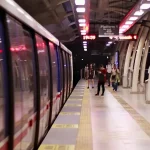
- Rapid KL (LRT, MRT, Monorail, buses): You can pay with a physical TNG card or with the TNG eWallet via QR or tap-and-pay at specific readers. Contactless bank cards are also increasingly accepted.
- KTM Komuter (Klang Valley): Pay with a physical TNG card, the TNG eWallet (PayDirect or QR at newer gates), or a contactless bank card at the gates.
- KTM ETS (intercity): Buy tickets online at ktmb.com.my, in the KTMB Mobile app, or at station counters. Online payment usually accepts credit and debit cards and DuitNow.
- Other buses: Many intercity and local services accept the TNG eWallet, but some smaller local buses still prefer cash.

Tipping, Service Charge and SST: Reading Your Bill
Tipping is not customary in Malaysia. Many restaurants, hotels and larger establishments add a 10% service charge and 6% Sales and Service Tax (SST) to the bill. This is stated on the menu or the bill itself. When these charges appear, you do not need to add anything.
For exceptional service, a small tip is always appreciated but entirely your choice. Think of rounding up the bill, or MYR 5 to 20 for a high-end restaurant, hotel, tour guide or driver who went above and beyond. You should never feel obliged.
Check the bottom of the menu before you order. Prices without the service charge and SST can look cheaper than they end up.
2026 Budget Reality: What Payments Cost You
These are the payment-related figures to plan for. The cash tiers are my suggestion for how much to carry each day, within the MYR 100 to 300 range.
- Budget traveller: Carry about MYR 100 in small notes for hawker stalls and markets. Use one larger ATM withdrawal instead of several, because each costs MYR 12 to 20 at the Malaysian bank, plus your own bank’s fees. Use a Wise or Revolut card or a TNG eWallet to avoid extra charges.
- Mid-range traveller: Carry about MYR 200 in cash and pay for malls, restaurants and Grab with a contactless card or DuitNow QR. Keep MYR 5 to 20 aside for occasional tips.
- Comfortable traveller: Carry about MYR 300 as a safety buffer and use cards almost everywhere. Expect the 10% service charge and 6% SST on bills in hotels and upscale restaurants. Tips of MYR 5 to 20 for exceptional guides or drivers are optional.

Common Payment Mistakes to Avoid
- Arriving with no cash. Rural areas, wet markets and traditional hawker stalls often accept only cash. Keep MYR 100 to 300 on you.
- Carrying only big notes. A MYR 100 note at a MYR 6 stall causes trouble. Keep MYR 1, 5, 10 and 20 notes.
- Making many small ATM withdrawals. Each one carries a MYR 12 to 20 fee from the Malaysian bank, plus your own bank’s charges.
- Setting up the TNG eWallet at the last minute. KYC needs a passport photo, so do it on WiFi before you need it at a gate.
- Tipping on top of a service charge. If the bill already shows 10% service charge, you do not need to add more.
- Skipping receipts at money changers. Compare rates and keep the receipt.
- Assuming every taxi takes a card. Use Grab, or keep cash ready for non-Grab taxis and small local buses.
Frequently Asked Questions
Is cash still needed in Malaysia in 2026?
Yes. Cities lean digital, but rural areas, traditional hawker stalls, wet markets and small family shops often accept only cash. Carry MYR 100 to 300 in small notes (MYR 1, 5, 10 and 20) as a backup, even if you plan to pay mostly by card or phone.
Can tourists use the Touch ‘n Go eWallet?
Yes, but registration needs KYC verification with a passport photo, which usually takes a few minutes. A local SIM helps. You can top up by FPX, a Visa or Mastercard, or cash at stores like 7-Eleven. Top-ups from banks or cards are generally free.
Do I need to tip in Malaysia?
No, tipping is not customary. Many restaurants and hotels already add a 10% service charge and 6% SST. For exceptional service, rounding up the bill or giving MYR 5 to 20 to a guide or driver who went further is appreciated, but it is always optional.
How much are ATM fees for foreign cards in Malaysia?
Most Malaysian banks charge international cards typically MYR 12 to MYR 20 per withdrawal, on top of your own bank’s fees. Exact amounts vary by bank and can change. Check the screen before confirming, and take out larger sums less often to reduce the total cost.
Can I tap my bank card on public transport?
Often, yes. Many Rapid KL buses and trains and KTM Komuter in the Klang Valley accept contactless bank cards at gates and readers. Look for the contactless symbol. Keep a TNG card or eWallet as a backup, since some smaller local buses still prefer cash.
📷 Featured image by Kevin Olson on Unsplash.