On this page
- Why Speaking Even Basic Malay Changes Your Shopping Experience
- How Malay Shopping Language Works: Pronunciation Basics
- Phrases for Entering a Shop and Asking About Products
- The Art of Tawar-Menawar: Bargaining Phrases and Etiquette
- Numbers, Prices, and Currency Phrases
- Market vs. Mall vs. Roadside Stall: Phrases by Context
- When Things Go Wrong: Phrases for Problems and Returns
- 2026 Budget Reality: What Things Cost and How Much Bargaining Moves the Price
- Frequently Asked Questions
Why Speaking Even Basic Malay Changes Your Shopping Experience
Malaysia‘s tourist infrastructure is excellent in 2026 — apps translate menus, cashless payments are everywhere, and most urban shopkeepers speak functional English. So why bother learning Malay phrases for shopping? Because the moment you open with Berapa harga ini? instead of “how much?”, something shifts. A vendor at Pasar Minggu grins. A batik seller in Kota Bharu drops the tourist price before you even ask. The transaction becomes a conversation rather than a transaction. That difference is real, and it happens consistently across Malaysia’s wet markets, night bazaars, and roadside kedai (shops). In 2026, with tourism numbers back at pre-pandemic peaks and hawker areas increasingly polished for visitors, the locals who remember foreigners who made the effort tend to offer better deals, fresher produce, and genuine warmth. This guide gives you the exact phrases to make that happen — with pronunciation written out so you can actually say them, not just recognise them on a page.
How Malay Shopping Language Works: Pronunciation Basics
Bahasa Malaysia is phonetically consistent — words are pronounced almost exactly as they are spelled using the Rumi (Latin) script. There are no tones like in Mandarin or Thai. Once you know the core sounds, you can read any Malay word and pronounce it close enough to be understood.
Key pronunciation rules
- a — always like the “a” in “father”, never like “cat”. So harga (price) is “HAR-ga”, not “HAR-guh”.
- e — two sounds. When written as é, it sounds like “é” in “café”. When unstressed (like in berapa), it sounds like the “e” in “the” — a soft schwa. Berapa = “ber-AH-pa”, with the first “e” being very soft.
- i — like “ee” in “feet”. Ini (this) = “EE-nee”.
- u — like “oo” in “food”. Murah (cheap) = “MOO-rah”.
- c — always “ch”. Cincin (ring) = “CHIN-chin”.
- g — always hard, like in “get”. Never soft like in “gym”.
- ng — like the end of “sing”. It can appear at the start of words too: ngap. This trips up English speakers but locals will understand you even if you pronounce it with a hard “n”.
- ny — like the Spanish “ñ” or the “ny” in “canyon”. Nyaman = “NYAH-man”.
One note on Bahasa Malaysia versus Bahasa Indonesia: they share the same base but differ in vocabulary in some areas. In Malaysia, the word for “cheap” is murah — same in both. But pricing vocabulary, slang, and certain everyday words diverge. This guide uses Malaysian Malay specifically, as used in peninsular Malaysia and Sabah/Sarawak contexts.
Phrases for Entering a Shop and Asking About Products
The first thirty seconds in a Malaysian shop set the tone. Walking in silently and pointing is fine, but it marks you immediately as a tourist who hasn’t engaged. These phrases open doors — sometimes literally.
Greetings and opening lines
- Selamat pagi — Good morning (said until around 11:00). Pronounced “seh-LAH-mat PAH-ghee”.
- Selamat petang — Good afternoon (roughly 12:00–18:00). “seh-LAH-mat peh-TANG”.
- Selamat malam — Good evening. “seh-LAH-mat MAH-lam”.
- Boleh saya tengok? — May I have a look? Literally: “Can I look?” Pronounced “BOH-leh SAH-yah teh-NGOK”. Use this when approaching a display case or before picking anything up.
- Ada tak…? — Do you have…? (“AH-da tak”). Casual, widely used. Example: Ada tak baju batik saiz L? — Do you have a batik shirt in size L?
- Ini apa? — What is this? “EE-nee AH-pa”. Useful at produce markets or craft stalls when you genuinely don’t recognise something.
- Ini buatan mana? — Where is this made? “EE-nee boo-AH-tan MAH-na”. Shows genuine interest and often prompts the seller to explain the product’s origin — whether it’s Sarawak beadwork, Kelantan silverware, or factory-made in China.
Asking about availability and options
- Ada warna lain? — Do you have other colours? “AH-da WAR-na lain”.
- Ada saiz yang lebih besar? — Do you have a bigger size? “AH-da SICE yang leh-BEE beh-SAR”.
- Boleh saya cuba? — May I try this? (for clothing). “BOH-leh SAH-yah CHOO-ba”.
- Di mana bilik persalinan? — Where is the fitting room? “dee MAH-na BEE-lik per-sah-LEE-nan”. Mainly needed in markets with makeshift changing areas.
The Art of Tawar-Menawar: Bargaining Phrases and Etiquette
Tawar-menawar — bargaining — is embedded in Malaysian market culture. At pasar malam, pasar borong (wholesale markets), craft bazaars, and roadside stalls, a quoted price is often a starting point, not a final offer. The cultural expectation is that both parties negotiate to a point that feels fair. Nobody loses face. Nobody storms off. It is fundamentally a friendly exchange, even when both sides are pushing hard.
The key etiquette rules: never bargain in a tone that suggests the price is offensive. Never walk away in a huff unless you genuinely don’t want the item. And if a seller meets your price, you are expected to buy — backing out after reaching agreement is considered rude.
Phrases to open the negotiation
- Berapa harga ini? — How much is this? “beh-RAH-pa HAR-ga EE-nee”. The single most useful shopping phrase in Malaysia.
- Mahal sangat. — That’s very expensive. “MAH-hal SAH-ngat”. Say this with a calm smile, not shock. It invites the seller to offer a revised price.
- Boleh kurang sikit? — Can you lower it a little? “BOH-leh KOO-rang SEE-kit”. This is the gentle opener — suggests you’re interested but looking for a fair deal.
- Saya nak beli dua. Boleh dapat diskaun? — I want to buy two. Can I get a discount? “SAH-yah nak BEH-lee DOO-ah. BOH-leh DAH-pat DIS-koun”. Quantity is a reliable lever in market bargaining.
Counter-offers and closing phrases
- [Price] boleh? — Can you do [price]? Example: Lapan puluh boleh? — Can you do RM80? This is your counter-offer, stated simply and directly.
- Saya hanya ada [amount]. — I only have [amount]. “SAH-yah HAH-nya AH-da…”. Use this carefully and honestly — it can work if believable.
- Kalau macam tu, saya tak jadi beli lah. — If it’s like that, I won’t buy then. “KAH-lau MAH-cham too, SAH-yah tak JAH-dee BEH-lee lah”. The slow-walk-away phrase. Say it gently while genuinely starting to move on. Often produces a better offer.
- Baiklah, saya ambil. — Alright, I’ll take it. “BYE-klah, SAH-yah AM-bil”. The deal-closer. Say it with a nod.
- Terima kasih. — Thank you. “teh-REE-ma KAH-sih”. Always end with this. Always.
The word lah deserves special mention. It appears at the end of sentences throughout Malaysian speech and softens a statement — turning a flat declaration into something more conversational and friendly. Mahal lah sounds less blunt than mahal alone. You can add lah to almost any short phrase and it will make you sound more natural to Malaysian ears.
Numbers, Prices, and Currency Phrases
You cannot bargain if you cannot understand what’s being said back to you. Malaysian numbers are straightforward and worth spending twenty minutes learning before you visit any market.
Core numbers (1–10)
- Satu — 1 (SAH-too)
- Dua — 2 (DOO-ah)
- Tiga — 3 (TEE-ga)
- Empat — 4 (em-PAT)
- Lima — 5 (LEE-ma)
- Enam — 6 (eh-NAM)
- Tujuh — 7 (TOO-juh)
- Lapan — 8 (LAH-pan)
- Sembilan — 9 (sem-BEE-lan)
- Sepuluh — 10 (seh-POO-luh)
Building larger numbers
- Dua puluh — 20 (DOO-ah POO-luh). Literally “two tens”.
- Tiga puluh lima — 35 (TEE-ga POO-luh LEE-ma). “Three tens five”.
- Seratus — 100 (seh-RAH-tus)
- Dua ratus lima puluh — 250
- Seribu — 1,000 (seh-REE-boo)
Currency and payment phrases
- Ringgit Malaysia — the official currency, abbreviated MYR or RM. In speech, amounts are usually just stated as numbers: tiga puluh ringgit (RM30).
- Sen — cents. RM1 = 100 sen. You’ll hear lima puluh sen (50 sen) at produce markets.
- Ada duit kecil? — Do you have small change? “AH-da DWEET keh-CHIL”. Useful when you only have large notes.
- Boleh bayar dengan kad? — Can I pay by card? “BOH-leh BAH-yar deh-NGAN kad”. Most malls and fixed shops accept cards in 2026, but cash is still expected at wet markets and pasar malam stalls.
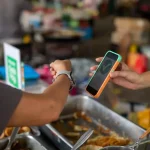
- Boleh scan QR? — Can I pay by QR? By 2026, DuitNow QR is accepted at a large number of market stalls across Malaysia. Many vendors display QR codes alongside their prices. This phrase — almost entirely English — works perfectly.
- Resit boleh? — Can I have a receipt? “REH-sit BOH-leh”. Rarely asked at markets but always fair to request at fixed shops.
Market vs. Mall vs. Roadside Stall: Phrases by Context
Where you’re shopping changes which phrases are useful and what the social norms around bargaining actually are.
Pasar malam (night markets) and wet markets
These are prime bargaining territory. Stalls are run by individuals or small family operations. The atmosphere at a busy pasar malam — the sizzle of grilled corn, the thick sweetness of durian hanging in the warm evening air, vendors calling out prices over one another — is chaotic in the best way. Here, direct bargaining phrases work well. Buying multiple items from the same stall and asking boleh dapat lebih murah kalau beli semua? (can I get cheaper if I buy everything?) is completely normal.
Malls and fixed-price shops
In Pavilion KL, Sunway Pyramid, or any chain retailer, prices are fixed and bargaining is not appropriate. Use polite request phrases instead:
- Ada promosi sekarang? — Is there a promotion now? “AH-da proh-MOH-see seh-KAH-rang”. Legitimate way to ask about discounts without bargaining.
- Ini harga terakhir? — Is this the final price? “EE-nee HAR-ga teh-RAH-khir”. In outlet stores and smaller boutiques, this occasionally prompts a small markdown.
Roadside stalls and kampung (village) shops
These require the most cultural sensitivity. A kedai runcit (corner shop) or a family-run roadside stall in a rural area operates on slim margins. Aggressive bargaining here is inappropriate. Friendly enquiry is fine. Murah sikit boleh? (can it be a little cheaper?) said with a smile is acceptable; extended negotiation is not.
When Things Go Wrong: Phrases for Problems and Returns
Markets don’t come with easy return policies. But knowing how to articulate a problem calmly in Malay prevents the situation from escalating and often results in a practical solution — a replacement, a partial refund, or at minimum a gracious acknowledgment.
- Ini rosak. — This is damaged/broken. “EE-nee ROH-sak”. State it plainly while showing the item.
- Ini bukan saiz yang betul. — This is not the right size. “EE-nee BOO-kan SICE yang BEH-tul”.
- Warna ini lain dari yang saya pilih tadi. — This colour is different from what I chose earlier. “WAR-na EE-nee LAIN DAH-ree yang SAH-yah PEE-lih tah-DEE”. Useful if you were shown a sample but given a different item.
- Boleh tukar? — Can I exchange this? “BOH-leh TOO-kar”. Simple and direct.
- Boleh pulangkan wang saya? — Can I get a refund? “BOH-leh poo-LANG-kan WANG SAH-yah”. This will not always succeed at market stalls, but asking calmly is always worth trying.
- Saya tak puas hati. — I’m not satisfied. “SAH-yah tak POO-as HAH-tee”. Literally “I don’t have a satisfied heart.” Use this to signal dissatisfaction without aggression.
- Tolong bantu saya. — Please help me. “TOH-long BAN-too SAH-yah”. General plea for assistance — works when you’re confused, overcharged, or simply stuck.
If a vendor becomes dismissive or you feel genuinely cheated at a pasar, stay calm. Raising your voice causes public embarrassment for both parties and resolves nothing in Malaysian social culture. A firm, quiet repeat of your concern — tolong faham, ini masalah saya (please understand, this is my problem/issue) — carries more weight than frustration.
2026 Budget Reality: What Things Cost and How Much Bargaining Moves the Price
Understanding realistic price ranges prevents you from either overpaying or insulting a vendor with an unreasonably low offer. These figures reflect 2026 market prices across peninsular Malaysia — Sabah and Sarawak craft markets run slightly higher due to logistics.
Budget tier (everyday markets and pasar malam)
- Fresh produce (per kg): RM2–RM8 for vegetables, RM10–RM18 for fish
- Printed batik fabric (per metre): RM15–RM35
- Mass-produced keychains and magnets: RM3–RM8 each
- Cotton T-shirts (tourist print): RM20–RM35
- Bargaining movement expected: 10–25% off the opening price is realistic
Mid-range tier (specialty craft stalls, batik boutiques)
- Hand-drawn batik tulis (per piece): RM80–RM250
- Pewter items (Royal Selangor quality): RM60–RM300
- Basketwork and woven products: RM40–RM150
- Songket fabric (machine-woven): RM120–RM400 per piece
- Bargaining movement expected: 5–15%. These sellers know the value of their product.
Comfortable tier (antique markets, Sarawak tribal crafts)
- Vintage ceramic pieces (Peranakan): RM200–RM800+
- Authentic Iban beadwork: RM150–RM600
- Signed or certified batik art: RM500–RM3,000+
- Bargaining movement expected: Minimal. 5% or a small gift inclusion is the norm. These sellers are specialists and price accordingly.
One change since 2024: cashless payments at pasar malam have expanded significantly under Malaysia’s 2025 Digital Economy Blueprint initiatives. Many stalls now accept DuitNow QR and e-wallets including Touch ‘n Go eWallet and Boost. However, some vendors have started quoting slightly higher prices for cashless transactions to offset platform fees — so carrying RM50–RM100 in cash when visiting markets remains practical advice in 2026.
Frequently Asked Questions
Is bargaining expected everywhere in Malaysia, or only at markets?
Bargaining is appropriate at pasar malam, wet markets, craft bazaars, and independent roadside stalls. It is not done at supermarkets, chain stores, or shopping malls. In smaller independent boutiques, politely asking about promotions or a small discount is acceptable but extended negotiation is unusual. Read the context before you start.
What if I mispronounce Malay phrases badly — will locals still understand me?
Almost certainly yes. Bahasa Malaysia is phonetically forgiving, and Malaysians are genuinely accustomed to hearing foreigners attempt Malay. The effort matters far more than perfect pronunciation. Even a rough berapa harga? with broken vowels will produce a smile and a clear answer. Trying is what counts.
Do I need different phrases in Sabah and Sarawak compared to peninsular Malaysia?
Standard Bahasa Malaysia works across all Malaysian states including Sabah and Sarawak. However, both East Malaysian states have local dialects — Sabah Malay and Sarawakian Malay — with slightly different vocabulary and pronunciation. For shopping purposes, standard Malay phrases work perfectly everywhere. Locals will appreciate your effort regardless of which region you’re in.
Can I use Google Translate for bargaining conversations in markets?
You can, but it slows everything down and breaks the natural rhythm of market bargaining. Google Translate’s Malay recognition has improved significantly by 2026, but holding up a phone mid-negotiation often makes vendors less willing to engage warmly. Learning ten to fifteen key phrases by memory before your market visit will produce far better results than relying on live translation.
What Malay phrase should I memorise first if I only learn one thing?
Berapa harga ini? — How much is this? It is universally useful, immediately signals respect for the local language, and opens every shopping interaction naturally. If you only remember one phrase from this entire guide, make it that one. It works at every market, stall, and kedai across Malaysia.
📷 Featured image by Neil Daftary on Unsplash.