On this page
You land in Kuala Lumpur, your phone has one bar of signal, and a driver is quoting a price that sounds high. Or it is 5:45 pm, the sky has just opened, and every Grab fare on your screen has doubled. These are the moments when choosing between Grab and a local taxi actually matters. In 2026, both options are still very much alive in Malaysia, and the smart traveller knows when to use each one.
The Short Answer: Grab or Taxi?
For most visitors, Grab is the easier choice. The price is shown upfront, you type your destination into the app, and nobody argues about the meter. Local taxis are still useful at airports, transport hubs and taxi stands, and when Grab is surging or you simply have no data.
The best setup is to have both. Keep the Grab app ready on your phone, and carry some small cash notes for taxis. Grab is the official website at www.grab.com/my/, and the regulator behind traditional taxis is APAD (Agensi Pengangkutan Awam Darat, the Land Public Transport Agency), at www.apad.gov.my.
How to Book a Grab, Step by Step
Grab is the dominant ride-hailing platform in Malaysia. It has largely absorbed rivals such as Uber and MyTeksi’s ride-hailing segment. Here is how a booking works:
- Download the app. Get “Grab” from Google Play Store or the Apple App Store. Do this before you fly, because airport WiFi can be slow.
- Register. Sign up with your mobile number and email. You will need to verify by SMS, so keep your home SIM active or set up a local SIM or eSIM first.
- Enter your destination. Choose “Car” (or another vehicle type) and type your destination into the “Where to?” field. The app detects your location or lets you set it by hand.
- Check the fare and wait time. You will see an upfront fixed fare for each service, such as GrabCar or GrabCar Plus.
- Tap “Book.” The app searches for a driver.
- Track your driver. Once someone accepts, you can see their location, arrival time, car model, licence plate, name and rating.
- Meet at the pickup point. Check the plate before you get in.
Which Grab service should you pick?
- GrabCar: the standard private car and the most common choice.
- GrabCar Plus/Premium: higher-end vehicles and more experienced drivers.
- GrabTaxi: connects you to a traditional metered taxi through the Grab app.
- GrabExec/Lux: premium executive vehicles.
- GrabShare and GrabFamily/Kids: carpooling and child-seat cars. Availability varies by region and time, so do not count on either, especially if you need a child seat.

GrabBike is mainly for food and parcel delivery. It is not a passenger service in Malaysia.
How Local Taxis Work
Taxis are licensed by APAD and run on a meter. There are three main types:
- Budget taxis (Teksi Bajet): usually red and white, red and blue, or yellow and blue. These are the most common.
- Executive taxis (Teksi Eksekutif): blue or silver, with more comfortable cars such as the Proton Perdana or Nissan Cefiro, and higher fares.
- Airport taxis: operate from airports, often with a coupon system or fixed fare.
You have four ways to get one:
- Street hailing: wave down an empty taxi and make sure the meter is visible and working.
- Taxi stands: found at shopping malls, KTM, MRT and LRT stations, and tourist attractions.
- Phone booking: call a company such as Comfort Taxi or Sunlight Taxi. A booking fee usually applies.
- App booking: use the GrabTaxi option inside Grab, or the EzCab app (www.ezcab.com.my).
2026 Budget Reality: What Rides Actually Cost
These are illustrative 2026 figures, based on non-surge, non-surcharge conditions unless stated. Real fares move with traffic, time and demand.
How Grab prices a ride
- Base fare: typically RM4.00 – RM6.00, depending on the city.
- Per kilometre: about RM0.70 – RM0.85.
- Per minute: about RM0.20 – RM0.30.
- Surge: 1.5x to 3.0x or higher in peak hours, heavy demand or bad weather. It is shown clearly before you book.
- Tolls: usually included in the upfront fare.
- Airport surcharge: RM5.00 – RM10.00 may apply at KLIA/KLIA2, already built into the displayed price.
How a budget taxi prices a ride
- Flag-down: RM3.00 – RM4.00 for the first 1 km.
- After that: RM0.25 – RM0.35 for every 115 metres or 21 seconds.
- Midnight surcharge: 50% extra between 12:00 AM and 6:00 AM.
- Phone booking fee: RM2.00 – RM4.00.
- Airport surcharge: RM12.00 for KLIA/KLIA2 pickups, on top of the meter.
- Baggage: large or bulky items may cost RM1.00 – RM2.00 each, but this is at the driver’s discretion.
- Tolls: paid by you, on top of the meter.
Executive taxis start at RM6.00 for the first 1 km, then RM0.35 – RM0.45 per 115 metres or 21 seconds. The same surcharges apply.
Side-by-side examples
- Budget tier, short hop (KLCC to Bukit Bintang, about 3 km): Grab RM8.00 – RM12.00 vs taxi RM7.00 – RM10.00.
- Mid-range tier (KL Sentral to Petaling Jaya, about 10 km): Grab RM18.00 – RM25.00 vs taxi RM20.00 – RM30.00.
- Comfortable tier, airport run (KLIA to KL city centre, about 55 km): Grab RM70.00 – RM90.00 vs taxi RM80.00 – RM110.00. The taxi figure includes the RM12 airport surcharge and tolls.

The pattern is clear. A metered taxi can be a little cheaper on very short trips. Grab tends to be competitive or cheaper on longer ones, but only when there is no surge.
Paying for Your Ride
Payment is where the two options feel most different.
Paying for Grab
- GrabPay: the main cashless method. Top up through online banking, a credit or debit card, or a convenience store.
- Cards: Visa, Mastercard and Amex are widely accepted once linked to the app.
- Cash: still an option, though cashless is encouraged.
- Touch ‘n Go eWallet: some integration with GrabPay exists, but paying directly with a TnG eWallet balance is not available for every service. Do not rely on it.
Paying for a taxi
- Cash: still the main method. Carry small notes, since drivers do not always have change.
- Cards: limited, usually only in newer or executive taxis with a terminal. Ask before the journey starts.
- Touch ‘n Go eWallet and DuitNow QR: more taxis are being fitted with these, and the trend is expected to keep growing. It is still not guaranteed, so ask first.
Where Each Option Wins
Grab wins in cities and towns. It covers the Klang Valley, Penang, Johor Bahru, Ipoh, Melaka, Kota Kinabalu and Kuching, and waits are often shorter than flagging a taxi. Setting your destination in the app also removes most language problems. You get driver tracking, an emergency button and ratings for both sides.
Taxis win at fixed points. At airports, KL Sentral, TBS and major hotels and malls, a taxi is basically guaranteed. Street hailing works well in busy centres, but in residential areas, late at night or in bad weather, you may stand waiting for a long time.

Grab has weak spots too. Drivers sometimes cancel if the pickup point is awkward or the fare looks low. You also need working mobile data. In rural areas and very small towns, Grab can be thin or absent, and a local taxi, a phone-booked car or a rental car may be your only choice.
Pairing Rides with Trains and Buses
Often the best answer is neither pure Grab nor pure taxi. Malaysia’s rail network works well with both:
- MRT, LRT and Monorail (www.myrapid.com.my) cover much of Kuala Lumpur and the Klang Valley. Taking the train to the nearest station and then a short Grab to your final stop is usually faster and cheaper than a full Grab across the city.
- KTM Komuter and ETS (www.ktmb.com.my) handle the Klang Valley and longer routes from KL Sentral to Ipoh, Butterworth (Penang) and Padang Besar near the Thai border. Use Grab or a taxi for the last stretch from the station.
- RapidKL buses are the cheapest option in the Klang Valley, but routes can be complex and traffic delays are common. If time matters, Grab or a taxi is more direct.
- KLIA Ekspres (www.kliaekspres.com) runs non-stop from KL Sentral to KLIA/KLIA2 in 30–35 minutes. It is usually faster and more predictable than a road transfer in heavy traffic. KLIA Transit makes several stops along the same route.
Grab and taxis do not replace long-distance buses (for example from TBS in KL), ferries to Langkawi from Kuala Perlis or Kuala Kedah, or domestic flights. They are how you reach those terminals and airports from your hotel. Choose the train for the airport run, and use Grab or a taxi when you have heavy luggage, a group, or want door-to-door service.
What Has Changed Since 2024
Some of the following are trends and expectations rather than confirmed rollouts, so check the apps when you arrive.
- More EVs on Grab. Grab is expected to have expanded its electric vehicle options in line with Malaysia’s green mobility push. A distinct “Grab Green” tier is possible, with slightly higher fares, but the exact name and details are not confirmed.
- Tighter regulation. APAD is expected to enforce stricter rules on driver working hours, vehicle maintenance and background checks. That could mean better quality, with slightly fewer drivers in some areas.
- Better rail integration. The Grab app may offer stronger links with KTM, MRT and LRT for planning first- and last-mile trips.
- More e-wallets in taxis. More taxis are expected to carry Touch ‘n Go eWallet or DuitNow QR terminals, so cashless payment is becoming more common.
- Taxis joining apps. More traditional taxis are joining platforms such as GrabTaxi and EzCab to offer fixed upfront fares.
- Competition. AirAsia Ride (www.airasia.com/ride/) is a growing challenger with competitive pricing and occasional promotions, though smaller apps may have consolidated or left the market.
- Less street hailing. App booking keeps replacing waving a taxi down on the roadside.

Common Mistakes to Avoid
- Booking a Grab without checking for surge. Read the fare and the multiplier before you tap “Book.”
- Agreeing to a taxi without the meter. Insist on the meter. If the driver refuses, get out and find another taxi. Overcharging of tourists is less common now due to stricter enforcement, but it still happens.
- Forgetting the extras on a taxi fare. Tolls, the RM12 airport surcharge, the 50% midnight surcharge and phone booking fees all add up.
- Not checking the plate. Match the car model, plate number and driver name in the Grab app before you get in.
- Counting on a card in a taxi. Ask first, and keep small notes ready.
- Relying on Grab in rural areas. Outside major centres, wait times can be long or there may be no drivers at all. Plan another option.
- Taking a car to the airport at rush hour without comparing. KLIA Ekspres is often quicker than a road transfer.
- Assuming child seats are available. GrabFamily/Kids is limited, so arrange seats ahead if you need one.
Frequently Asked Questions
Is Grab cheaper than a taxi in Malaysia?
Not always. On short trips like KLCC to Bukit Bintang, a metered taxi at RM7.00–RM10.00 can beat Grab at RM8.00–RM12.00. On longer routes such as KL Sentral to Petaling Jaya, Grab at RM18.00–RM25.00 tends to be slightly lower than a taxi at RM20.00–RM30.00. Surge pricing can change this quickly.
Can I pay cash for a Grab ride?
Yes, cash is available as an option, although Grab encourages cashless payment. You can link a Visa, Mastercard or Amex card, or top up GrabPay through online banking, a card or a convenience store. Paying in-app also means you do not need small notes ready when you arrive.

Do Malaysian taxis accept cards or e-wallets?
Card acceptance is limited, usually only in newer or executive taxis with terminals. Touch ‘n Go eWallet and DuitNow QR are becoming more common but are not guaranteed. Always confirm the payment method with the driver before the journey starts, and carry small notes as backup.
What is the best way to get from KLIA to Kuala Lumpur?
KLIA Ekspres is usually the fastest and most predictable, taking 30–35 minutes non-stop to KL Sentral. Grab (RM70.00–RM90.00) or a metered taxi (RM80.00–RM110.00 including the RM12 airport surcharge and tolls) suits groups, heavy luggage or door-to-door trips, though traffic can slow them.
How do I avoid being overcharged by a taxi?
Insist on the meter before you get in, and find another taxi if the driver refuses. APAD licenses taxis and has tightened enforcement. You can also book through GrabTaxi or EzCab, where fixed upfront fares are increasingly offered, which removes most disputes about the price.
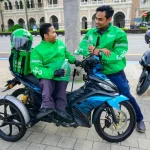
📷 Featured image by Muhammad Qayyum Abdul Rahman on Unsplash.