On this page
- Why Basic Malay Greetings Matter More Than You Think
- How to Say Hello in Malay: Selamat and Beyond
- How to Say Thank You in Malay
- The Islamic Greeting: Assalamualaikum
- Casual Greetings Malaysians Actually Use
- Pronunciation Guide: Saying It Right Without Embarrassing Yourself
- Useful Follow-Up Phrases After Hello
- 2026 Budget Reality: What It Costs to Learn Malay Properly
- Frequently Asked Questions
Most travelers arriving in Malaysia in 2026 pull up Google Translate and call it done. That works, barely — but the moment you greet a local in even broken Malay, something shifts. Faces open up. You get better directions, warmer service, and sometimes a spontaneous invitation to sit down and share a meal. With Malaysia’s tourism sector now drawing record arrivals following the expanded Visit Malaysia 2026 campaign, locals are more aware than ever of how few foreign visitors bother to learn even two or three phrases. Those who do stand out immediately.
Why Basic Malay Greetings Matter More Than You Think
Malaysia is a country built on layers of courtesy. Bahasa Malaysia — the national language — carries a social weight that goes beyond mere communication. Greetings in Malay signal respect for a person’s age, religion, and social standing. Getting that right, even imperfectly, earns you goodwill that no amount of money can buy.
This matters practically too. In smaller towns, kampung (village) areas, and among older Malaysians especially, English fluency varies widely. A traveler who opens with a genuine selamat pagi (good morning) or a warm terima kasih (thank you) will get more patient, helpful responses than one who immediately launches into rapid English.
Bahasa Malaysia also has a unique quality: it is largely phonetic. What you see written is, with a few exceptions, what you say. This makes it genuinely accessible for travelers with zero prior language background. You do not need months of study. Learning five to ten core phrases before your trip is enough to make a real difference.
One more thing worth knowing: Bahasa Malaysia and Bahasa Indonesia share the same roots but are not identical. Vocabulary, spelling, and even pronunciation differ in some places. If you have learned Indonesian before, you are ahead — but do not assume everything transfers directly.

How to Say Hello in Malay: Selamat and Beyond
The core formal greeting in Malay is built around the word selamat, which comes from the Arabic salama, meaning peace or safety. It is used in combination with words indicating the time of day, and it signals warmth and goodwill.
- Selamat pagi — Good morning (used from roughly 6:00 until 12:00)
- Selamat tengah hari — Good midday (used around noon, though less common in casual speech)
- Selamat petang — Good afternoon/evening (used from around 12:00 to sunset)
- Selamat malam — Good night (used after dark)
Selamat pagi is your most useful morning phrase. You will hear it in hotels, at breakfast stalls, and from shopkeepers as they open up. The smell of fresh roti canai sizzling on a flat iron and the sound of selamat pagi drifting across a kopitiam (traditional coffee shop) is one of those small, genuine Malaysian moments that sticks with you long after you leave.
For a general, all-purpose hello that works any time of day, use hai (exactly like the English “hi”) or helo. These are casual and widely understood, especially among younger Malaysians. They do not carry the cultural depth of selamat pagi, but they are perfectly acceptable in relaxed, informal settings.
There is also apa khabar, which translates directly as “how are you?” — though it functions more like “hello, how’s things?” in practice. The standard reply is khabar baik, meaning “I’m well” or literally “good news.” This exchange is common between people who know each other and is a genuinely warm opener.
How to Say Thank You in Malay
Terima kasih is the phrase every traveler should lock in before boarding their flight. It means “thank you,” and it is used constantly, across all ethnic communities in Malaysia, in formal and informal situations alike.

The phrase has an interesting history. Terima comes from the Arabic karim, meaning generous or noble, filtered through the old Malay trading world. Kasih means love or affection in Malay. So at its root, terima kasih carries a meaning closer to “receive with love” or “accept this with generosity.” That cultural depth is why the phrase feels warmer than a plain transactional “thanks.”
The standard response to terima kasih is sama-sama, which means “you’re welcome” or, more literally, “same to you.” You will also hear terima kasih kembali (thank you in return) and the more casual okay or no problem among younger urban Malaysians.
For stronger gratitude — if someone has gone out of their way to help you — you can say terima kasih banyak-banyak, which means “thank you very much” (literally “thank you many times over”). It sounds warm and genuine without being over the top.
A short, sincere terima kasih delivered with eye contact and a slight nod goes a long way in Malaysia. It acknowledges the person in front of you, not just the transaction.
The Islamic Greeting: Assalamualaikum
Malaysia is a majority-Muslim country — approximately 63% of the population identified as Muslim in the 2026 census projections — and the Arabic-origin Islamic greeting is deeply embedded in daily life here. Understanding it as a traveler is important, both to respond correctly when it is offered to you, and to know when it is appropriate to use yourself.
Assalamualaikum means “peace be upon you.” It is the standard greeting between Muslims and is used morning, afternoon, and evening across homes, offices, markets, and public spaces. The correct response is Waalaikumsalam, meaning “and upon you peace.”
As a non-Muslim traveler, the etiquette is straightforward. If someone greets you with Assalamualaikum, responding with Waalaikumsalam is respectful and appreciated. Malaysians generally understand that foreign visitors may not be Muslim, and the exchange is seen as a gesture of cultural respect rather than a religious declaration.

Can you initiate this greeting as a non-Muslim? Opinions vary. In casual traveler contexts — entering a homestay run by a Muslim family, for example, or greeting a guide at a mosque visit — offering Assalamualaikum first is generally received positively. If you are uncertain, defaulting to selamat pagi is always appropriate and never wrong.
One practical note: if you are visiting a mosque as part of sightseeing (many of Malaysia’s mosques welcome respectful non-Muslim visitors during non-prayer times), using Assalamualaikum at the entrance is a warm and considerate gesture. Pair it with modest dress — covered shoulders and knees, and shoes left at the door — and you signal genuine respect.
Casual Greetings Malaysians Actually Use
Formal Malay phrases are great for official interactions, but daily Malaysian life runs on a different, much looser register. If you spend time in a kopitiam, on a commuter train, or at a night market, you will hear a blend of Malay, English, Mandarin, and Tamil that textbooks do not prepare you for.
The most common casual Malay-English hybrid greeting is simply “Eh, makan dah?” — which roughly translates as “Hey, have you eaten yet?” This is a genuine cultural greeting, not a literal question about your last meal. Saying yes (sudah, or just “already-lah”) or no (belum) is the correct play. It comes from a tradition rooted in a time when food security was not guaranteed, and asking someone if they had eaten was a sincere expression of care.

Other casual expressions you will actually hear:
- Lah — a particle added to the end of sentences for emphasis or softness. “Okay lah,” “no problem lah,” “come lah.” It is untranslatable but signals ease and friendliness.
- Boleh — “can” or “okay.” Boleh is one of the most flexible words in Malaysian daily speech. “Boleh tak?” means “Can or not?” — a casual way of asking if something is possible.
- Cincai lah — roughly “whatever” or “it’s fine, don’t sweat it.” Used when someone is relaxed about an outcome.
- Weh — a casual attention-getter between friends, similar to “hey.” Not rude among peers, but not appropriate for elders or in formal settings.
Malaysian casual speech — sometimes called Manglish — is a living, evolving thing. Young Malaysians in 2026 mix Malay, English, and sometimes Cantonese or Hokkien in the same sentence without breaking stride. You are not expected to master this. But recognizing lah and boleh means you will follow conversations more easily and stop wondering why everyone seems to be ending sentences with a single syllable.
Pronunciation Guide: Saying It Right Without Embarrassing Yourself
The good news about Malay pronunciation: it follows consistent rules. Unlike English, where spelling and sound frequently diverge, Bahasa Malaysia is largely written as it sounds. Master a few key sounds and you can attempt almost any word.
Vowel Sounds
- a — always like the “a” in “father.” Never like the “a” in “cake.” So pagi is “PAH-gee,” not “PAY-gee.”
- e — two sounds depending on position. At the start of a word or stressed syllable, it sounds like “eh” as in “bed.” In unstressed syllables, it is a schwa — the soft “uh” sound in “the.” Selamat is “seh-LAH-mat,” not “see-LAH-mat.”
- i — like “ee” in “see.” Kasih is “KAH-see.”
- o — like “oh” in “go.” Round your lips.
- u — like “oo” in “food.” Pukul (o’clock) is “POO-kool.”

Consonants to Watch
- c — always pronounced “ch” as in “chair.” Never a hard “k” sound. Cinta (love) is “CHIN-tah.”
- g — always hard, like “g” in “go.” Never soft like the “g” in “gem.”
- ng — can appear at the start of a word, which feels strange to English speakers. Practice the “ng” at the end of “sing,” then try it at the beginning: ngantuk (sleepy).
- r — rolled slightly, similar to a soft Spanish “r.” Not the flat English “r.”
- kh — a soft, breathy sound from the back of the throat, like the “ch” in Scottish “loch.” Heard in khabar.
Putting It Together: Your Key Phrases
- Selamat pagi — “seh-LAH-mat PAH-gee”
- Terima kasih — “teh-REE-mah KAH-see”
- Apa khabar — “AH-pah KHA-bar” (the “kh” is that soft throat sound)
- Sama-sama — “SAH-mah SAH-mah”
- Assalamualaikum — “as-SAH-lah-moo-ah-LAY-koom”
- Waalaikumsalam — “wah-AH-lay-koom-SAH-lam”
The most common mistake English speakers make is over-stressing the first syllable of every word — the way English naturally works. In Malay, stress generally falls on the second-to-last syllable. Keeping that in mind smooths out your rhythm considerably.
Useful Follow-Up Phrases After Hello
A greeting without anywhere to go can stall quickly. These phrases let you move a basic exchange forward — even if the conversation has to end with a smile and a polite terima kasih.
Introducing Yourself
- Nama saya [name] — “My name is [name]” (SAH-yah is “I/me”)
- Saya dari [country] — “I am from [country]”
- Saya pelancong — “I am a tourist”
Asking for Help
- Tolong — “Please” or “Help.” One of the most important words you can know. Tolong before a request immediately softens it.
- Boleh tolong saya? — “Can you help me?”
- Di mana…? — “Where is…?” As in Di mana stesen MRT? — “Where is the MRT station?”
- Saya tidak faham — “I don’t understand.” Honest and appreciated.
- Boleh cakap perlahan-lahan? — “Can you speak slowly?” Extremely useful when someone responds to your Malay with more Malay than you expected.

Polite Closings
- Selamat tinggal — “Goodbye” (said by the person leaving)
- Selamat jalan — “Safe travels” (said to the person leaving — a genuinely warm send-off)
- Jumpa lagi — “See you again” — casual and friendly
The combination of terima kasih followed by selamat jalan at the end of any interaction — even a brief one at a market stall — leaves a lasting impression. The smoky warmth of a satay grill at a night market, the vendor handing you a skewer, and your terima kasih, selamat jalan as you walk off — that is the kind of small human exchange that makes travel worth it.
2026 Budget Reality: What It Costs to Learn Malay Properly
You do not need to spend anything to learn enough Malay for a two-week trip to Malaysia. But if you want to go deeper, here is what the landscape looks like in 2026.
Free Options
- Duolingo Malay course — relaunched with expanded content in late 2024, now covering conversational phrases through roughly A2 level. Free tier is genuinely useful for travelers.
- YouTube (Malay language channels) — several Malaysian creators have built solid beginner series specifically targeting tourists and expats. Search “Belajar Bahasa Malaysia” for options.
- Google Translate offline pack — download the Bahasa Malaysia pack before you travel. Works without internet. Useful for reading menus and signs, though pronunciation guidance remains limited.
Budget (MYR 0 – MYR 50)
- Phrasebooks: Printed Malay-English travel phrasebooks are available at most Malaysian airports and major bookshops for MYR 15–35. The MPH Bookstores and Kinokuniya (KLCC) carry several options.
- Pimsleur Malay (single month subscription): approximately MYR 45–50/month on the current 2026 exchange rate. Audio-focused, good for pronunciation.

Mid-Range (MYR 50 – MYR 300)
- Online private tutoring via platforms like iTalki or Preply: expect MYR 60–120 per hour for community tutors, MYR 130–220 per hour for professional teachers with formal Bahasa Malaysia qualifications.
- Short group classes at language centres in Kuala Lumpur (e.g., weekend intensives): typically MYR 150–280 for a 6–8 hour beginner course.
Comfortable (MYR 300 and above)
- Private language instruction with certified Dewan Bahasa dan Pustaka-accredited teachers: MYR 300–600 for a structured 10-hour beginner package. Best for expats planning extended stays.
- Immersive homestay programs in Kelantan or Terengganu (arranged through cultural NGOs): MYR 800–1,500 for a week, including accommodation and guided cultural activities. Language learning happens naturally as a byproduct.
For most travelers, the honest answer is: use Duolingo for two weeks before your trip, download Google Translate offline, and practice the ten phrases in this article out loud until they feel natural. That preparation costs nothing and covers 80% of what you will actually need on the ground.
Frequently Asked Questions
Is it rude to use English instead of Malay in Malaysia?
Not at all. English is widely spoken in Malaysian cities and is an official language of business and education. Locals will not take offence if you speak English. But attempting even a few Malay phrases — especially greetings and thank-yous — is seen as respectful and will almost always result in a warmer response.
Can I use the same Malay greetings with Chinese and Indian Malaysians?
Yes, absolutely. Bahasa Malaysia is the national language shared across all ethnic communities. Chinese and Indian Malaysians speak and understand Malay fluently. Greetings like selamat pagi and terima kasih are appropriate and appreciated regardless of who you are talking to.

What is the difference between Bahasa Malaysia and Bahasa Indonesia?
They share the same roots and are largely mutually intelligible, but vocabulary, spelling, and some expressions differ. For example, “car” is kereta in Malaysia but mobil in Indonesia. If you have learned Indonesian, your Malay will be understood in Malaysia, but expect some differences in everyday speech and slang.
Is the Islamic greeting Assalamualaikum appropriate for non-Muslim travelers to use?
Responding to it with Waalaikumsalam is always appropriate and respectful. Initiating it yourself as a non-Muslim is generally received warmly, particularly in rural areas or at mosque visits. If you are unsure, selamat pagi or another time-based greeting is always the safe and correct option.
How do Malaysians feel when foreigners try to speak Malay?
The reaction is almost universally positive. Malaysians tend to find it genuinely touching when a foreign visitor makes the effort, even imperfectly. Mistakes are met with patient correction rather than mockery. The effort itself communicates respect — and that is what locals actually remember about the travelers they meet.
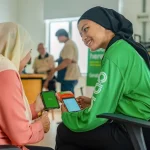
📷 Featured image by Kamaruld Salleh on Unsplash.