Many travellers plan a Deepavali trip around October, then find out the main day falls later. In 2026, Deepavali is expected on Sunday 8 November, not in October. Malaysian public holiday dates are officially gazetted, so confirm the final date and any replacement holiday before you book. October is still worth knowing about, because that is when the festival starts to show up in the shops, streets and kitchens.
Why the Date Matters: October Build-Up, November Celebration
Deepavali follows the Hindu lunar calendar, so the date moves each year. In 2025 it fell in the second half of October. In 2026 it shifts to early November, and the date can differ by a day depending on local religious calculations.
For a visitor, this gives you two different trips. Arrive in mid to late October and you will see the preparation phase: festive bazaars, shoppers buying sarees and kurtas, sweet makers working long hours, and decorations going up. Arrive in the first week of November and you get the celebration itself, with oil lamps, family visits, open houses and a public holiday that makes some areas very quiet and others very busy.
What Deepavali Means in Malaysia
Deepavali is the Hindu festival of lights, celebrating the victory of light over darkness and good over evil. It is a nationwide public holiday in Malaysia and is celebrated mostly by the Malaysian Indian community, especially Tamil Hindus. Many Malaysians of other backgrounds join in through visits, shared meals and workplace celebrations.
Traditional practices include an early morning oil bath, new clothes, prayers at the temple, and lighting oil lamps at home. Families often draw kolam, colourful patterns made with rice flour or coloured powder, at the front door. Malaysia’s multicultural habit of sharing festivals is a big part of the experience. A Chinese colleague or a Malay neighbour may be invited to the table, and you might be too.
Where to Feel the Festival
Brickfields, Kuala Lumpur
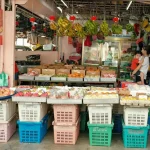
Brickfields is KL’s best-known Little India, a short distance from KL Sentral. In the weeks before Deepavali, the streets fill with festive decorations, garland sellers, textile shops and food stalls. The air smells of jasmine, frying batter and sweet spice, and Tamil film songs drift out of shop doorways. Go in the late afternoon and stay until evening, when the lights come on and the heat eases.
George Town, Penang
Penang’s Little India in George Town is compact and easy to walk. You will find sari shops, bangle stalls, spice merchants and old restaurants serving banana leaf meals. The festive mood is strong in the days leading up to Deepavali. Penang is also a good base if you want to combine the festival with the island’s famous food scene.
Klang
Klang, just outside Kuala Lumpur, has one of the largest Indian communities in the Klang Valley. Its Little India area is known for busy festive shopping and strong food traditions. It suits travellers who want a local atmosphere rather than a tourist-oriented one.
Batu Caves
Batu Caves is famous mainly for Thaipusam, but the temple complex is open year-round and reachable by KTM Komuter from KL Sentral. The 272 colourful steps and the giant golden statue are well known. Dress modestly, expect macaques, and go early to avoid the midday heat. Visiting on the main festival day itself may mean larger crowds of worshippers, so be respectful and patient.
What to Eat During Deepavali
Deepavali food is a reason to travel in itself. Home kitchens and bakeries make festive snacks for weeks beforehand.
- Murukku: crunchy, spiral-shaped savoury snacks made from rice and lentil flour. They are easy to pack as gifts.
- Laddu: round sweets, often made with gram flour, sugar and ghee. They are rich and melt in the mouth.
- Adhirasam: a chewy, fried sweet made from rice flour and jaggery, with a deep caramel flavour.
- Banana leaf rice: a Malaysian Indian staple, served on a banana leaf with vegetable curries, papadum, pickles and your choice of meat or fish. Take a bite of the hot rice mixed with dhal and rasam, and the spice builds slowly on your tongue.
- Mutton varuval and chicken curries: common on festive tables in non-vegetarian households.
Many restaurants in Brickfields and Penang also add festive set meals or special menus around Deepavali. Menus differ from place to place, so check with the restaurant.
Open Houses and Etiquette for Visitors
The open house is a Malaysian tradition where hosts invite friends, neighbours and colleagues to visit and eat. If you are invited, it is considered a warm gesture, not a formality. A few simple habits will help you fit in.
- Remove your shoes before entering a home or temple.
- Dress neatly. Bright colours are welcome. Cover your shoulders and knees for temple visits.
- Use your right hand for eating, giving and receiving.
- Bring a small gift, such as a box of biscuits, fruit or sweets. Check whether your host is vegetarian before bringing food.
- Accept at least a small portion of what is offered. Declining everything can seem impolite.
- Say “Happy Deepavali” or “Deepavali Vazhthukkal”, the Tamil greeting. A smile matters more than perfect pronunciation.
If you are not invited to a private home, you can still enjoy public celebrations, shopping areas and temples. Ask before photographing people, especially during prayers.
Planning Around the Holiday
Deepavali is a public holiday, and Malaysians often use it for balik kampung trips and family visits. If the holiday creates a long weekend, expect busier roads, fuller buses and higher demand on popular routes. Plan your intercity transport early, particularly if you are travelling between KL, Penang and other major cities. Trains and buses can sell out in peak periods.
For accommodation, book several weeks ahead if you want a specific hotel in KL’s Brickfields area or in George Town, since festive weekends fill up. Within cities, ride-hailing apps are usually the easiest way to move around when streets near Little India areas are congested. Public transport is a good option for Batu Caves and for reaching Brickfields via KL Sentral.
Weather is also a factor. Late October and November fall within the wetter part of the year in much of Peninsular Malaysia, and afternoon thunderstorms are common. Carry a compact umbrella and plan outdoor visits for the morning or early evening.
2026 Budget Reality
These are general estimates in Malaysian Ringgit (MYR). Festive periods can push accommodation prices higher, so treat them as a guide and not a fixed rate.
Budget
- Accommodation: roughly RM80–150 per night for a hostel or simple hotel
- Banana leaf rice or hawker meals: roughly RM8–15 per meal
- Festive snacks (murukku, sweets): roughly RM10–25 per pack
- Local transport: a few ringgit per rail trip; short ride-hailing journeys cost more
Mid-range
- Accommodation: roughly RM200–400 per night for a comfortable city hotel
- Restaurant meals: roughly RM20–45 per person
- Festive clothing, such as a kurta or a simple saree: roughly RM60–250 depending on fabric and shop
- Ride-hailing for the day: roughly RM40–100 depending on distance and traffic
Comfortable
- Accommodation: RM450 and above per night for upscale hotels
- Sit-down meals at higher-end Indian restaurants: roughly RM50–120 per person
- Premium silk sarees or designer festive wear: several hundred ringgit and up
- Private driver or tour for a day: prices vary widely, so confirm before booking
Frequently Asked Questions
When is Deepavali in Malaysia in 2026?
Deepavali is expected on Sunday 8 November 2026, not in October. The date follows the Hindu lunar calendar and can vary slightly. Always confirm with the official Malaysian public holiday gazette, as well as any replacement holiday announcements, before booking travel or accommodation.
Is Deepavali a public holiday throughout Malaysia?
Yes, Deepavali is a public holiday across Malaysia. Many government offices, schools and businesses close, though some shops, restaurants and tourist services stay open. Smaller family-run businesses may close for a day or more, so check opening hours in advance, especially in Little India areas.
Can tourists join Deepavali celebrations?
Yes. Visitors are welcome at public celebrations, festive markets and many temples. Private open houses are by invitation, but Malaysians are often happy to include guests. Dress modestly at temples, remove your shoes where required, and ask permission before photographing worshippers or families.
Where is the best place to experience Deepavali in Malaysia?
Brickfields in Kuala Lumpur and Little India in George Town, Penang, are the most popular choices for visitors. Klang also has a strong festive atmosphere with a more local feel. Choose based on your itinerary. KL has more transport options, while Penang is easier to explore on foot.
What should I wear to a Deepavali event?
Wear neat, comfortable clothing in bright colours. Many people wear sarees, kurtas or other traditional outfits, but visitors do not need to. For temples, cover your shoulders and knees. Choose light fabrics for the heat and wear shoes that are easy to remove.
Explore more
Malaysia’s West Coast Gems: Your October 2026 Travel Guide
Diving and Snorkeling in Malaysia: Best Spots for September 2026
Experience Malaysia Day: Your September 2026 Guide to National Unity
📷 Featured image by Amir Azhad on Unsplash.