On this page
- Malaysian Ringgit Cash: Still Non-Negotiable in Many Situations
- Contactless Cards: What International Visitors Need to Know About Fees
- DuitNow QR: Malaysia’s National Payment Standard Explained
- Touch ‘n Go eWallet: The One App That Does Almost Everything
- Other eWallets Worth Knowing
- Paying for Transport: A Method-by-Method Breakdown
- 2026 Budget Reality: What Things Cost and Which Payment Method Fits
- Tipping, Service Charges, and SST: What’s Already in Your Bill
- Common Mistakes Travellers Make With Payments in Malaysia
- Frequently Asked Questions
💰 Click here to see Malaysia Budget Breakdown
💰 Prices updated: August, 2026. Budget figures are estimates — always verify before travel.
Exchange Rate: $1 USD = RM4.03
Daily Budget (per person)
Shoestring: RM100.00 – RM200.00 ($24.81 – $49.63)
Mid-range: RM180.00 – RM400.00 ($44.67 – $99.26)
Comfortable: RM450.00 – RM1,300.00 ($111.66 – $322.58)
Accommodation (per night)
Hostel/guesthouse: RM20.00 – RM70.00 ($4.96 – $17.37)
Mid-range hotel: RM100.00 – RM350.00 ($24.81 – $86.85)
Food (per meal)
Budget meal: RM15.00 ($3.72)
Mid-range meal: RM35.00 ($8.68)
Upscale meal: RM100.00 ($24.81)
Transport
Single metro/bus trip: RM2.00 ($0.50)
Monthly transport pass: RM150.00 ($37.22)
Malaysia in 2026 is one of Southeast Asia’s most payment-diverse countries — and that creates a genuine problem for first-time visitors. You arrive at KLIA with a pocketful of foreign currency, a Visa card, and zero idea whether the hawker stall near your hotel takes contactless, QR codes, or only cash. The answer changes depending on whether you’re in central Kuala Lumpur, a Penang coffee shop, or a night market in Kota Bharu. This guide cuts through the confusion by covering every payment method you’ll realistically encounter, with honest advice on fees, limits, and what to set up before you leave home.
Malaysian Ringgit Cash: Still Non-Negotiable in Many Situations
Despite a rapid shift toward digital payments, cash in Malaysian Ringgit (MYR) is not optional — it’s essential for specific situations that will come up on almost any trip.
Banknotes come in RM1, RM5, RM10, RM20, RM50, and RM100 denominations. Coins run from 5 sen to 50 sen. The old 1 sen coin is out of circulation, so prices ending in .01 or .04 are rounded to the nearest 5 sen at checkout.
Where cash is genuinely required or strongly preferred:
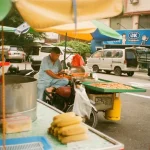
- Hawker stalls and wet markets: The smell of char kway teow sizzling on a wok, the din of a morning market — these are experiences built around cash. Many hawker stall operators, especially those run by older generations, still work entirely in notes and coins. DuitNow QR is appearing at more stalls, but patchy and not universal.
- Rural towns and kampung areas: Outside major urban corridors, digital payment infrastructure drops off quickly. Villages, independent sundry shops, and small-town eateries routinely operate cash-only.
- Street-hailed taxis: Grab dominates urban ride-hailing, but taxis flagged on the street — especially in smaller cities — often prefer or only take cash.
- Some local transport: Rural buses and mini-vans typically require exact cash fare. No card reader, no QR code, no exceptions.

ATMs: Well-distributed in cities, shopping malls, petrol stations, and major transport hubs. Maybank has the largest ATM network in Malaysia and reliably accepts international Visa and Mastercard. In remote areas, ATMs are scarce — withdraw before you leave a major town.
For international cards, expect a local bank fee of approximately MYR 12 to MYR 25 per ATM withdrawal, on top of whatever your home bank charges (usually 2% to 4% of the withdrawal). Daily withdrawal limits typically sit between MYR 3,000 and MYR 10,000 depending on your card issuer.
Currency exchange: Licensed money changers in shopping malls and tourist areas consistently beat bank rates and airport counters. Bring your passport — it’s required for the transaction. Never exchange at the airport unless you only need a small amount to get into the city.
Contactless Cards: What International Visitors Need to Know About Fees
Visa and Mastercard contactless payments work smoothly at supermarkets, pharmacies, petrol stations, hotel checkouts, and most mid-sized restaurants across urban Malaysia. The contactless symbol — four curved lines — is visible on most modern payment terminals. American Express is accepted at international hotels and high-end restaurants, but treat it as a bonus rather than a reliable primary card.
Malaysia’s domestic debit card network is called MyDebit. You’ll see this on cards issued by Malaysian banks. For visitors, your regular Visa or Mastercard debit or credit card works fine wherever contactless terminals exist.
PIN-free contactless limits: For transactions under roughly MYR 250 to MYR 500 (the threshold varies by bank and terminal), you can tap and go without entering a PIN. Above that amount, you’ll be prompted for your 6-digit PIN. Have it memorised — some Malaysian terminals don’t support signature as a fallback.

Fees for international cards: This is where visitors regularly get caught out. Each transaction with a foreign-issued card typically incurs:
- A foreign transaction fee from your issuing bank: 1% to 3%
- A network conversion fee from Visa or Mastercard: approximately 0.8% to 1%
- Combined total: expect 2% to 4% per transaction
If you make frequent small purchases, these fees accumulate fast. The practical solution used by most experienced travellers is to pair a low-fee international card — such as a Wise card or a no-foreign-transaction-fee travel card from your home country — with a small cash reserve for markets and hawker stalls. Use the card for hotels, restaurants, and supermarkets. Use cash for everything under RM20 at street-level vendors.
DuitNow QR: Malaysia’s National Payment Standard Explained
DuitNow QR is the payment infrastructure that quietly runs behind most of Malaysia’s digital transactions. Launched by Payments Network Malaysia (PayNet), it’s a single interoperable QR code standard that works across every major bank and eWallet in the country. One QR code on the merchant’s counter — any customer with any participating app can scan and pay.
This is a significant practical advantage. You don’t need to be on the same platform as the merchant. A MAE app user and a Boost user can both pay the same DuitNow QR sticker.
Participating banks whose mobile apps support DuitNow QR include Maybank (via MAE), CIMB, Public Bank, RHB, Hong Leong Bank, UOB, HSBC, OCBC, AmBank, Affin Bank, Alliance Bank, Bank Islam, Bank Rakyat, BSN, and several others. All major eWallets — Touch ‘n Go eWallet, GrabPay, Boost, ShopeePay — also support it.

How to use DuitNow QR as a visitor:
- Open a participating eWallet or bank app. Touch ‘n Go eWallet is the easiest for tourists to set up without a Malaysian bank account.
- Tap “Scan” or “QR Pay” in the app.
- Point your camera at the merchant’s DuitNow QR code.
- Enter the amount if it isn’t pre-filled.
- Confirm with your app PIN, fingerprint, or face ID.
- Show the confirmation screen to the merchant — done.
Payments are free for consumers. Merchants pay a small transaction fee of around 0.25% to 0.5%, which is why even small businesses have adopted it — it costs them less than card terminals.
Cross-border QR in 2026: One of the more significant developments since 2024 is the expanded cross-border QR payment integration. Travellers from Singapore using PayNow and from Thailand using PromptPay can now scan Malaysian DuitNow QR codes and pay directly without needing local currency for digital transactions. This is live for a growing number of participating banks and eWallets on both sides. For full details and the official platform, visit duitnow.com.my.
Touch ‘n Go eWallet: The One App That Does Almost Everything
If you’re only going to set up one digital payment tool before arriving in Malaysia, make it the Touch ‘n Go (TnG) eWallet. It handles merchant payments, highway tolls, LRT and MRT fares, parking, and utility bills — all from one app developed by TNG Digital Sdn Bhd.
The app is available on iOS and Android and can be registered with a foreign phone number, though some features require a Malaysian identity verification step. Tourists typically access the basic wallet and scan-to-pay functions without any issue.
Topping up your TnG eWallet:
- Online banking (FPX): Instant and generally free, but requires a Malaysian bank account.
- Debit or credit card: Instant top-up from a foreign card. Check with your card issuer — some classify eWallet top-ups as cash advances, which carry separate fees.
- Cash at kiosks: Top up at 7-Eleven, Petronas stations, Watsons, and other participating outlets. Instant and usually free.

The Touch ‘n Go NFC Card: As of 2026, the enhanced TnG NFC Card is the standard physical card sold at convenience stores and transport stations for around MYR 10 (not including any stored value you load). The key upgrade over older cards is NFC reload — you can top up its balance directly from the TnG eWallet app using any NFC-enabled smartphone. No more hunting for a top-up kiosk. This card taps onto LRT, MRT, Monorail, and most KTM Komuter gates, and works at toll plazas.
For tolls specifically — RFID is king in 2026: On all major Malaysian highways, cash toll lanes have been virtually eliminated. The dominant method is RFID, which requires a tag affixed to your windscreen linked to your TnG eWallet. If you’re renting a car, confirm with the rental company whether RFID is already installed (most major rental fleets have it). The physical TnG card with PayDirect works as a backup at remaining non-RFID lanes.
Visit touchngo.com.my for the full list of accepted locations and to manage your account online.
Other eWallets Worth Knowing
Touch ‘n Go dominates, but these apps have real presence and are worth knowing, especially if you’re already using one of their parent platforms.
GrabPay: Built into the Grab app, which most visitors already install for ride-hailing. You can link a foreign debit or credit card to GrabPay and use it for rides, GrabFood deliveries, and physical merchants that accept GrabPay QR or DuitNow QR. If you’re using Grab daily anyway, keeping a small GrabPay balance is convenient — it sometimes qualifies for ride discounts.

Boost: A Malaysian eWallet with solid merchant coverage in urban areas. Known for frequent cashback promotions and in-app rewards. Accepts DuitNow QR. Worth downloading if you’re staying more than a week and want to take advantage of periodic promotions at cafes, restaurants, and retail stores.
ShopeePay: Primarily useful if you’re buying from Shopee for delivery during a longer stay. It works at some physical merchants via DuitNow QR but isn’t particularly practical as a day-to-day payment tool for travellers.
MAE by Maybank: Maybank’s standalone eWallet and digital banking app. If you open a Maybank account during an extended stay in Malaysia, MAE becomes a full-featured banking app. For short-term visitors, it’s useful only if you’re already banking with Maybank.
Paying for Transport: A Method-by-Method Breakdown
Transport payments in Malaysia are one of the areas most likely to trip up a visitor because each mode has slightly different rules and accepted methods.
KL’s Urban Rail (LRT, MRT, Monorail)
The preferred method is the Touch ‘n Go card or TnG eWallet via PayDirect — tap in, tap out, fare deducted automatically. Debit and credit cards are accepted at vending machines and ticket counters at major stations. Cash is accepted for single-journey tokens at vending machines, but the queue is usually longer and the token must be returned at the exit gate.
KTM Komuter (Local Commuter Rail)
Touch ‘n Go is the fastest option. At major stations like KL Sentral, debit and credit cards work at ticket counters. Cash is available but slow at peak hours.
KTM ETS (Intercity — KL to Penang, Ipoh, etc.)
Book in advance through the KTM website or the official KTM app using FPX (direct online banking from a Malaysian account) or a credit/debit card. Tickets sell out for weekend journeys, especially on the KL–Penang route. Cash is accepted at station ticket counters for walk-up purchases, but don’t count on seats being available on popular departure times.

Rapid KL and City Buses
Touch ‘n Go card or eWallet on most Rapid KL routes. Rural and smaller town buses often require exact cash fare — no change is given, and no card reader exists.
Grab
Pay via GrabPay, a linked debit or credit card, or cash (cash option available for GrabCar but not GrabFood or GrabMart). The Grab app is available at grab.com/my. Card linking is straightforward — most foreign Visa and Mastercard cards work without issue.
Tolls
RFID is the standard on all major highways in 2026 — confirmed on the North-South Expressway, PLUS, SPRINT, and other key routes. If your rental car has RFID and it’s linked to a TnG eWallet, tolls deduct automatically as you pass through. If you’re driving a car without RFID, use the Touch ‘n Go card lane. Carrying cash specifically for tolls is no longer practical on major routes.
2026 Budget Reality: What Things Cost and Which Payment Method Fits
Understanding payment methods only makes sense alongside a realistic picture of what you’ll actually be spending.
Budget Traveller (MYR 100–180 per day)
- Hawker meal: MYR 5–12 per dish — cash preferred, DuitNow QR increasingly accepted
- Kopitiam breakfast (kaya toast, half-boiled eggs, local coffee): MYR 8–15 — often cash, some accept TnG QR
- LRT/MRT single journey: MYR 1.20–5.90 depending on distance — Touch ‘n Go card or token
- Budget guesthouse: MYR 40–80 per night — cash or card at check-in
- Grab ride within KL city: MYR 10–25 — GrabPay or linked card
Mid-Range Traveller (MYR 200–400 per day)
- Restaurant meal (non-hawker): MYR 30–80 per person — contactless card or DuitNow QR standard
- 3-star hotel per night: MYR 120–250 — credit card at booking and check-in
- Shopping mall purchases: MYR varies — contactless card, TnG eWallet, DuitNow QR
- Entry fees (KLCC park, Batu Caves, etc.): MYR 0–30 — cash or card depending on location

Comfortable Traveller (MYR 500+ per day)
- Upscale restaurant: MYR 100–300 per person — Visa/Mastercard credit card, Amex at international brands
- 4-5 star hotel: MYR 350–900+ per night — credit card mandatory at check-in for incidental hold
- Private transfers: MYR 80–200 — Grab or pre-booked with card payment
Tipping, Service Charges, and SST: What’s Already in Your Bill
Tipping is not culturally expected in Malaysia. This is not false modesty — Malaysians genuinely do not tip in most everyday settings, and no one will follow you out if you don’t leave extra money on the table.
The bill at restaurants and hotels will often include two additions automatically:
- 10% service charge: Added by most mid-range and upscale restaurants, cafes, and hotels. This replaces any tip expectation.
- 6% Sales and Service Tax (SST): Applied on top of the base price at registered businesses.
So a meal listed at RM50 on the menu can total RM58 after SST and service charge. Hawker stalls and budget kopitiams don’t apply either — you pay exactly the stated price.
If you want to leave something extra for genuinely outstanding service — a tour guide who went well beyond expectations, a hotel butler, a spa therapist — rounding up the bill or leaving MYR 10–20 is appreciated but never obligated.
Common Mistakes Travellers Make With Payments in Malaysia
These errors come up repeatedly and are easy to avoid once you know about them.
- Assuming cards work everywhere: A contactless card that works in KL malls will fail at a Taman Negara food stall or a remote Sarawak longhouse. Carry at least MYR 200–300 in cash whenever you’re heading outside major urban areas.
- Forgetting to top up the TnG card before driving: Highway RFID deductions happen in real-time. If your eWallet balance runs out mid-journey, you’ll either face a barrier that doesn’t open or get logged for an unpaid toll. Top up before long drives.
- Using the airport money changer without comparing rates: The exchange counter in the arrivals hall at KLIA and KLIA2 offers noticeably worse rates than licensed changers in the city. Change just enough to cover your first taxi or Grab ride, then exchange properly in town.
- Triggering cash advance fees on credit cards for eWallet top-ups: Some card issuers classify eWallet reloads (including TnG and GrabPay) as cash advances, which carry fees of 2–5% and often have no interest-free period. Check your card’s terms before loading an eWallet with a credit card.
- Not having small notes for cash situations: Handing a RM50 note to a hawker stall operator for a RM6 meal creates friction — many stalls don’t carry large change floats early in the day. Break larger notes at supermarkets or convenience stores and keep RM1, RM5, and RM10 notes handy.
- Assuming DuitNow QR works with foreign bank apps: DuitNow QR requires a participating Malaysian bank or eWallet app. Your home country’s banking app will not scan a DuitNow QR code and process a payment. You need a Malaysian eWallet (TnG eWallet being the most accessible for visitors) or the cross-border QR integration if you’re coming from Singapore or Thailand with a compatible bank.

Frequently Asked Questions
Can I use Google Pay or Apple Pay in Malaysia?
Yes, both Google Pay and Apple Pay are accepted at contactless terminals that support Visa and Mastercard PayWave or PayPass. Coverage is good at major retail chains, supermarkets, and upscale restaurants in cities. They won’t help you at hawker stalls or rural areas — keep cash for those situations. Acceptance has expanded noticeably since 2024.

Do I need a Malaysian bank account to use DuitNow QR?
No. You can pay via DuitNow QR using the Touch ‘n Go eWallet, which tourists can set up without a Malaysian bank account. Load the eWallet using a foreign debit or credit card. Full bank account functionality gives you more options, but it’s not required for daily payment use during a visit.
Is it safe to carry large amounts of cash in Malaysia?
Malaysia is generally a low-crime country for tourists. Petty theft exists in crowded areas like Bukit Bintang or Chow Kit in KL, but violent robbery is uncommon. The practical approach is to carry MYR 100–200 for daily cash needs, keep the rest in a hotel safe, and rely on card or eWallet for larger purchases. Don’t flash large notes in busy public spaces.
What happens if I run out of cash in a remote area?
ATM availability in rural East Malaysia (Sabah and Sarawak) and parts of the Peninsular interior is genuinely limited. Plan your cash withdrawals before entering remote areas — Kota Kinabalu, Kuching, Miri, and Sandakan have reliable ATM access, but towns beyond these may not. Carry enough MYR for your full remote leg before departing a major city.
Are prices negotiable in Malaysia, and does payment method affect the price?
Bargaining is acceptable at traditional markets, souvenir stalls, and some smaller independent shops. It’s not appropriate in supermarkets, chain restaurants, or anywhere with a fixed price display. Payment method occasionally affects price — some small vendors charge slightly more for card payments to offset their transaction fees, though this is less common than it was before DuitNow QR reduced merchant costs. If a surcharge is applied, it should be disclosed before you pay.