On this page
- Why Malay Matters More Than You Think
- How Bahasa Malaysia Actually Works
- Pronunciation Guide
- Essential Greetings and Polite Phrases
- Food and Ordering Language
- Getting Around: Transport and Directions
- Shopping and Bargaining Language
- Emergency and Safety Phrases
- Bahasa Malaysia vs Bahasa Indonesia: Key Differences
- 2026 Budget Reality: Language Learning Resources
- Frequently Asked Questions
Why Malay Matters More Than You Think
Most tourists arrive in Malaysia assuming English will carry them through every situation. In Kuala Lumpur’s malls and major hotels, that is largely true. But the moment you step into a kampung (village), order food at a roadside warung, or negotiate a fare at a rural bus station, English disappears fast. In 2026, Malaysia’s rural tourism sector has grown significantly — new eco-tourism routes in Pahang, Sabah, and Kelantan now attract visitors into communities where Bahasa Malaysia is the only working language. Knowing even twenty words transforms you from a lost tourist into someone locals actually want to help.
Beyond practicality, speaking a few words of Malay triggers a warmth that no amount of pointing at a phone screen can replicate. Malaysians are genuinely pleased when foreigners try — not because they expect fluency, but because the effort signals respect. This guide gives you the real, usable language: not a textbook word list, but the phrases that actually come up in daily travel.
How Bahasa Malaysia Actually Works
Before memorising phrases, understanding the basic logic of the language saves you enormous confusion. Bahasa Malaysia (literally “Malaysian Language”) is structurally simple in ways that English is not.
No Verb Conjugation
The verb never changes form. “I eat,” “she eats,” “they ate,” “we will eat” — in Malay, all of these use the same root word: makan. Time is expressed by adding a time word to the sentence, not by changing the verb. Saya makan means “I eat.” Saya makan semalam means “I ate yesterday.” The word semalam (yesterday) does the work.
No Gendered Nouns
Unlike French, Spanish, or Arabic, Malay has no masculine or feminine nouns. A chair is a chair. A door is a door. Nothing needs an article like “le” or “la.” This eliminates an entire category of mistakes.

Plurals Are Simple
To make something plural, you either repeat the word or add a number. Buku is “book.” Buku-buku is “books.” But if you say dua buku (two books), you do not need to repeat the word — the number makes it clear. In casual speech, repetition is often skipped entirely.
Adjectives Come After Nouns
In English you say “big house.” In Malay it is rumah besar — literally “house big.” This applies consistently. Air sejuk is “cold water.” Jalan besar is “big road” (also used to mean main road). Once you know this rule, you can start building small sentences on your own.
Questions Are Easy
Add ke or kah to the end of a statement to make it a question. Or just raise your voice at the end, exactly like English informal speech. Boleh? alone — “Can?” — is one of the most useful single-word questions in the entire language.
Pronunciation Guide
Bahasa Malaysia uses the Roman alphabet, which means you can read most signs without learning a new script. Pronunciation is phonetic — words are generally said exactly as they are spelled, with very few exceptions.
Vowels
- a — like the “a” in “father.” Apa (what) sounds like “ah-pah.”
- e — two sounds. At the end of a syllable it sounds like the “e” in “the” (a soft schwa). In a stressed syllable it sounds like “eh” as in “bed.” Meja (table) is “meh-jah.”
- i — like “ee” in “feet.” Ini (this) is “ee-nee.”
- o — like “o” in “go.” Toko (shop) is “toh-koh.”
- u — like “oo” in “food.” Buku (book) is “boo-koo.”
Key Consonants
- c — always pronounced “ch.” Cari (to look for) sounds like “cha-ree.”
- g — always hard, like “g” in “go.” Never soft like “gem.”
- r — slightly rolled, similar to Spanish “r.” Lighter than English “r.”
- ng — a nasal sound like the “ng” in “singing.” It can appear at the START of a word. Ngantuk (sleepy) begins with this sound — “ngahn-took.”
- ny — like “ny” in “canyon.” Nyaman (comfortable) is “nyah-mahn.”
- kh — a soft “k” sound from the back of the throat, like a gentle version of the Scottish “loch.” Found in Arabic-origin words like khas (special).
Stress and Rhythm
Stress in Bahasa Malaysia usually falls on the second-to-last syllable. Makanan (food) is “ma-KA-nan.” Berbayar (to pay) is “ber-BA-yar.” The rhythm is fairly even — do not over-stress syllables the way English does. Speak at a steady, moderate pace and you will be understood.
Essential Greetings and Polite Phrases
Greetings in Malaysia carry cultural weight. Getting them right — or at least attempting them — opens doors.
Standard Greetings
- Selamat pagi (seh-lah-mat pah-gee) — Good morning (before 12:00)
- Selamat tengah hari (seh-lah-mat teh-ngah hah-ree) — Good afternoon (around midday)
- Selamat petang (seh-lah-mat peh-tahng) — Good afternoon/evening (after 12:00)
- Selamat malam (seh-lah-mat mah-lahm) — Good night
- Apa khabar? (ah-pah khah-bar) — How are you?
- Khabar baik (khah-bar bah-eek) — I am well (standard reply)
The Salam Greeting
Among Malay Muslims, the greeting Assalamualaikum (ah-sah-lah-moo-ah-lay-kum) means “Peace be upon you.” The response is Waalaikumsalam. As a non-Muslim visitor, you are not expected to use this — but if a local greets you this way, replying Waalaikumsalam is respectful and appreciated. If you are unsure, a simple selamat pagi or a nod and smile is always appropriate.
Core Polite Phrases
- Terima kasih (teh-ree-mah kah-sih) — Thank you
- Sama-sama (sah-mah sah-mah) — You’re welcome
- Tolong (toh-long) — Please / Help
- Maaf (mah-ahf) — Sorry / Excuse me
- Tidak apa-apa (tee-dahk ah-pah ah-pah) — No problem / It’s fine
- Boleh (boh-leh) — Can / Okay / Yes (very versatile)
- Tidak boleh (tee-dahk boh-leh) — Cannot / Not allowed
- Saya tidak faham (sah-yah tee-dahk fah-ham) — I don’t understand
- Boleh cakap perlahan sikit? (boh-leh cha-kahp per-lah-hahn see-kit) — Can you speak a little slower?
The word sikit (a little) is your best friend. Adding it to almost any request softens the tone immediately and signals humility — a quality Malaysians respond well to.
Food and Ordering Language
The hawker stall is where Malay language skills pay off fastest. Picture the sizzle of a wok over high flame, the hiss of noodles hitting hot oil, and a stall uncle leaning across the counter waiting for your order — this is exactly when a few Malay words earn their keep.
Basic Food Vocabulary
- Makan — eat / food (general)
- Minum — drink
- Nasi — rice
- Mee — noodles
- Ayam — chicken
- Daging — beef / meat
- Ikan — fish
- Sayur — vegetables
- Pedas — spicy
- Manis — sweet
- Masin — salty
- Sedap — delicious
Ordering Phrases
- Satu / dua / tiga — one / two / three
- Saya nak… (sah-yah nahk) — I want…
- Boleh bagi saya…? — Can you give me…?
- Tak pedas — not spicy
- Kurang pedas — less spicy
- Tanpa daging — without meat
- Vegetarian boleh? — Can it be vegetarian?
- Halal ke? — Is it halal?
- Bungkus (boong-koos) — takeaway / pack it up
- Makan sini — eating here (dine in)
- Berapa harga? — How much does it cost?
- Air kosong — plain water
- Teh tarik kurang manis — pulled milk tea, less sweet
The phrase kurang manis (less sweet) is essential. Malaysian drinks are often made with condensed milk and significant sugar. Saying this when ordering teh tarik, Milo, or coffee will get you a noticeably different — and often more pleasant — result.
Getting Around: Transport and Directions
Malaysia’s public transport network expanded again in 2026 with new MRT and LRT extensions connecting Putrajaya, Klang, and parts of Selangor. Signage at stations is bilingual, but when you need to ask a local for help — at a bus stand in Kota Bharu or a jetty in Langkawi — Malay gets you there faster than any app.
Transport Vocabulary
- Bas — bus
- Teksi — taxi
- Stesen — station
- Lapangan terbang — airport
- Terminal bas — bus terminal
- Jeti — jetty / pier
Direction Phrases
- Di mana…? (dee mah-nah) — Where is…?
- Ke mana? — Where are you going? / Where to?
- Belok kiri — turn left
- Belok kanan — turn right
- Terus — straight ahead
- Dekat — near / close
- Jauh — far
- Berapa jauh? — How far?
- Berapa minit? — How many minutes?
- Tolong hantar saya ke… — Please take me to… (for taxis)
- Berhenti sini (ber-hen-tee see-nee) — Stop here
Berhenti sini is particularly important in grab cars and local taxis. Drivers understand it immediately and it prevents the awkward mime of waving your arms at the windshield.
Shopping and Bargaining Language
Fixed-price shopping is standard in malls and chain stores. But at pasar malam (night markets), Petaling Street, and craft markets in Kota Kinabalu or Kuching, bargaining is expected — and doing it in Malay gets you better starting offers.
Shopping Phrases
- Berapa harga ini? — How much is this?
- Mahal sangat (mah-hal sahng-at) — Too expensive
- Boleh kurang? — Can you reduce (the price)?
- Boleh dapat harga baik? — Can I get a better price?
- Saya nak tengok dulu — I want to look first (browse without committing)
- Ada saiz lain? — Do you have another size?
- Ada warna lain? — Do you have another colour?
- Saya nak ini — I want this one
- Tak jadi lah (tahk jah-dee lah) — Forget it / I won’t take it (walking-away phrase)
- Okay, saya ambil — Okay, I’ll take it
The particle lah appears constantly in Malaysian speech. It softens statements, adds emphasis, or signals casualness depending on context. Boleh lah means “It’s fine.” Mahal lah means “That’s really expensive.” You do not need to force it into your speech — locals will not expect it from tourists — but recognising it helps you read the tone of a conversation.
Emergency and Safety Phrases
Nobody plans to need these. But having them memorised — not buried in an app — matters when stress shuts down your ability to think clearly.
Critical Emergency Phrases
- Tolong! — Help!
- Panggil polis! (pahng-gil poh-lis) — Call the police!
- Panggil ambulans! — Call an ambulance!
- Saya sakit (sah-yah sah-kit) — I am sick
- Saya terluka — I am injured
- Di mana hospital? — Where is the hospital?
- Saya hilang passport saya — I have lost my passport
- Saya kena curi — I have been robbed
- Saya alah kepada… (ah-lah) — I am allergic to…
- Saya perlukan doktor — I need a doctor
Emergency numbers in Malaysia: Police — 999. Ambulance — 999 or 991. Tourist police hotline — 1800-88-5050 (active in 2026). The tourist police hotline has English-speaking officers and handles lost documents, theft, and tourist-specific issues faster than a standard police report.
Bahasa Malaysia vs Bahasa Indonesia: Key Differences
Both languages share the same roots and much of the core vocabulary. A speaker of one can mostly understand the other. But for travellers who have studied Bahasa Indonesia, or who are visiting both countries, some words carry different meanings — and a few create genuine confusion.
Vocabulary That Differs
- Kereta — In Malaysia: car. In Indonesia: train.
- Polis — In Malaysia: police. In Indonesia: polisi.
- Bas — In Malaysia: bus. In Indonesia: bus (same word, different spelling).
- Hospital — In Malaysia: hospital. In Indonesia: rumah sakit (literally “sick house”).
- Baju — In Malaysia: any clothing/shirt. In Indonesia: specifically a shirt/blouse.
- Pejabat — In Malaysia: office. In Indonesia: kantor.
- Awak — In Malaysia: you (informal, friendly). In Indonesia: rarely used this way.
Spelling and Pronunciation Differences
Malaysian spelling was standardised alongside Indonesian in 1972 through a shared agreement, so most words look the same. The main difference is in loanwords from English. Malaysia tends to adopt English words more directly (teksi, bas, hospital) while Indonesian often uses a different adaptation or a local word entirely. If you learned Bahasa Indonesia from apps like Duolingo, your foundation transfers well — just watch for the vocabulary gaps above.
2026 Budget Reality: Language Learning Resources
If you want to go beyond survival phrases before your trip, the options in 2026 are genuinely good — and most are affordable or free.
Free and Low-Cost Options
- Duolingo Bahasa Malaysia — The Malaysia-specific course launched in 2025 (previously only Indonesian was available). Free tier covers basics. MYR 0 for essentials.
- Google Translate offline pack (Malay) — Download before travel. Works without data. Free. Accurate for common phrases but struggles with dialect.
- YouTube: Bahasa Malaysia for Beginners channels — Several Malaysian educators offer solid free courses. Quality has improved significantly since 2024.
Paid Options Worth Considering
- Pimsleur Malay — Audio-based, strong for pronunciation. Approximately MYR 180–220 for a full subscription. Good for commuters who want passive learning.
- italki — Malay tutors — One-on-one sessions with Malaysian tutors. Budget community tutors charge MYR 30–60 per hour. Professional teachers: MYR 80–150 per hour. Strong option for conversation practice before a longer trip.
- Phrasebook apps (Lonely Planet, Mondly) — MYR 15–40 one-time purchase. Useful for quick reference but do not build functional understanding.
In-Country Learning
Several language schools in Kuala Lumpur and Penang offer short intensive courses for tourists. Expect to pay MYR 300–600 for a weekend crash course covering conversational basics. The IAIS (International Institute of Advanced Islamic Studies) and some community centres in KL offer low-cost or subsidised classes open to visitors — worth checking if you plan a stay of two weeks or longer.
Frequently Asked Questions
Is English widely spoken in Malaysia? Do I really need Malay?

English is common in urban areas, major hotels, and tourist zones. But rural areas, local markets, small eateries, and older generations often operate in Malay only. Even basic Malay — ten to twenty words — dramatically improves your experience and earns genuine goodwill from locals who appreciate the effort.
Is Bahasa Malaysia the same as Bahasa Melayu?
Yes — they refer to the same language. Bahasa Malaysia is the official national term used in government and education. Bahasa Melayu refers to the Malay language in an ethnic and linguistic sense. In everyday conversation, Malaysians say Bahasa Malaysia or simply BM or Bahasa. Tourists using either term are understood without confusion.
How different is Malaysian Malay from the dialects spoken in Kelantan or Kedah?
Regional dialects vary significantly in vocabulary and pronunciation. Kelantanese Malay, for example, is challenging even for Malaysians from other states. Standard Bahasa Malaysia — the version taught in schools and used in media — is understood nationwide. Stick to standard phrases and you will be understood everywhere, even if locals respond in dialect.
What is the most important single Malay word a tourist should know?
Boleh (can/okay/yes) is arguably the most versatile. It confirms permission, agrees to terms, and answers yes/no questions. Close second is tolong (please/help) — combining it with any noun or verb creates an instant, polite request. Together they cover a surprising range of situations.
Will Malaysians laugh at my Malay pronunciation?
Almost never. Malaysians are accustomed to English, Chinese, Tamil, and other accents shaping how Malay sounds. Mispronounced Malay from a foreign tourist is met with patience and usually a warm correction, not mockery. The attempt itself matters far more than accuracy. Locals consistently respond better to imperfect Malay than to someone who does not try at all.
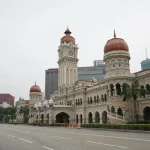
📷 Featured image by Job Savelsberg on Unsplash.