On this page
Most visitors land in Kuala Lumpur with the same question: do I need to buy a card, download an app, or just tap and go? Ticketing advice online is often out of date, and some of it still describes tokens and cash queues. In 2026 the answer is simpler than it used to be. The MRT, run by Rapid Rail under the RapidKL brand, is clean, air-conditioned and easy to use once you know which lines matter and how to pay.
What the MRT Covers in 2026
The MRT works alongside the LRT and the Monorail to form KL’s rail Network. For visitors, two MRT lines are open and one is still being built.
- Kajang Line (MRT1): Fully operational since 2017. It runs from Kwasa Damansara to Kajang and has 31 stations. It passes through central KL, including Bukit Bintang, Pasar Seni and Muzium Negara.
- Putrajaya Line (MRT2): Fully operational since March 2023. It connects Kwasa Damansara to Putrajaya Sentral and has 36 stations. It links you to Putrajaya, the administrative capital, and meets the Kajang Line at Tun Razak Exchange (TRX).
- Circle Line (MRT3): Still under construction in 2026. It is not expected to be fully open to the public until 2030 or later, so do not plan any itinerary around it.
In practice, you only need the Kajang Line and the Putrajaya Line. Together they reach most of the places tourists want to see.
Paying for Your Ride: Cards, Phones and Contactless
RapidKL strongly encourages cashless payment across the MRT, LRT, Monorail and RapidKL buses. You have several options, and the best one depends on how long you are staying.
Contactless Visa or Mastercard
This is the easiest choice for most visitors. By 2026, all RapidKL gates on the MRT, LRT and Monorail accept direct contactless payments from Visa and Mastercard credit and debit cards. Tap your bank card on the turnstile reader when you enter, and tap the same card when you exit. The fare comes out of your account. Make sure the card shows the contactless symbol.
Touch ‘n Go card
The physical Touch ‘n Go card is a reloadable contactless smart card and still the most common way locals pay. The card costs MYR 10.00 and comes with no stored value. You can buy it at LRT, MRT and Monorail customer service counters, at convenience stores such as 7-Eleven and MyNews, and at petrol stations. Top up at customer service counters, self-service kiosks or convenience stores. You can also top up through the Touch ‘n Go eWallet app on an NFC-enabled phone. More information is at www.touchngo.com.my.

The MyRapid Touch ‘n Go Card is a co-branded version marketed to RapidKL users. It works the same way as a standard card, and tourists will see no difference in use or fares.
Touch ‘n Go eWallet app
You can pay by generating a QR code in the app to scan at QR-enabled gates. You can also use the “Pay with Wallet” feature by tapping your phone where NFC is supported. The rollout is still ongoing, so not every gate may support it. Carry a backup payment method.
Single-journey tokens and concession cards
Tokens are sold at ticket vending machines and are valid for one trip only. They are less common now because cashless options are so widespread. Concession cards are for eligible Malaysian citizens, such as senior citizens, students and disabled persons, so tourists are generally not eligible.
Fares and a 2026 Budget
MRT fares are distance-based. The minimum fare typically starts around MYR 1.00 to MYR 1.50 for short distances and rises with each station you travel. These are approximate 2026 examples:
- Bukit Bintang to Pasar Seni (2 stations): MYR 1.80 to MYR 2.20
- Muzium Negara to TRX (3 stations): MYR 2.00 to MYR 2.50
- Kwasa Damansara to Kajang (the full Kajang Line): MYR 5.00 to MYR 6.00
The My50 unlimited pass is mainly for Malaysian citizens and often requires linking to a MyKad. Tourist-specific MRT passes are uncommon in 2026, because the focus is on contactless payment.
Daily MRT budget tiers (MRT portion only)
- Budget: Use your own contactless bank card and skip buying a Touch ‘n Go card. Four short rides at about MYR 1.80 to MYR 2.20 each comes to roughly MYR 7 to MYR 9 a day.
- Mid-range: Buy the MYR 10.00 Touch ‘n Go card once, then make about six rides at MYR 1.80 to MYR 2.50 each. That is roughly MYR 11 to MYR 15 a day, plus the one-off card cost.
- Comfortable: Take the MRT for the main corridors, including one long ride on the Kajang Line (MYR 5.00 to MYR 6.00) plus a few short hops, and use Grab for late nights or awkward last-mile trips. The MRT part runs about MYR 12 to MYR 15 a day, and Grab fares are shown in the app before you confirm.
Step-by-Step: Your First MRT Trip
- Plan the route. Open the MyRapid PULSE app (iOS and Android) or Google Maps. PULSE shows real-time train arrivals, station information and journey planning for all RapidKL services. The official site is www.myrapid.com.my.
- Enter the station. Tap your Touch ‘n Go card or contactless bank card on the reader at the turnstile. The gate opens.
- Find the platform. Signs show the line name and direction, for example “Kajang Line – Towards Kajang.”
- Board. Stand behind the yellow safety line and let passengers get off first.
- Exit. Follow the exit signs and tap the same card at the exit turnstile. The correct fare is deducted and the gate opens.

When you step down into the station from the humid street, the first thing you notice is the cool, dry air-conditioning. Announcements play in both Malay and English, and RapidKL staff generally understand English, so asking for help is easy. Most MRT stations have lifts and escalators, which makes them workable with luggage or limited mobility.
Operating Hours and Train Frequency
The MRT runs generally from 6:00 AM to midnight daily. Frequency changes through the day:
- Peak hours (Mon to Fri, 7:00 AM to 9:00 AM and 5:00 PM to 7:00 PM): a train every 3 to 5 minutes.
- Off-peak hours: a train every 7 to 10 minutes.
- Weekends and public holidays: a train every 7 to 10 minutes.
Trains get crowded in the weekday peaks. If your schedule is flexible, travel between the two rush windows.
Stations That Matter for Visitors
On the Kajang Line
- Pasar Seni: Interchange with the LRT Kelana Jaya Line. It gives direct access to Central Market, Petaling Street (Chinatown) and the Sri Mahamariamman Temple. Dataran Merdeka (Independence Square) is close by.
- Muzium Negara: A direct underground link to KL Sentral, which connects to KTM Komuter, KLIA Ekspres and KLIA Transit, the LRT and the Monorail. It also serves the National Museum.
- Bukit Bintang: The heart of KL’s shopping and entertainment district, with an interchange to the KL Monorail. Pavilion KL, Starhill Gallery and Fahrenheit88 are nearby. Come up at dusk and you are close to Jalan Alor, where the smell of charcoal grills and sizzling noodles drifts down the street.
- TRX (Tun Razak Exchange): The interchange with the Putrajaya Line. It is a financial hub with new luxury shopping and dining.
- Cochrane: Access to MyTOWN Shopping Centre and IKEA Cheras.

On the Putrajaya Line
- TRX: Switch here to or from the Kajang Line.
- Ampang Park: Interchange with the LRT Kelana Jaya Line. You can reach Suria KLCC by the covered pedestrian walkway from KLCC LRT station, which is a relief on a hot or rainy afternoon.
- Putrajaya Sentral: Connects to Putrajaya and Cyberjaya by feeder buses and KLIA Transit.
Connecting to Other Transport
The MRT is well integrated with the rest of KL’s network, so transfers are straightforward.
- LRT: Interchanges include Pasar Seni, Masjid Jamek and Ampang Park. Payment is unified, so the same Touch ‘n Go card or contactless bank card works.
- KL Monorail: Interchanges at Bukit Bintang and Hang Tuah, also with unified payment.
- KTM Komuter: Connects at KL Sentral (via Muzium Negara MRT), Putra and Bank Negara. Komuter accepts Touch ‘n Go cards at the gates, and single-journey tokens are also available. See www.ktmb.com.my.
- KTM ETS: This is the long-distance intercity service, for example KL to Ipoh to Penang, and it leaves from KL Sentral. Tickets are bought separately, usually online or at the counter, and are not part of RapidKL payment.
- RapidKL buses: They feed MRT and LRT stations and cover areas without rail. Pay with a Touch ‘n Go card or a contactless bank card. MyRapid PULSE shows routes and schedules.
- KLIA Ekspres and KLIA Transit: These run from KL Sentral to KLIA Terminal 1 and Terminal 2, with a separate ticketing system. Details are at www.kliaekspres.com.
- Grab: Useful for first and last mile, late-night trips or places off the rail map. Download the Grab app, register and book. Fares show upfront. See www.grab.com/my/.
- Long-distance buses: The main intercity terminal is Terminal Bersepadu Selatan (TBS). Reach it through Bandar Tasik Selatan station, then a short walk or shuttle, or by KTM Komuter. Check the exact route in MyRapid PULSE.
- Domestic flights: AirAsia (www.airasia.com) and Malaysia Airlines (www.malaysiaairlines.com) serve other parts of Malaysia, such as Borneo and Penang, from KLIA.
- Ferries: Langkawi ferries depart from Kuala Perlis or Kuala Kedah, which you reach from KL by long-distance bus or KTM ETS.

Common Mistakes to Avoid
- Buying a card you do not need. If you only stay a few days, your contactless Visa or Mastercard may be enough. The MYR 10.00 card has no stored value, so factor in top-ups too.
- Assuming the MRT goes to the airport. It does not. Ride to Muzium Negara, walk through to KL Sentral, then take KLIA Ekspres or KLIA Transit, which use separate tickets.
- Expecting ETS tickets to work on RapidKL cards. Intercity trains are a separate booking.
- Relying only on eWallet QR codes. The rollout is ongoing, so keep a card as backup.
- Counting on the Circle Line. Guides that mention MRT3 as available are wrong for 2026.
- Travelling at the peak hours with luggage. Between 7:00 AM and 9:00 AM and 5:00 PM and 7:00 PM, trains fill up. Wait for a quieter window or use Grab.
- Ignoring your belongings. Stations and trains are generally safe, but stay aware of your surroundings in crowds.
- Planning a late return. Service generally ends at midnight, so have Grab ready for later nights.
Frequently Asked Questions
Can tourists use a contactless credit card on the KL MRT?
Yes. By 2026, all RapidKL gates on the MRT, LRT and Monorail accept contactless Visa and Mastercard credit and debit cards. Tap the same card at entry and exit, and the fare is deducted from your account. Check that your card has the contactless symbol and that your bank allows overseas payments.
How much does the MRT cost in Kuala Lumpur?
Fares are distance-based, starting around MYR 1.00 to MYR 1.50 for short trips. Bukit Bintang to Pasar Seni costs roughly MYR 1.80 to MYR 2.20, and the full Kajang Line from Kwasa Damansara to Kajang is about MYR 5.00 to MYR 6.00. These are approximate 2026 figures.
What time does the KL MRT run?
Generally from 6:00 AM to midnight daily. Trains arrive every 3 to 5 minutes during weekday peaks (7:00 AM to 9:00 AM and 5:00 PM to 7:00 PM) and every 7 to 10 minutes off-peak, on weekends and on public holidays. For trips after midnight, Grab is the practical option.
Does the MRT go to KLIA airport?
No. Take the MRT to Muzium Negara, which links underground to KL Sentral, then board KLIA Ekspres or KLIA Transit to Terminal 1 or Terminal 2. These airport trains use a separate ticketing system, so check www.kliaekspres.com for current details before you travel.
Is the MRT Circle Line open in 2026?
No. The MRT3 Circle Line is still under construction in 2026 and is not expected to open fully for public use until 2030 or later. Visitors only need the Kajang Line (MRT1) and Putrajaya Line (MRT2), which cover the main tourist areas. Expect some road works near construction zones in central KL.
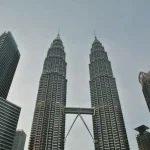
📷 Featured image by Amar Syazwan Rosman on Unsplash.