On this page
- The Core Difference Between Perhentian Besar and Perhentian Kecil
- Best Beaches on Each Island — Where You Actually Want to Lay Your Towel
- Snorkelling and Diving — Which Island Has Better Access to Marine Life
- Food, Nightlife, and Social Scene — What to Expect After Sunset
- Accommodation Options and 2026 Budget Reality
- Getting to the Perhentians in 2026 — Ferries, Speedboats, and Practicalities
- Day Trip or Overnight? How Long You Actually Need
- Frequently Asked Questions
💰 Click here to see Malaysia Budget Breakdown
💰 Prices updated: October, 2026. Budget figures are estimates — always verify before travel.
Exchange Rate: $1 USD = RM4.08
Daily Budget (per person)
Shoestring: RM100.00 – RM180.00 ($24.51 – $44.12)
Mid-range: RM250.00 – RM450.00 ($61.27 – $110.29)
Comfortable: RM500.00 – RM1,000.00 ($122.55 – $245.10)
Accommodation (per night)
Hostel/guesthouse: RM30.00 – RM60.00 ($7.35 – $14.71)
Mid-range hotel: RM110.00 – RM200.00 ($26.96 – $49.02)
Food (per meal)
Budget meal: RM15.00 ($3.68)
Mid-range meal: RM35.00 ($8.58)
Upscale meal: RM100.00 ($24.51)
Transport
Single metro/bus trip: RM2.00 ($0.49)
Monthly transport pass: RM50.00 ($12.25)
Planning a trip to the Perhentian Islands in 2026 means facing one immediate question: Besar or Kecil? The islands sit close enough together that you can see one from the other, yet they deliver genuinely different experiences. With the Marine Park’s revised entry and snorkelling fees introduced in late 2025 now fully in effect, and a handful of new resort openings changing the accommodation picture on both islands, the comparison has shifted enough that old advice doesn’t always hold.
The Core Difference Between Perhentian Besar and Perhentian Kecil
The names say it all in Malay — Besar means big, Kecil means small. But size is the least interesting difference between the two.
Perhentian Besar is the quieter, more spread-out island. It draws couples, families, and divers who want comfortable chalets, relatively uncrowded beaches, and early nights. The pace is genuinely slow. Resorts here tend to have generators that cut off by midnight, which tells you everything about the crowd they attract.
Perhentian Kecil is where the backpacker and younger traveller energy concentrates. Long Beach (Pantai Panjang) is the island’s social hub — a strip of budget chalets, restaurants with plastic chairs, and travellers comparing dive certificates over fruit shakes. It’s louder, cheaper on average, and more likely to have someone organising a bonfire at 10pm.
Neither island is better in an absolute sense. The right choice depends entirely on what kind of trip you want.
Best Beaches on Each Island — Where You Actually Want to Lay Your Towel
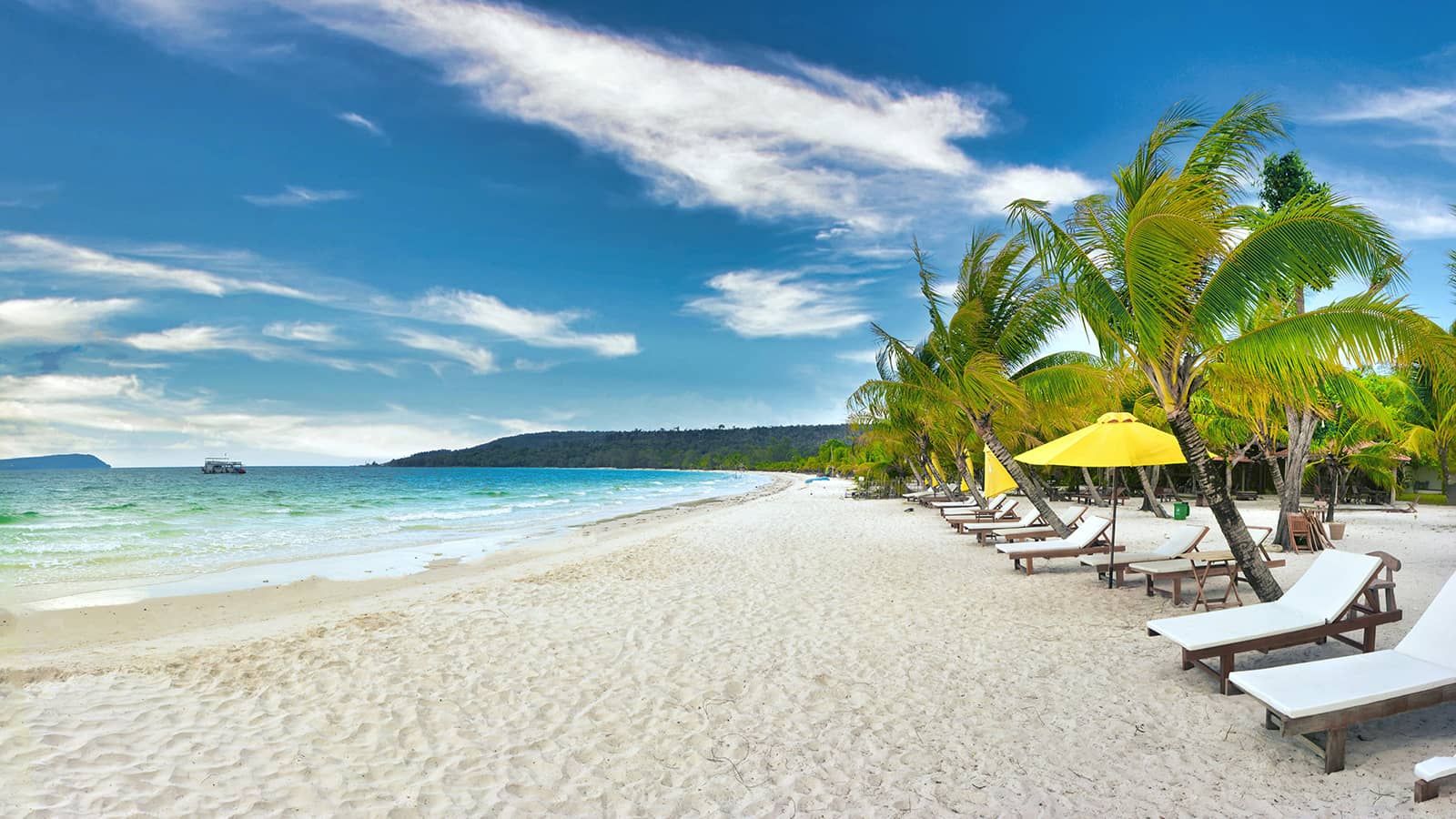
On Perhentian Besar, the standout beach is Teluk Pauh (also called Turtle Bay). The sand here is powdery white and the bay curves in a gentle arc that blocks wind from most directions. Mornings are calm enough that you can see the seabed through the shallows without snorkelling gear. The trees fringing the beach provide real shade by mid-afternoon, which matters more than people expect in 34°C heat. The main beach in front of the larger resorts is also pleasant but gets boat traffic from speedboat transfers, which breaks the quiet.
On Perhentian Kecil, Long Beach is the crowd favourite — a long stretch of golden sand facing the open South China Sea. It catches a breeze and the sunsets from here are genuinely beautiful, with the light turning the water orange and the silhouettes of wooden fishing boats drifting past. The trade-off is that Long Beach faces the swell side of the island, so waves can get rough and swimming is sometimes unsafe. Coral Bay (Teluk Aur) on the western side of Kecil is calmer and better for swimming, though the beach itself is shorter and gets busier at the water’s edge.
If beach quality alone is your deciding factor, Besar edges ahead. If you want beach atmosphere and the feeling of something happening around you, Kecil wins.
Snorkelling and Diving — Which Island Has Better Access to Marine Life
The Perhentians sit inside a Marine Park, and both islands have excellent reefs within swimming or short boat distance. The Marine Park Conservation Fee is MYR 30 per person per entry as of 2026 — pay this at the jetty or through your accommodation.
For snorkelling, Perhentian Kecil has a slight edge in convenience. The house reef at Coral Bay has sea turtles that feed on the seagrass with almost reliable frequency in the morning — slip in quietly before 8am and you’re likely to share the water with at least one. The visibility is rarely below 10 metres when the sea is calm.
For scuba diving, Perhentian Besar has more established dive centres with better facilities and slightly more serious instructors catering to advanced divers. Sites like D’Lagoon, reachable by boat from Besar, regularly see blacktip reef sharks and large schools of barracuda. Both islands have PADI Open Water courses, typically ranging from MYR 800 to MYR 1,100 depending on the operator and whether equipment rental is bundled.
In practical terms, the reef quality between both islands is comparable — you are, after all, in the same marine park. The difference is access: Kecil makes snorkelling easy from shore, while Besar better serves those who want structured dive trips.
Food, Nightlife, and Social Scene — What to Expect After Sunset
Food on both islands is beach-shack simple — grilled fish, fried rice, pasta, and the kind of banana pancake that every backpacker Southeast Asia trail seems to require by law. Prices on Kecil’s Long Beach are slightly lower because competition is higher with more restaurants clustered together.
On Kecil, the evening social scene at Long Beach is genuinely lively. Restaurants push tables toward the sand, someone inevitably has a guitar, and it’s easy to end up talking to strangers over cold Carlsberg (yes, alcohol is available at the resort restaurants on both islands, though no dedicated bars exist). The smell of grilling satay and fresh-cut pineapple drifts along the beach as the sun drops — it’s exactly the kind of unpretentious tropical evening that keeps travellers coming back to Malaysia.
On Besar, after dinner is quieter. The larger resorts have their own restaurants, the music volume stays modest, and by 10pm most guests are back in their chalets. This suits couples and families perfectly. It’s not dull — it’s intentional. The reward is waking up at 6am to a beach that’s entirely yours, with nothing louder than waves and the occasional kingfisher.
Accommodation Options and 2026 Budget Reality
Both islands operate on a cash-heavy economy. Bring enough ringgit from the mainland — ATMs do not exist on either island, and card readers are inconsistent even at mid-range resorts.
Perhentian Kecil
- Budget: Fan-only dorm beds or basic chalets from MYR 50–90 per night. Long Beach has the highest concentration of these.
- Mid-range: Air-conditioned chalets with en-suite bathroom, MYR 150–250 per night. Quality varies — check that the AC unit is newer before committing.
- Comfortable: The better-appointed guesthouses on Coral Bay side, MYR 280–400 per night, offer more privacy and sea views without going full resort.
Perhentian Besar
- Budget: Basic fan chalets start around MYR 80–120, fewer options than Kecil.
- Mid-range: Resort-style rooms with pool access, MYR 250–450 per night. Several resorts here were refurbished in 2024–2025.
- Comfortable: The higher-end properties on Besar reach MYR 500–700 per night in peak season, which is among the most expensive accommodation in inland coastal Malaysia outside of Langkawi.
Meals on both islands run MYR 15–35 per person per sitting at restaurant level. Bottled water, sunscreen, and snorkelling gear rental add up — budget MYR 50–80 per day for extras beyond accommodation and food.
Getting to the Perhentians in 2026 — Ferries, Speedboats, and Practicalities
The gateway is Kuala Besut in Terengganu, roughly 400 kilometres northeast of Kuala Lumpur. The journey involves a combination of road and sea travel — there are no direct flights to the islands themselves.
From KL, the most common route in 2026 is taking the ETS train from KL Sentral to Wakaf Baharu station (journey time approximately 5–6 hours, from MYR 59 one-way in second class). From Wakaf Baharu, grab a taxi to Kuala Besut jetty — around 30 minutes, MYR 20–30 per car. Speedboats from Kuala Besut to the islands run roughly MYR 35–45 per person one way, with departures concentrated in the morning (7am–1pm) and afternoon (3pm–5pm). The crossing takes 30–45 minutes depending on sea conditions.
Speedboats dock at both islands — tell the operator which one you want. If you want to visit both during your trip, inter-island water taxis run MYR 15–25 per person and operate throughout the day.
The islands close to visitors from November through February due to monsoon season. The 2026 opening date was 1 March, consistent with recent years. Peak season is mid-June through August — expect fully booked accommodation if you haven’t reserved at least 6 weeks ahead.
Day Trip or Overnight? How Long You Actually Need
A day trip to the Perhentians is technically possible but genuinely not worth the effort. The speedboat schedule alone eats two hours of your day each way, and the Marine Park fee applies regardless of how long you stay. Coming all this way for four or five hours on a beach is a waste of a journey this good.
The minimum worthwhile stay is two nights. That gives you one full day to explore beaches and snorkel, and a second morning before the afternoon boat back. Most travellers who plan for two nights end up wishing they had booked three or four.
If you are visiting both islands, allow at least one night on each. The inter-island transfer is easy, and having a full sunset on Long Beach followed by a quiet morning on Besar is one of the better ways to experience the contrast.
A week on the Perhentians is not unusual for travellers doing a dive course, which typically runs three days of water time plus classroom sessions.
Frequently Asked Questions
Which Perhentian island is better for families with children?
Perhentian Besar is generally better for families. The calmer beaches, quieter evenings, and more spacious resort-style accommodation suit parents travelling with young children. The sea at Teluk Pauh is shallow enough for confident child swimmers to enjoy without strong currents, especially in the morning before midday winds pick up.
Can you visit both Perhentian Besar and Perhentian Kecil on the same trip?
Yes, easily. Inter-island water taxis run throughout the day and cost MYR 15–25 per person. Most travellers split their stay across both islands. Pack light — you’ll carry your own bag between accommodations, and paths on both islands are sandy, uneven, and sometimes steep.
Is there Wi-Fi and phone signal on the Perhentian Islands?
Mobile signal is patchy on both islands in 2026. Some resorts offer Wi-Fi that works adequately for messaging but not video calls. Expect to be largely offline, particularly on Besar. Most travellers treat this as a feature rather than a problem — the Perhentians are genuinely one of Malaysia’s best places to disconnect.
What is the best time of year to visit the Perhentian Islands?
The islands are open from March through October. The calmest sea conditions and best underwater visibility occur from late May through August. July and August are peak months — busiest and most expensive. March–April and September–October offer good weather with fewer crowds and slightly lower accommodation rates.
Do I need to book accommodation in advance for the Perhentians?
During peak season (July–August), advance booking is essential — popular chalets and mid-range resorts fill up weeks ahead. In shoulder season (March–May, September–October), walk-in options exist but are limited, particularly on Besar. Budget places on Kecil’s Long Beach are most likely to have last-minute availability year-round.
📷 Featured image by Amir Azhad on Unsplash.