On this page
- Penang Still Has the Element of Surprise
- Walking the UNESCO Core: George Town’s Living Heritage Streets
- Street Art Hunting: More Than Just the Iron Boy
- The Temple & Mosque Circuit: Penang’s Spiritual Landmarks
- Penang Hill and the Island’s Green Escapes
- Beaches and Water Experiences Worth Your Time
- Where to Eat: Penang’s Real Food Trail
- Cultural Workshops and Hands-On Experiences
- Night Markets and Penang After Dark
- Day Trips Worth Making from Penang
- Shopping in Penang: Where the Good Stuff Actually Is
- Getting Around Penang in 2026
- 2026 Budget Breakdown: What Penang Costs Now
- Frequently Asked Questions
💰 Click here to see Malaysia Budget Breakdown
💰 Prices updated: August, 2026. Budget figures are estimates — always verify before travel.
Exchange Rate: $1 USD = RM4.03
Daily Budget (per person)
Shoestring: RM100.00 – RM200.00 ($24.81 – $49.63)
Mid-range: RM180.00 – RM400.00 ($44.67 – $99.26)
Comfortable: RM450.00 – RM1,300.00 ($111.66 – $322.58)
Accommodation (per night)
Hostel/guesthouse: RM20.00 – RM70.00 ($4.96 – $17.37)
Mid-range hotel: RM100.00 – RM350.00 ($24.81 – $86.85)
Food (per meal)
Budget meal: RM15.00 ($3.72)
Mid-range meal: RM35.00 ($8.68)
Upscale meal: RM100.00 ($24.81)
Transport
Single metro/bus trip: RM2.00 ($0.50)
Monthly transport pass: RM150.00 ($37.22)
Penang Still Has the Element of Surprise
Most travelers arrive thinking they know what Penang is: UNESCO heritage streets, street art, and great food. They’re right about all three — but in 2026, the island has grown well past that postcard version. New funicular service upgrades on Penang Hill, a refreshed Rapid Penang bus network with real-time tracking through the MyPenang Go app, and a surge of independent creative spaces opening in the quieter corners of George Town mean there’s more to navigate than ever. If your last visit was pre-2024, a lot has changed. This guide covers 25 genuinely unmissable experiences — from the iconic to the overlooked — so you get the full picture of what makes Penang one of Southeast Asia’s most layered destinations.
Walking the UNESCO Core: George Town’s Living Heritage Streets
George Town’s UNESCO World Heritage Site status, earned in 2008, could have turned the old city into a polished museum. It didn’t. The streets between Lebuh Armenian, Lebuh Chulia, Jalan Masjid Kapitan Keling, and Lebuh Pantai are still genuinely lived in — shophouses that sell joss sticks on the ground floor have families sleeping upstairs, and the narrow five-foot ways still smell of incense, drains, and frangipani in equal measure.
- Cheong Fatt Tze Mansion (The Blue Mansion) — The indigo-walled 19th-century townhouse on Lebuh Leith is one of the finest examples of Chinese baroque architecture in the world. Take the guided tour (MYR 22 per person in 2026) to understand the feng shui logic built into every corridor.
- Khoo Kongsi — The grandest clan house in Penang, with a courtyard that opens for free viewing. The ornate roof ridge, packed with ceramic dragons and immortal figures, is extraordinary up close.
- Lebuh Armenian — One of the most photogenic streets in Malaysia. Walk it slowly in the morning before the tour groups arrive, when the shadows are long and the coffee shops are just opening their wooden shutters.
- Fort Cornwallis — The 18th-century star-shaped fort at the seafront. It’s not huge, but the cannons and historical panels give context to George Town’s founding under Francis Light.

Allow at least half a day for a serious walking tour of the heritage core. The streets are compact enough to cover on foot, but dense enough in detail that rushing feels like a waste.
Street Art Hunting: More Than Just the Iron Boy
The famous Ernest Zacharevic murals — the boy on the bicycle, the children on a swing — are still here and still worth seeing. But treating them as the beginning and end of Penang’s street art scene in 2026 means missing about 80% of the picture. The island now has over 200 documented public art pieces, ranging from large-scale wall murals in Kampung Malabar to wrought-iron caricature plaques mounted at the sites they reference.
- The wrought-iron rod caricatures — small, witty, and attached to walls throughout the heritage zone — tell local history in cartoon form. Finding them all is genuinely fun and takes a full morning.
- Hin Bus Depot on Jalan Gurdwara operates as a full creative arts hub, with rotating outdoor murals, installations, independent studio spaces, a café, and a weekend market. This isn’t a tourist attraction — it’s where Penang’s arts scene actually lives.
- The Cannon Street and Ah Quee Street corridor added several new large-format pieces in 2024–2025. These are less photographed and more experimental than the Zacharevic originals.

Pick up a free street art map from the Penang Global Tourism office near Fort Cornwallis, or use the George Town Street Art Trail function on the MyPenang Go app to navigate between pieces without backtracking.
The Temple & Mosque Circuit: Penang’s Spiritual Landmarks
Few places in Malaysia pack this many significant religious sites into such a walkable area. The stretch along Jalan Masjid Kapitan Keling — sometimes called the “Street of Harmony” — places a Sunni mosque, a Hindu temple, a Chinese temple, and a Christian cathedral within a few hundred metres of each other. That’s not a tourist arrangement. These buildings have coexisted on the same street for nearly two centuries.
- Sri Mahamariamman Temple — One of the oldest Hindu temples in Penang, with a towering gopuram (entrance tower) covered in multicoloured deity sculptures. Remove shoes before entering.
- Masjid Kapitan Keling — Built in 1801 by Indian Muslim merchants. The whitewashed Mughal-style dome is best seen from across the street in early morning light.
- Goddess of Mercy Temple (Kuan Yin Teng) — The most visited Chinese temple in Penang. The smell of burning incense is thick and constant, and worshippers come throughout the day. The chaos is the point.
- Kek Lok Si Temple on Air Itam hillside is Southeast Asia’s largest Buddhist temple complex. The seven-storey pagoda, bronze Kuan Yin statue, and the panoramic views over Georgetown make it a half-day visit. Take the free funicular up to the statue platform.
- Penang Snake Temple in Bayan Lepas — dedicated to Chor Soo Kong, the temple really does have pit vipers resting on the altars. Less dramatic than the name suggests, but genuinely strange.
Penang Hill and the Island’s Green Escapes
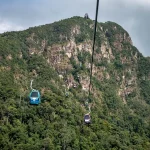
At 833 metres above sea level, Penang Hill (Bukit Bendera) is the island’s highest point and one of its most underused experiences. The funicular railway — upgraded significantly in 2024 — now runs Swiss-built cars with larger capacity and better frequency, cutting wait times that used to stretch to 45 minutes on weekends. The temperature at the summit sits around 20–25°C when the city below is sweltering at 34°C, and on clear mornings, the view over George Town and the mainland is genuinely breathtaking.

- The David Brown’s Restaurant & Tea Terraces at the summit serves proper colonial-era high tea. Sitting on the terrace with a pot of local tea while looking across the Strait of Malacca at sunset is one of Penang’s quiet highlights.
- The Habitat eco-park on Penang Hill runs guided treetop walks, a canopy walk at 130 metres elevation, and night walks with guided wildlife spotting. Entry is MYR 65 for adults in 2026.
- Penang National Park at Teluk Bahang — Malaysia’s smallest national park — covers the northwestern tip of the island. Jungle trails lead to Monkey Beach (Teluk Duyung) and Turtle Beach (Pantai Kerachut), both accessible only on foot or by boat.
If you have fitness and the right shoes, the Penang Hill jungle trail (Moon Gate Trail) through the rainforest to the summit takes 2–3 hours and rewards hikers with hornbill sightings and a far less crowded arrival at the top.
Beaches and Water Experiences Worth Your Time
Penang’s beaches aren’t the turquoise-postcard type you get in Langkawi or the Perhentians, and it’s better to know that before you arrive. The water is warmer and murkier due to coastal traffic. That said, the beach scene here has its own energy.
- Batu Ferringhi is the island’s main beach strip, about 12 kilometres from George Town. The beach itself is decent — wide, reasonably clean, and lined with coconut palms. At night, it transforms into a buzzing night market. Water sports operators here offer jet skiing, parasailing, and banana boat rides throughout the day.
- Monkey Beach (Teluk Duyung) inside Penang National Park is the island’s best beach. It’s accessible by a 45-minute jungle trek or a 15-minute boat ride from Teluk Bahang jetty (MYR 25–35 per person return in 2026). The water is clearer, the beach is quieter, and there are no hotels. Bring water and snacks.
- Kerachut Beach is even more remote — a longer trail from the park entrance — and doubles as a green turtle nesting site. Sightings are seasonal (May to September).

Where to Eat: Penang’s Real Food Trail
Penang food is the reason many Malaysians from KL, Johor, and Sabah will make a dedicated trip just to eat. The hawker culture here is dense, competitive, and genuinely excellent. This is where to go, not what to order — that part you’ll figure out from the steam and the crowds.
- New Lane Hawker Centre (Lorong Baru) — Opens only in the evening. By 7pm, the plastic tables fill quickly with locals eating their way through rows of stalls. This is one of the most authentic hawker experiences left in George Town.
- Gurney Drive Hawker Centre — The most famous in Penang, rebuilt and relocated in recent years. Larger, slightly more tourist-facing than New Lane, but the quality of the stalls remains high. The seafront setting is a bonus.
- Chowrasta Market on Jalan Penang — The ground floor wet market gives way to a food hall upstairs. The morning breakfast scene here is pure Penang: thick kopi in ceramic cups, newspapers spread on formica tables, and ceiling fans doing their best work.
- Kimberley Street — One of the most concentrated food streets in George Town, best after 6pm. Several stalls here have been run by the same families for three or four generations.
- Penang Road Famous Cendol — The queue at this stall on Lebuh Keng Kwee is always there for a reason. The shaved ice with green pandan jelly, palm sugar, and coconut milk hits differently in 33°C heat.
- Pulau Tikus market area — The residential neighbourhood of Pulau Tikus (around Jalan Burma) has a cluster of old-school kopitiam and hawker stalls that cater almost entirely to locals. Less Instagrammed, more honest.

Cultural Workshops and Hands-On Experiences
George Town has a growing scene of participatory cultural experiences that go well beyond looking at old buildings. These give you something to do with your hands and a different kind of memory to bring home.
- Clan jetties (Chew, Tan, Lee, and others) — These wooden stilt villages jutting into the sea off Pengkalan Weld are still inhabited by descendants of Chinese immigrant clans. Chew Jetty is the largest and most visited; the others are quieter and equally interesting. Walking them at dusk, when the lamps come on and laundry flaps between the houses, is a privilege that still feels real rather than staged.
- Batik painting workshops — Several studios around Lebuh Armenian and Hin Bus Depot run 2–3 hour batik workshops. Prices range from MYR 80–150 per person depending on the complexity of the design.
- Peranakan cooking classes — Nonya (Peranakan Chinese) cuisine is specific to Penang and Melaka. A handful of instructors in George Town run small-group classes (MYR 150–250 per person) teaching dishes using recipes that have been in their families for generations.
- Trishaw rides (beca) — A 30-minute trishaw tour around the heritage core costs approximately MYR 40–60 in 2026. The decorative, flower-adorned trishaws are unashamedly touristy, but the pace is perfect for absorbing the streetscapes.
- Penang Peranakan Mansion — A private museum on Church Street packed with Straits Chinese antiques, furniture, and jewellery. Better curated than it looks from the outside. Entry MYR 25 in 2026.

Night Markets and Penang After Dark
Penang’s night markets aren’t secondary to the daytime experience — in many ways, they’re the headline act. The island cools down slightly after 7pm, the streets fill up, and the food gets better.
- Batu Ferringhi Night Market — Runs every night along the beach road from roughly 7pm. Clothing, accessories, crafts, and plenty of questionable electronics. It’s lively, occasionally overpriced, and worth a browse.
- Penang Road Night Pasar — The stretch of Penang Road and its side lanes becomes a pedestrian food and shopping corridor on weekend nights. This is the one that locals actually use.
- Pulau Tikus Saturday Night Market — A more neighbourhood-scale pasar malam along Jalan Pasar. Food quality is higher, tourist density is lower.
- For a drink with a view, the rooftop bars in the heritage hotels along Lebuh Farquhar and the bar scene developing around Love Lane give George Town a proper evening dimension that didn’t exist a decade ago.
- Straits Quay in Tanjung Tokong hosts live music most weekends — a marina-fronted entertainment strip aimed at families and couples, with a more relaxed atmosphere than the city centre.
Day Trips Worth Making from Penang
The island’s location in northern Malaysia makes it a strong base for short excursions. These three are genuinely worth your time.
Langkawi
Langkawi is 90 minutes by high-speed ferry from Swettenham Pier in George Town (MYR 80–120 return in 2026, depending on operator). The duty-free island offers dramatically clearer beaches, island-hopping tours, a spectacular cable car, and the Langkawi Geopark UNESCO site. Plan a minimum of two nights if you go.
Taiping, Perak
About 90 minutes by bus or car from Penang, Taiping is one of Malaysia’s most historically layered towns. The colonial-era Taiping Lake Gardens (Malaysia’s oldest public gardens), the excellent Perak Museum, and a distinctly slower pace than Penang make it a rewarding day trip. The town also has serious hawker food credentials that most tourists never discover.

Bukit Mertajam and Butterworth
Butterworth sits directly across the Penang Strait — a 10-minute RM 1.20 ferry ride from the Georgetown ferry terminal. The mainland town of Bukit Mertajam, 20 minutes further, has a genuinely local food scene including hawker stalls that some Penangites consider better than the island’s own. A half-day trip requiring no accommodation.
Shopping in Penang: Where the Good Stuff Actually Is
- Chowrasta Market (Pasar Chowrasta) on Jalan Penang — The go-to for Penang’s famous dried goods: nutmeg products, dried cuttlefish, prawn paste (belacan), and pickled fruits. Prices are lower here than in tourist-facing shops.
- Little India (Lebuh Pasar) — Textiles, jasmine garlands, gold jewellery, and spices. The density of colour and the sound of Tamil pop from shop speakers makes it one of the most sensory streets in George Town.
- Penang Road — The main shopping drag, mixing independent boutiques, souvenir shops, and older sundry stores. Touristy, but several shops here sell quality Peranakan ceramics, batik, and locally designed merchandise that you won’t find elsewhere.
- Gurney Plaza and Gurney Paragon — Penang’s most upmarket malls, side by side on Gurney Drive. International brands, a good food court, and a proper supermarket for self-catering supplies.
- Prangin Mall and Komtar — The more local, budget-friendly end of mall shopping. Komtar’s observation deck (Rainbow Skywalk) on the 65th floor is worth the MYR 35 entry fee for the panoramic view over the island.
Getting Around Penang in 2026
Penang doesn’t have an MRT or LRT — the long-discussed Penang Light Rail Transit project is still in its infrastructure development phase as of 2026, with the first line not expected to open before 2028. For now, getting around works like this:

- Grab — The most practical option for most visitors. Reliable, air-conditioned, and relatively affordable. A ride from George Town to Batu Ferringhi costs approximately MYR 20–30 depending on time of day.
- RapidPenang Bus — Significantly improved in 2025 with real-time GPS tracking via the MyPenang Go app. Route 101 connects Komtar (George Town) to Batu Ferringhi. Route 204 covers the airport connection. Fares are MYR 1.40–4.00 depending on distance.
- Penang Ferry — The Penang–Butterworth ferry runs from early morning to late night. The crossing takes 10 minutes and costs MYR 1.20 (island-bound trips are free). This is still one of Asia’s great short water crossings and worth doing at least once for the skyline view of George Town.
- Walking — George Town’s heritage core is best covered entirely on foot. Most key sites are within a 2–3 km radius of each other.
- Bicycle rental — Available from several shops along Lebuh Chulia for MYR 15–25 per day. Useful for exploring the quieter residential streets south of the main tourist zone.
- Airport transfers — Penang International Airport is in Bayan Lepas, about 16 km south of George Town. Grab takes 25–35 minutes and costs MYR 25–45. RapidPenang Route 401E connects the airport to Komtar for MYR 4.00.
2026 Budget Breakdown: What Penang Costs Now
Penang remains one of Malaysia’s best-value destinations, though prices in George Town’s tourist zone have climbed noticeably since 2023. Here’s an honest daily budget breakdown for 2026.
Budget Traveler — MYR 100–160/day
- Accommodation: Hostel dorm or basic guesthouse on Lebuh Chulia — MYR 35–60/night
- Food: Hawker stalls and kopitiam — MYR 25–40/day for three solid meals
- Transport: RapidPenang bus and walking — MYR 5–10/day
- Attractions: Most street art and temples are free; budget MYR 20–30 for one paid attraction
Mid-Range Traveler — MYR 280–450/day
- Accommodation: Boutique heritage hotel in George Town — MYR 150–250/night
- Food: Mix of hawker meals and one sit-down restaurant — MYR 60–90/day
- Transport: Mix of Grab and bus — MYR 30–50/day
- Attractions: Penang Hill + The Habitat, Kek Lok Si, Cheong Fatt Tze Mansion — MYR 60–80 total

Comfortable Traveler — MYR 600–1,000+/day
- Accommodation: Boutique luxury hotels like Eastern & Oriental or Macalister Mansion — MYR 400–800/night
- Food: Restaurant dining with craft cocktails — MYR 150–250/day
- Transport: Private car hire or Grab Premium — MYR 80–120/day
- Experiences: Private tours, cooking classes, rooftop dining — MYR 150–300
Frequently Asked Questions
How many days do you need in Penang?
Three full days covers George Town’s heritage core, Penang Hill, the main hawker spots, and a beach visit. Four to five days lets you add Penang National Park, a day trip to Langkawi or Taiping, and time to explore the island’s quieter residential neighbourhoods without rushing. Most visitors who rush wish they’d stayed longer.
Is Penang safe for solo travelers?
Penang is considered one of Malaysia’s safest cities for solo travel, including solo female travelers. George Town’s heritage area is well-lit, populated in the evenings, and has a strong tourism infrastructure. Standard precautions apply — watch your belongings in crowded night markets and use Grab rather than unmarked taxis after dark.
What is the best area to stay in Penang?
George Town’s heritage core (around Lebuh Chulia and Lebuh Armenian) puts you within walking distance of the main attractions, best hawker streets, and street art. Batu Ferringhi suits beach-focused visitors. Gurney Drive offers a mid-point with good food access and proximity to upmarket malls. Budget travelers cluster around Lebuh Chulia.
Is Penang worth visiting if I’ve already been to Kuala Lumpur?
Penang and Kuala Lumpur are very different experiences. KL is a modern metropolis; Penang’s appeal is its layered heritage, intense hawker food culture, walkable old town, and slower pace. Most Malaysia travelers who do both say Penang is the more memorable of the two. It’s a 4-hour drive or 1-hour flight from KL.
What is the best time of year to visit Penang?
December to February is the most popular period — drier on the northwest coast, cooler evenings, and major festivals including Thaipusam and Chinese New Year. April to July is the shoulder season with fewer crowds and lower hotel prices. November sees the northeast monsoon bringing heavier rain to Batu Ferringhi. George Town itself is enjoyable year-round.
Explore more
The Ultimate Penang Shopping Guide: Malls, Markets & Must-Buys for Travelers
Penang Food Guide: 15 Must-Try Dishes & Where to Find Them