On this page
- How ATMs Work for Foreign Cards in Malaysia
- ATM Fees You Will Actually Pay
- Best Bank ATM Networks for Tourists
- Withdrawal Limits and How to Plan Your Cash Needs
- What Has Changed Since 2024
- Digital Payments That Reduce Your ATM Dependency
- When Cash Is Still King in Malaysia
- 2026 Budget Reality: What You Actually Need in Cash
- ATM Safety and Common Tourist Mistakes
- Frequently Asked Questions
💰 Click here to see Malaysia Budget Breakdown
💰 Prices updated: August, 2026. Budget figures are estimates — always verify before travel.
Exchange Rate: $1 USD = RM4.03
Daily Budget (per person)
Shoestring: RM100.00 – RM200.00 ($24.81 – $49.63)
Mid-range: RM180.00 – RM400.00 ($44.67 – $99.26)
Comfortable: RM450.00 – RM1,300.00 ($111.66 – $322.58)
Accommodation (per night)
Hostel/guesthouse: RM20.00 – RM70.00 ($4.96 – $17.37)
Mid-range hotel: RM100.00 – RM350.00 ($24.81 – $86.85)
Food (per meal)
Budget meal: RM15.00 ($3.72)
Mid-range meal: RM35.00 ($8.68)
Upscale meal: RM100.00 ($24.81)
Transport
Single metro/bus trip: RM2.00 ($0.50)
Monthly transport pass: RM150.00 ($37.22)
Malaysia in 2026 is one of Southeast Asia’s most cashless-friendly destinations — QR codes on hawker stall tables, tap-to-pay at train gates, GrabPay at roadside bakeries. So tourists often arrive assuming they will barely need cash. Then they find themselves standing at a wet market in Kota Bharu or a guesthouse in the Cameron Highlands, and nobody accepts cards. The reality is that ATMs remain your financial lifeline in Malaysia, and knowing exactly how to use them — which banks to choose, which fees to expect, and which on-screen prompts to decline — can save you real money and real frustration on every trip.
How ATMs Work for Foreign Cards in Malaysia
The good news first: using a foreign debit or credit card at a Malaysian ATM is straightforward. The vast majority of ATMs across the country accept international cards on the Visa, Mastercard, Maestro, and Cirrus networks. You will almost always see the relevant network logos displayed on the machine itself. American Express cards work at some larger bank ATMs — notably Maybank and CIMB — but acceptance is patchy, so do not rely on Amex as your only card.
Every ATM at a major Malaysian bank offers an English-language interface. As soon as you insert your card, the screen will prompt you to select a language. Choose English immediately. From there, the process is familiar to anyone who has used an ATM in Europe or North America.
Here is the full sequence, step by step:
- Insert your card into the card slot. Chip-and-PIN cards are standard.
- Select English from the language menu.
- Enter your PIN. Cover the keypad with your other hand — this is standard security practice everywhere, and Malaysian ATMs are no exception.
- Select “Withdrawal” or “Cash Withdrawal” from the transaction menu.
- Select your account type. For most foreign debit cards, choose “Savings Account.” For credit cards, choose “Credit Card.” If the first option does not work, try the other — this is one area where trial and error is normal.
- Enter the amount in MYR. Only type the figure you want in Malaysian Ringgit. Do not guess at exchange rates here.
- Decline Dynamic Currency Conversion (DCC) if prompted. This is the most important step and gets its own section below. Short version: always choose MYR, never your home currency.
- Confirm the transaction and wait for the machine.
- Collect your cash first, then your card, then your receipt. Malaysian ATMs dispense cash before returning your card. Do not walk away after grabbing the notes — wait for the card.

ATMs at KLIA and KLIA2 airports are available 24 hours and are usually the first machines tourists encounter. They work reliably with foreign cards, though airport ATMs worldwide tend to be prime locations for DCC prompts, so stay alert at step seven.
ATM Fees You Will Actually Pay
Understanding the fee structure at Malaysian ATMs requires separating two completely different sets of charges: what the Malaysian bank charges, and what your home bank charges.
Malaysian Bank ATM Fees
As of 2026, the major Malaysian banks — Maybank, CIMB Bank, Public Bank, Hong Leong Bank, and RHB Bank — do not charge a direct ATM usage fee for withdrawals made with foreign-issued debit or credit cards. This has been the long-standing policy and remains in place. You will not see a Malaysian bank fee line on your receipt for a standard withdrawal.

That said, this policy can change. Always glance at the fee disclosure screen before confirming any transaction. If a fee is displayed that you did not expect, cancel the transaction and try a different bank’s ATM.
Your Home Bank Fees
This is where most tourists lose money without realising it. Your home bank almost certainly charges one or both of the following:
- Foreign transaction fee: Typically 1–3% of the withdrawal amount, applied as a currency conversion markup.
- International ATM withdrawal fee: A flat fee per transaction, commonly equivalent to MYR 20–50 (roughly USD 5–10), depending on your bank.
These charges come from your bank, not from the Malaysian ATM. Check your home bank’s international fee schedule before you travel. Cards specifically designed for travel — such as Wise, Revolut, Charles Schwab (for US travellers), or Starling Bank (for UK travellers) — typically waive or significantly reduce these fees. If you are a frequent traveller, holding one of these alongside your main bank card is worth the minor setup effort.
Dynamic Currency Conversion — Decline It Every Time
Dynamic Currency Conversion (DCC) is the single most expensive trap at Malaysian ATMs and card terminals. When the machine offers to show you the amount in your home currency — dollars, euros, pounds, yen — and asks whether you want to pay in that currency instead of MYR, it is not doing you a favour. The exchange rate used for DCC is set by the payment processor, not the interbank rate, and it typically runs 5–10% worse than what your bank would apply. On a MYR 500 withdrawal, that is MYR 25–50 in pure waste.
The correct response to any DCC prompt is to select “No,” “Decline,” “Continue in MYR,” or whatever the negative option reads. Always choose the local currency — MYR. Your home bank will convert at its own rate, which, even with a conversion fee, will almost always be cheaper than DCC.

By 2026, DCC prompts have become more common and more aggressively worded at Malaysian ATMs, particularly at airport and hotel-lobby machines. The screen may phrase it as “Would you like to see a guaranteed rate in USD?” or present the DCC option first with a tick already placed. Slow down and read before you confirm.
Best Bank ATM Networks for Tourists
Not all ATM networks are equal in reach and reliability. For tourists, these five are the most useful:
Maybank
Maybank is Malaysia’s largest bank and runs the most extensive ATM network in the country. Their distinctive yellow machines with the tiger logo appear in city centres, shopping malls, petrol stations, smaller towns, and many rural areas where other banks have no presence at all. If you can only memorise one bank name, make it Maybank. Their ATMs are well-maintained, consistently offer English interfaces, and work reliably with Visa and Mastercard foreign cards.
CIMB Bank
CIMB has a strong presence in urban centres, shopping malls, and commercial areas. Their ATMs are easy to find in Kuala Lumpur, Penang, Johor Bahru, and Kota Kinabalu. CIMB machines tend to be newer and handle foreign cards without issues.
Public Bank
Public Bank is particularly reliable and well-regarded for customer-facing services. You will find their ATMs in urban and semi-urban areas. Their machines are consistently well-maintained, which matters when you are withdrawing cash in an unfamiliar place.
Hong Leong Bank
Hong Leong Bank has a solid ATM presence, particularly in the Klang Valley and major commercial districts. Good as a backup option if Maybank or CIMB machines have queues.

RHB Bank
RHB rounds out the major five with a decent nationwide network. Less prominent in rural areas than Maybank, but dependable in towns and city suburbs.
For practical navigation: Google Maps searches for “Maybank ATM” or “CIMB ATM” followed by your current location return accurate, current results in Malaysia. This is the fastest way to find the nearest machine when you are out and about.
Withdrawal Limits and How to Plan Your Cash Needs
Daily ATM withdrawal limits for foreign cards in Malaysia depend on two separate caps: the limit set by the Malaysian bank’s ATM, and the daily limit your home bank places on your card for international withdrawals.
At the ATM end, single transaction limits at most major Malaysian bank machines range from MYR 1,500 to MYR 3,000. Daily limits for foreign cards are typically between MYR 1,500 and MYR 5,000, though the exact figure varies by bank. If you need more than MYR 3,000 in a single session, you may need to complete two separate transactions, which could mean paying two sets of home bank fees if your bank charges per transaction rather than per day.
Practically speaking, here is how to plan:
- Call your home bank before you travel and confirm your daily international withdrawal limit in MYR equivalent.
- If your bank charges per transaction, withdraw the maximum you need in one go rather than making multiple smaller withdrawals.
- Withdraw cash in cities or towns before heading to rural areas, national parks, or islands like the Perhentians or Tioman where ATMs may be absent or out of service.
- Keep a small emergency cash reserve — MYR 200–300 — separate from your main wallet. A money belt or a zip pocket in your bag works fine.
What Has Changed Since 2024
Malaysia’s payment landscape has shifted in a few meaningful ways between 2024 and 2026 that directly affect how tourists manage their money.

Open-Loop Public Transport Payments
The biggest change for daily convenience is the expansion of open-loop contactless payment on Kuala Lumpur’s public transport network. Certain KTM Komuter lines and specific bus routes have implemented systems that accept a direct tap from any contactless Visa or Mastercard bank card, bypassing the need for a physical Touch ‘n Go card. This is still rolling out across the full network as of 2026 and is not universal, but it means that for some journeys in and around KL, your regular bank card is all you need. Check the Rapid KL website or app for the current list of enabled stations and routes before relying on this.
Enhanced Touch ‘n Go Card
The Enhanced Touch ‘n Go Card has largely replaced the older physical TNG card in circulation since 2025. The key upgrade is that this card can be linked directly to the Touch ‘n Go eWallet app and topped up wirelessly via the app, removing the old hassle of finding a physical reload kiosk. For tourists who plan to use highways (if self-driving) or the rail and bus network extensively, the Enhanced TNG Card is the most convenient physical option.
DuitNow QR International Interoperability
DuitNow QR — Malaysia’s national QR payment standard — has expanded its cross-border interoperability significantly since 2024. By 2026, tourists from Singapore (PayNow), Thailand (PromptPay), and Indonesia (QRIS) can scan Malaysian DuitNow QR codes directly from their home banking apps and pay in MYR without needing to set up a Malaysian e-wallet. This is a genuine quality-of-life improvement for regional tourists and reduces ATM dependency for day-to-day spending. Check DuitNow.my for the current list of integrated foreign payment schemes.
Contactless Transaction Limits
Contactless payment transaction limits without PIN entry have increased to MYR 250–500 at many merchants, though the exact threshold varies by merchant and issuing bank. This covers the vast majority of everyday purchases — a restaurant meal, groceries, a petrol fill-up — without needing to enter your PIN each time.

Digital Payments That Reduce Your ATM Dependency
The more you can shift everyday spending to digital payments, the fewer ATM trips — and the fewer transaction fees — you will rack up. Here are the main options available to tourists in 2026.
Touch ‘n Go eWallet
Download the Touch ‘n Go eWallet app (available on Google Play and the Apple App Store) and register with your international phone number. Top up the wallet using a foreign credit or debit card. Once loaded, you can pay via QR code at thousands of merchants, use public transport on enabled routes, pay for highway tolls if you rent a car, and cover parking in most urban car parks. The official website is touchngo.com.my.
GrabPay
If you are already using Grab for rides — and most tourists in Malaysia do — GrabPay is the natural extension. Link your international credit or debit card to the Grab app at grab.com and use GrabPay for rides, food delivery, and at participating retail merchants. The convenience factor is high because most tourists have Grab installed within hours of arrival anyway.
DuitNow QR
If your home banking app already supports DuitNow QR interoperability (check with your Singaporean, Thai, or Indonesian bank), use it. The QR codes are everywhere — taped to hawker stall counters, stuck on shop windows, printed on restaurant tables. Scanning and paying takes about ten seconds and the MYR amount is handled automatically.
Contactless Cards
For higher-value purchases at supermarkets, restaurants, department stores, and petrol stations, a Visa PayWave or Mastercard PayPass contactless card is universally accepted in urban Malaysia in 2026. AEON, Lotus’s, Jaya Grocer, 7-Eleven, MyNews — all accept contactless. So do most sit-down restaurants and cafes in cities. The hum of the payment terminal and the small beep confirming your tap — it is so routine in KL and Penang now that handing over cash in a mall can feel almost old-fashioned.

When Cash Is Still King in Malaysia
Despite all the digital infrastructure, there are consistent situations where cash is not optional — it is the only thing accepted. Knowing these in advance saves embarrassment and prevents genuine inconvenience.
- Hawker centres and kopitiam coffee shops: The aunt manning the char kway teow wok and the uncle behind the wonton mee cart are running a high-volume, low-margin operation. Most do not take cards. The smoky waft of the wok, the clatter of plates, the rhythm of orders shouted across the hall — this is where Malaysia tastes best, and it runs almost entirely on cash. Budget MYR 8–20 per hawker meal and carry small notes.
- Pasar malam (night markets) and wet markets: Fresh produce, clothing, street snacks, traditional crafts — all cash. Night markets are a highlight of any Malaysian trip, and you will want money in hand from the moment you arrive.
- Rural areas and smaller towns: In the interior of Sabah and Sarawak, the East Coast of Peninsular Malaysia, and smaller towns across the country, ATM availability drops sharply and card acceptance is limited to larger shops. Withdraw enough cash before leaving a major town.
- Budget accommodation: Small guesthouses, homestays, and budget lodgings in rural areas often prefer or require cash payment.
- Tipping: Not customary in Malaysia — a 10% service charge and 6% government tax are already included in most restaurant bills. But if a driver, guide, or hotel staff member has gone genuinely out of their way, a MYR 5–10 tip in cash is appreciated. It must be cash — you cannot tip digitally in most situations.

2026 Budget Reality: What You Actually Need in Cash
Here is a realistic breakdown of daily cash needs and spending tiers for tourists in Malaysia in 2026. These figures are in MYR and reflect actual 2026 prices.
Budget Traveller
- Accommodation: MYR 40–80 per night (hostel dorm or basic guesthouse)
- Food: MYR 30–60 per day (hawker meals, kopitiam, convenience store snacks)
- Transport: MYR 10–25 per day (public transport, occasional Grab)
- Activities: MYR 10–30 per day (free parks, cheap entry attractions)
- Daily total: MYR 90–195
- Recommended daily cash withdrawal: MYR 150–200
Mid-Range Traveller
- Accommodation: MYR 150–300 per night (3-star hotel or serviced apartment)
- Food: MYR 80–150 per day (mix of hawker, casual restaurants, café lunches)
- Transport: MYR 30–60 per day (Grab, occasional taxi, day trips)
- Activities: MYR 50–100 per day (entrance fees, tours, attractions)
- Daily total: MYR 310–610
- Recommended daily cash on hand: MYR 200–300 (cards cover most of the rest)
Comfortable Traveller
- Accommodation: MYR 400–900+ per night (4–5 star hotels or resorts)
- Food: MYR 200–400 per day (fine dining, hotel restaurants, Western options)
- Transport: MYR 80–200 per day (private transfers, car hire)
- Activities: MYR 100–300 per day (premium tours, spas, golf)
- Daily total: MYR 780–1,800+
- Recommended daily cash on hand: MYR 200–400 (most spending goes on card)
One consistent finding across all tiers: even comfortable travellers need MYR 150–400 in accessible cash for markets, hawker food, rural travel, and small tips. Do not arrive with only cards.
ATM Safety and Common Tourist Mistakes
Malaysia is generally safe and ATM fraud is not rampant, but the same global risks apply here as anywhere else. A few specific points for tourists:
Card Skimming
Skimming devices are rare but not unknown at standalone ATMs in Malaysia — particularly at isolated machines away from bank branches. Before inserting your card, give the card slot a firm pull. If it wobbles or feels loose, do not use that machine. ATMs attached to bank branches or inside shopping malls carry the lowest risk. Freestanding machines at petrol station forecourts or convenience stores carry slightly more.

Inform Your Home Bank Before You Travel
This is the most commonly skipped step and it causes genuine problems. Banks flag international transactions as potential fraud, especially if your card suddenly starts being used in Malaysia with no travel notification on file. Contact your home bank before departure, tell them your travel dates, and confirm your international withdrawal limit. Five minutes before the trip saves a blocked card on day one.
The DCC Mistake
It bears repeating because it is so common: when an ATM or card terminal asks if you want to pay in your home currency rather than MYR, the answer is always no. This applies at ATMs, hotel front desks, souvenir shops, and restaurant payment terminals. Some machines make the DCC option look like the “easier” choice or default to it. Read the screen carefully before tapping confirm.
Relying on a Single Card
Carry at least two cards from different networks — ideally one Visa and one Mastercard. If one card is blocked, swallowed by a machine (this happens when you forget to retrieve it within the timeout window), or stops working for any reason, you need a backup. Store the second card separately from the first — not in the same wallet.
Withdrawing Too Little, Too Often
If your home bank charges a flat fee per international ATM transaction, withdrawing MYR 100 five times costs the same in fees as withdrawing MYR 500 once. Withdraw in amounts that match your realistic needs for the next 1–2 days, and avoid micro-withdrawals that stack up fee charges.

Frequently Asked Questions
Do Malaysian ATMs charge a fee for foreign cards?
As of 2026, the major Malaysian banks — Maybank, CIMB, Public Bank, Hong Leong, and RHB — do not charge a direct ATM usage fee for foreign-issued cards. The fees you pay come from your home bank: typically a foreign transaction percentage (1–3%) and possibly a flat international withdrawal fee. Always check your home bank’s schedule before travelling.
Which is the best ATM network for tourists in Malaysia?
Maybank is the best choice for most tourists because it has the largest ATM network in Malaysia, including coverage in smaller towns and some rural areas where other banks are absent. CIMB and Public Bank are strong alternatives in urban areas. All three offer reliable English-language interfaces and work with Visa and Mastercard foreign cards.
What is Dynamic Currency Conversion and should I accept it?
Dynamic Currency Conversion (DCC) is an option at ATMs and card terminals that lets you pay in your home currency instead of MYR. You should always decline it. DCC uses exchange rates that are typically 5–10% worse than your bank’s rate, meaning you pay significantly more for the same transaction. Always choose to be charged in MYR.
Do I still need cash in Malaysia in 2026?
Yes. Despite Malaysia’s strong push toward cashless payments, cash remains essential at hawker centres, night markets, wet markets, rural areas, and budget guesthouses. Digital payments like Touch ‘n Go eWallet, GrabPay, and contactless cards cover most urban and mall spending, but you should always carry MYR 150–300 in cash as a baseline.
Can I use my foreign e-wallet or banking app to pay in Malaysia?
Possibly, depending on your home country. By 2026, DuitNow QR — Malaysia’s national QR payment standard — has interoperability with Singapore’s PayNow, Thailand’s PromptPay, and Indonesia’s QRIS, meaning tourists from those countries can scan Malaysian QR codes directly from their home banking apps. Check DuitNow.my for the current list of integrated foreign schemes and verify with your home bank whether your app is enabled.
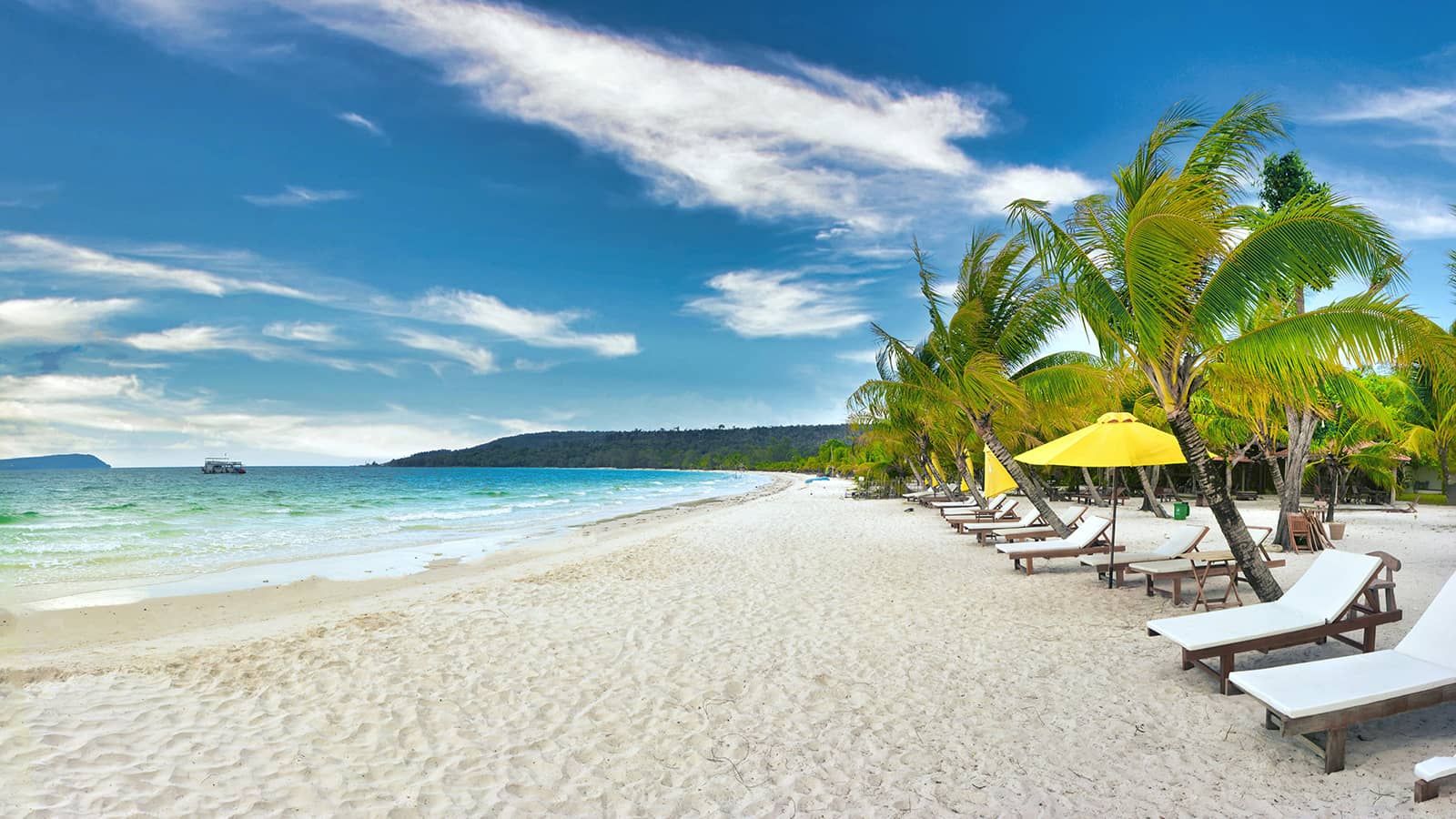
📷 Featured image by Amar Syazwan Rosman on Unsplash.