On this page
- Jalan Alor & the Bukit Bintang Eating Strip
- Chow Kit Market & the Surrounding Hawker Lanes
- Bangsar & Telawi Street
- Brickfields (Little India)
- Petaling Street & Chinatown’s Hidden Eateries
- Damansara Uptown & SS2
- 2026 Budget Reality: What Eating in KL Actually Costs
- Getting Between KL’s Food Neighbourhoods in 2026
- Frequently Asked Questions
💰 Click here to see Malaysia Budget Breakdown
💰 Prices updated: August, 2026. Budget figures are estimates — always verify before travel.
Exchange Rate: $1 USD = RM4.03
Daily Budget (per person)
Shoestring: RM100.00 – RM200.00 ($24.81 – $49.63)
Mid-range: RM180.00 – RM400.00 ($44.67 – $99.26)
Comfortable: RM450.00 – RM1,300.00 ($111.66 – $322.58)
Accommodation (per night)
Hostel/guesthouse: RM20.00 – RM70.00 ($4.96 – $17.37)
Mid-range hotel: RM100.00 – RM350.00 ($24.81 – $86.85)
Food (per meal)
Budget meal: RM15.00 ($3.72)
Mid-range meal: RM35.00 ($8.68)
Upscale meal: RM100.00 ($24.81)
Transport
Single metro/bus trip: RM2.00 ($0.50)
Monthly transport pass: RM150.00 ($37.22)
Kuala Lumpur‘s food scene in 2026 has a real overchoice problem. Scroll any social feed and you’ll find viral omakase counters, trending Korean BBQ strips, and a new rooftop bar seemingly every week. The harder question — the one most visitors and even newer KL residents struggle with — is where to actually go for food that’s genuinely worth your time and money across different parts of the city. This guide cuts through the noise and maps out the best eating zones by neighbourhood, so you know exactly where to head depending on where you are and what you’re after.
Jalan Alor & the Bukit Bintang Eating Strip
Jalan Alor is still the single most concentrated stretch of food in KL, and no amount of Instagram-bait restaurants has changed that. The street runs parallel to Bukit Bintang’s main drag and transforms every evening from around 5pm into a corridor of plastic tables, overhead fairy lights, and the billowing smoke of woks firing at full heat. The smell hits you before you turn the corner — char-grilled seafood, caramelised soy from wok-fried kway teow, and the faint sweetness of grilled corn husks piled near the entrance stalls.
The food here is primarily Chinese-Malaysian. You’ll find stalls and open-fronted restaurants doing barbecue chicken wings marinated in a dark, lightly sweet soy glaze, butter prawns with a dry, curried crust, and claypot lou shu fun (thick silver needle noodles) that arrives still bubbling at the table. Stall W22 — recognisable by its yellow signboard and the perennial queue — does arguably the best char kway teow on this street, with the wok hei hitting hard on every plate.
Beyond Jalan Alor itself, the wider Bukit Bintang zone has expanded significantly. Jalan Imbi now has a cluster of newer mid-range restaurants including strong Vietnamese and Japanese options. Pavilion KL’s basement food hall was refurbished in late 2025 and now carries a significantly expanded Malaysian hawker section alongside its existing Japanese and Korean food tenants — it’s a legitimate option when it rains and you want to stay dry without sacrificing quality.
Chow Kit Market & the Surrounding Hawker Lanes
Most tourists skip Chow Kit entirely, which is exactly why it remains one of the most honest eating areas in the city. The wet market on Jalan Raja Alang opens from around 6am and the surrounding lanes are at their best between 7am and noon. This is where KL locals — not influencers, not expats — eat breakfast and pick up lunch.
The nasi lemak here is served the traditional way: wrapped in banana leaf, the rice carrying a faint fragrance from the leaf itself, with sambal that has real chilli heat rather than the sweetened version you find in hotel buffets. Several stalls along Lorong Raja Alang have been run by the same families for over two decades and operate a simple system — point at what you want, pay between MYR 3 and MYR 6, find a plastic chair somewhere.
Chow Kit is also one of the best places in KL for nasi campur (mixed rice), where you select from a spread of Malay dishes that changes daily. Dishes to watch for include masak lemak cili api (a fiery yellow coconut curry), ayam goreng berempah (deep-fried spiced chicken), and pucuk paku (wild fern stir-fried with sambal belacan). Come by 11am and the best dishes are usually gone by noon.

The 2026 expansion of the MRT Putrajaya Line has made Chow Kit more accessible — the Titiwangsa station is a 15-minute walk, or you can take a Grab for under MYR 8 from most of central KL. The area has a rough-around-the-edges character that some visitors find uncomfortable, but the food is the real deal and prices are the lowest you’ll find anywhere in the city centre.
Bangsar & Telawi Street
Bangsar occupies a specific niche in KL’s food landscape: it’s where you go when you want a proper sit-down meal, a working lunch, or dinner with people who don’t want to sweat it out at a hawker stall. Telawi Street — particularly the stretch between Telawi 2 and Telawi 3 — is the spine of the neighbourhood’s restaurant scene and contains a density of genuinely good restaurants within a short walk of each other.
For Malay food, Rebung at the edge of Bangsar remains the benchmark for buffet-style traditional cooking. It’s not cheap (around MYR 55–65 per person in 2026), but the spread is extensive and the quality is consistent. Closer to Telawi, several newer places have opened targeting the brunch crowd — expect avocado plates and cold brew, yes, but also strong local options like roti canai with house-made dhal that genuinely competes with anything you’d find at a mamak.
The Bangsar Village mall food court is a legitimate eating option and not just a mall fallback — the hawker stalls inside have been well-curated and several have been there long enough to have a real following. The prawn mee here is worth the visit alone: a deep, rust-coloured broth built from prawn shells and dried shrimp, with a heat that builds slowly rather than hitting all at once.
Bangsar is also KL’s strongest neighbourhood for international restaurants if that’s what you’re after. Lebanese, modern Italian, Japanese izakaya, and a couple of genuinely good Korean BBQ spots all cluster within a few blocks. Prices are higher than elsewhere — expect to spend MYR 50–120 per person at mid-range restaurants — but the quality justifies it.

Brickfields (Little India)
Brickfields is about 2 kilometres south of KL Sentral and has been KL’s South Indian eating hub for generations. If you want banana leaf rice, this is where you come. The premise is simple: a fresh banana leaf is placed in front of you, rice is scooped on, and servers circulate continuously with different vegetable curries, papadom, and rasam (a thin, peppery tomato broth). You eat with your right hand if you want the full experience. The whole meal runs MYR 12–18 in 2026 at most of the established restaurants.
Vishalachi’s on Jalan Scott is the name that comes up most consistently among people who eat here regularly. The curries change daily, the banana leaf is always fresh rather than pre-cut plastic, and the mutton varuval (dry-fried spiced mutton) is available on weekends if you arrive before 1pm. Sri Devi nearby is slightly more tourist-visible but maintains quality.
Beyond banana leaf, Brickfields is the right place for teh tarik done properly — pulled tea with a frothy head and the right balance of condensed milk sweetness — and for roti canai with a range of accompaniments that goes well beyond the standard dhal and curry. Tosai (fermented rice and lentil crepes) is a morning staple here and most mamak stalls in the neighbourhood serve it until around 11am.
The area is easy to reach: KL Sentral is the main interchange for the ERL to KLIA and the LRT, KTM, and monorail lines, and Brickfields is a 10-minute walk or one monorail stop from there. The neighbourhood has been progressively tidied up since the 2024 streetscape improvements, though it retains its authentic character.

Petaling Street & Chinatown’s Hidden Eateries
The tourist version of Petaling Street — the covered bazaar with replica watches and cheap clothing — isn’t the reason to come here for food. The reason is the web of side streets and back lanes around it, where kopitiam culture is still operating exactly as it has for decades. A kopitiam is a Chinese coffee shop — usually a shophouse with marble-topped tables, old wooden chairs, and an anchor stall serving kopi (coffee brewed with a cotton sock filter) alongside independent hawker stations operating out of the same space.
Old China Café on Jalan Balai Polis is a well-known name and worth visiting for its Peranakan (Nyonya) dishes — especially the beef rendang and the black nut curry — though it’s firmly on the tourist radar now and prices reflect that. For a more local experience, head to the kopitiams on Jalan Tun H.S. Lee and the lanes behind it. These serve roast meats — char siu (barbecue pork), siu yuk (crispy roasted pork belly) — on rice with a simple pour of sauce and a bowl of clear broth on the side. Total cost: MYR 10–16.
Dim sum is the other reason to be in this area early. Several shophouses open from 6:30am and run dim sum service until around 11am. The har gau (steamed prawn dumplings) and chee cheong fun (silky rice noodle rolls with soy and sesame) are the items to order. These places fill up fast with older Chinese-Malaysian residents who’ve been coming here for years — finding a shared table and eating alongside them is one of those quintessentially KL experiences that no restaurant review can fully capture.
Damansara Uptown & SS2

If you’re staying in KL for more than a few days, or if you want to eat the way KL residents actually eat on a Tuesday night, head out to the Damansara area. It’s not a tourist zone — there’s no curated atmosphere — but the food density and quality-to-price ratio here is hard to beat anywhere in the city.
Damansara Uptown (also called Damansara Kim) has a string of hawker centres and independent Chinese restaurants along its main stretch. The pan mee here — flat handmade noodles in a clear anchovy broth topped with minced pork, crispy anchovies, and a soft-poached egg — is the local obsession, and you’ll find multiple versions within a few hundred metres of each other. The dry version (without soup) has a slightly spicy minced pork sauce that clings to the noodles in a way that makes it genuinely difficult to stop eating.
SS2 in Petaling Jaya, about 12 kilometres from central KL, is famous for its wantan mee — egg noodles served either with soup or dry, topped with char siu and wantan dumplings. The SS2 Wantan Mee stall that’s been operating since the 1980s still draws queues on weekend mornings. This suburb is also one of the best places in the Klang Valley for bak kut teh (a peppery pork rib soup served with rice and youtiao fried dough sticks) — a dish that works as both breakfast and dinner depending on who you ask.
Getting to these areas without a car is more practical in 2026 than it was two years ago. The Putrajaya MRT Line extension completed in early 2026 puts Damansara Uptown within reach, and Grab remains reliable for the last-kilometre gap from stations to specific hawker stalls.
2026 Budget Reality: What Eating in KL Actually Costs
KL remains one of the most affordable major cities in Southeast Asia for food, but costs have risen noticeably since 2024 due to the adjusted fuel subsidy structure and increases to minimum wage that took effect in mid-2025. Here’s what to realistically expect:

- Budget (hawker stalls, kopitiams, mamak restaurants): MYR 5–15 per meal. This covers nasi lemak, roti canai, economy rice, wantan mee, and most local breakfast options. Drinks are typically MYR 2–5.
- Mid-range (sit-down local restaurants, better hawker centres, food halls): MYR 20–50 per person. Includes banana leaf rice, seafood dishes at Chinese restaurants, and quality Malay restaurants.
- Comfortable (established restaurants, Bangsar/KLCC dining, nicer Japanese or Western options): MYR 60–150 per person. International restaurants in Bangsar, better omakase counters in Bukit Bintang, and hotel dining fall here.
A practical note: the 6% service tax (SST) applied to F&B at registered restaurants in 2026 is sometimes included in menu prices and sometimes added at the end. Check whether the menu states “service charge and tax included” — if it doesn’t, add 10% service charge plus 6% SST to your bill estimate. Mamak stalls and most hawker centres are exempt from this.
Water is free at hawker stalls and mamaks — tap water is safe to drink in KL. At sit-down restaurants, bottled water runs MYR 3–8 depending on the establishment.
Getting Between KL’s Food Neighbourhoods in 2026
The expanded rail network in 2026 makes several of KL’s best eating areas accessible without a car, but there are still gaps worth knowing about.
By rail: The Kelana Jaya LRT line covers Bangsar (Abdullah Hukum station, a 10-minute walk to Telawi Street). The Ampang LRT line and KTM Komuter both stop at Brickfields/KL Sentral. Petaling Street and Chinatown are served by the Pasar Seni LRT station on the Kelana Jaya line. The MRT Putrajaya Line’s northern extension, completed in February 2026, now includes Titiwangsa, which significantly helps for Chow Kit access.

By Grab: Still the most practical option for reaching Damansara Uptown, SS2, or anywhere in the Klang Valley that isn’t on a rail line. In 2026, Grab surcharges during peak dinner hours (7–9pm on weekends) can push a 10-kilometre trip to MYR 20–30. Booking five minutes before you want to leave rather than immediately on arrival at a popular restaurant usually gets you a lower fare.
On foot: Bukit Bintang to Jalan Alor is a 5-minute walk. Bukit Bintang to Chinatown is about 20 minutes on foot through a route that passes through the interesting transition zone of Jalan Pudu. Bangsar to Brickfields is walkable in around 25 minutes if the weather cooperates — which in KL it frequently doesn’t. The pedestrian connectivity around the KLCC area has improved with the covered walkway extensions completed in 2025.
Timing: Hawker stalls and kopitiams operate on their own schedules and many close when they sell out rather than at a fixed hour. Morning stalls (dim sum, nasi lemak, roti canai) typically close by noon. Night markets and dinner stalls open from 5–6pm. The only genuinely 24-hour food options are mamak restaurants, which are scattered throughout every neighbourhood and serve everything from mee goreng to maggi soup at 3am without drama.
Frequently Asked Questions
What is the best area to eat in Kuala Lumpur for first-time visitors?
Jalan Alor in Bukit Bintang is the most accessible starting point — it’s centrally located, open every evening, and covers a wide range of Chinese-Malaysian dishes in one street. For a broader introduction across food types, spending one meal in Brickfields for Indian and one morning in Chinatown for dim sum gives a more complete picture of KL’s food diversity.
Is street food in Kuala Lumpur safe to eat in 2026?

Generally yes. KL’s hawker stalls operate under municipal food handler licensing and are regularly inspected. Stalls with high turnover — meaning food doesn’t sit around — are always the safer bet. Avoid pre-cooked dishes that have been sitting unrefrigerated for long periods, particularly seafood. Most visitors eat at hawker stalls throughout their trip without any issues.
What are the cheapest areas to eat in KL without sacrificing quality?
Chow Kit for Malay breakfast, Chinatown’s back lanes for Chinese kopitiam meals, and Brickfields for banana leaf rice offer the best quality-to-price ratio in the city. Meals regularly come in under MYR 12 in these areas. The key is arriving at peak local meal times — 7–9am for breakfast, 12–1:30pm for lunch — when food is freshest.
Do KL restaurants have vegetarian and halal options?
Halal food is extremely easy to find — the majority of Malay and Indian restaurants in KL are halal-certified, and many Chinese restaurants now display halal certification. Vegetarian options are widely available at Indian restaurants (banana leaf meals can be fully vegetarian) and at Chinese Buddhist restaurants particularly around Brickfields and certain parts of Chow Kit. Most mamak restaurants offer vegetarian roti and rice options.
When is the best time to eat at KL’s hawker centres and street food stalls?
For morning hawker food — dim sum, nasi lemak, roti canai — arrive between 7am and 9am for the freshest food and best selection. Lunch hawker centres are busiest from noon to 1pm; arrive slightly before or after. Evening street food like Jalan Alor is best before 7:30pm on weekdays. Most popular stalls sell out before their listed closing time, so earlier is consistently better.
Explore more
Which Kuala Lumpur Neighborhood is Perfect for Your Trip?
Kuala Lumpur Bucket List: 20 Must-Do Things in KL for First-Timers
Where to Stay in Kuala Lumpur: Best Neighborhoods & Hotels for Your Trip
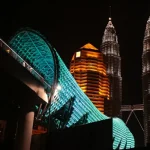
📷 Featured image by Sharkes Monken on Unsplash.