On this page
- Why Malacca Rewards a 2-Day Stay
- Day 1 Morning: Jonker Street, Dutch Square and the Heritage Core
- Day 1 Afternoon: St. Paul’s Hill, A Famosa and the Riverside Quarter
- Day 1 Evening: Jonker Walk Night Market and Dinner on the Water
- Day 2 Morning: Baba Nyonya Heritage, Cheng Hoon Teng and Little India
- Day 2 Afternoon: Bukit China, Villa Sentosa and the Malay Kampung Belt
- Day 2 Evening: Rooftop Sundowners and Farewell Dinner
- Where to Stay for Your 2 Days
- Getting to Malacca and Moving Around in 2026
- 2026 Budget Breakdown for 2 Days
- Practical Tips That Actually Matter
- Frequently Asked Questions
💰 Click here to see Malaysia Budget Breakdown
💰 Prices updated: August, 2026. Budget figures are estimates — always verify before travel.
Exchange Rate: $1 USD = RM4.03
Daily Budget (per person)
Shoestring: RM100.00 – RM200.00 ($24.81 – $49.63)
Mid-range: RM180.00 – RM400.00 ($44.67 – $99.26)
Comfortable: RM450.00 – RM1,300.00 ($111.66 – $322.58)
Accommodation (per night)
Hostel/guesthouse: RM20.00 – RM70.00 ($4.96 – $17.37)
Mid-range hotel: RM100.00 – RM350.00 ($24.81 – $86.85)
Food (per meal)
Budget meal: RM15.00 ($3.72)
Mid-range meal: RM35.00 ($8.68)
Upscale meal: RM100.00 ($24.81)
Transport
Single metro/bus trip: RM2.00 ($0.50)
Monthly transport pass: RM150.00 ($37.22)
Why Malacca Rewards a 2-Day Stay
In 2026, Malacca still sits in an awkward spot on most travelers’ itineraries — too often treated as a rushed day trip from Kuala Lumpur, with people cramming four centuries of history into five hours before catching the last bus home. That approach misses almost everything good about the city. The UNESCO World Heritage Zone is walkable, yes, but Malacca’s real character only reveals itself when the tour groups thin out after 6pm, when the night market fires up along Jonker Street, and when you have a slow morning to sit with a cup of white coffee at a kopitiam while the shophouse light turns golden. Two full days gives you that. One day does not.
Malacca in 2026 has also become noticeably sharper as a destination. The Melaka Waterfront Economic Zone has added new riverside dining options, several heritage guesthouses have undergone serious restorations, and the Aeroline and FlixBus services now run more reliable express connections from KL. The city rewards travelers who move slowly, eat adventurously, and wander without a rigid schedule. This itinerary gives you a strong framework — but leave room to get lost.
Day 1 Morning: Jonker Street, Dutch Square and the Heritage Core
Start early. By 8am, Jonker Street (Jalan Hang Jebat) belongs almost entirely to locals — coffee shop owners rolling up their shutters, delivery motorbikes weaving between antique dealers still wiping down their glass cases. The smell of toasted bread and kaya drifts out of the old kopitiams. Pull up a plastic stool at Kafe Baba Charlie or the long-running Klebang Original Coconut Shake stall nearby and order half-boiled eggs with kaya toast and a cup of Hainanese white coffee — thick, slightly bitter, served in a ceramic cup that clinks against the saucer.
After breakfast, walk south toward Dutch Square (Stadthuys). The terracotta-red buildings here are some of the oldest Dutch colonial structures in Asia, built in the 1650s. Don’t just photograph them from across the square — walk into the courtyard and notice the thick walls, the heavy timber shutters, the way the building stays noticeably cool inside even at 9am. The Malacca History and Ethnography Museum inside is worth 30–40 minutes if you want context for the rest of the day. Entry is MYR 10 for adults in 2026.

From Dutch Square, cross the small red bridge over the Malacca River. The bridge itself is a photo spot, but the real point is what’s on the other side: Christ Church Malacca (1753), the oldest functioning Protestant church in Malaysia, and the famous Victoria Jubilee Fountain in the square. Then walk one block east to Jalan Tokong (Temple Street) where three religious buildings — a Chinese temple, a Hindu temple, and a mosque — stand within 100 metres of each other. It’s a genuinely unrepeatable street.
Morning Logistics
- Dutch Square to Jonker Street: 5-minute walk
- Most heritage sites open from 9am; arrive before the tour buses at 10am
- Wear light clothing — humidity sits around 85% year-round
- Bring cash; many shophouses and kopitiam are cash-only
Day 1 Afternoon: St. Paul’s Hill, A Famosa and the Riverside Quarter
By 11am the sun is serious. Walk uphill to St. Paul’s Hill — it takes about 10 minutes from Dutch Square and the gradient is gentle. At the top, St. Paul’s Church (built 1521) stands roofless and open to the sky, its walls lined with Dutch tombstones set into the stone. The original tomb of Francis Xavier is here, before his body was moved to Goa. Standing inside the ruin with the sea breeze coming through the open walls on a clear day, looking out over the city’s rooftops toward the Strait of Malacca, is one of those moments where the weight of the place actually lands.

Descend the south side of the hill to reach A Famosa, the surviving gate of the Portuguese fortress built in 1511. What remains is just one gatehouse — the British demolished the rest in 1806 — but the Porta de Santiago is still striking. Next to it, the Proclamation of Independence Memorial (closed Mondays) covers Malaysia’s road to independence in 1957 in more depth than most visitors expect.
For lunch, head to Nancy’s Kitchen on Jalan Hang Lekir for authentic Peranakan food — the ayam pongteh (chicken braised in fermented soybean paste) and perut ikan are the dishes regulars order. Expect to spend MYR 25–35 per person. The restaurant is small and fills fast after noon, so arrive just before 12pm or after 1:30pm.
The afternoon is for the Malacca River walk. The riverside between Jalan Quayside and Kampung Morten has been developed over the past few years into a pleasant 2km promenade with murals, restored godowns (warehouses), and small cafes built into former boat repair sheds. The light here between 3pm and 5pm is warm and flat — good for photography, better for sitting. Several riverside cafes serve cold cendol and iced bandung. The sticky sweetness of a good Malacca cendol — palm sugar syrup pooling into shaved ice with green pandan jelly — is the taste of the city in a single cup.
Day 1 Evening: Jonker Walk Night Market and Dinner on the Water

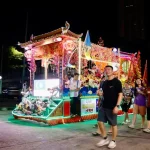
Jonker Walk Night Market runs on Friday, Saturday, and Sunday evenings from around 6pm to midnight. If your trip includes a weekend night, structure everything around being here. The street closes to traffic and the stalls take over — grilled corn, oyster omelettes, lok lok skewers, sugar cane juice, asam pedas fish, Nyonya kuih in colours that look impossible. The crowd is mostly local families and Malaysian tourists from KL, which keeps the energy genuine.
If you’re visiting on a weekday, the night market doesn’t run, but Jonker Street’s restaurants are still busy and the atmosphere is calmer. Restoran Peranakan on Jonker Street and Selvam Restaurant near Jalan Bendahara are both reliable weeknight options for sit-down meals.
For dinner with a view, the riverside restaurants along Jalan Merdeka and Jalan Quayside have outdoor tables directly above the water. Calanthe Art Café does good local coffee and light bites. For something more substantial, River Side Grill and Ole Sayang both do grilled seafood with views of the illuminated river. Budget MYR 50–80 per person for a riverside dinner with drinks.
Day 2 Morning: Baba Nyonya Heritage, Cheng Hoon Teng and Little India
Day 2 goes deeper into the layers of Malacca that the average day-tripper misses entirely. Start at the Baba Nyonya Heritage Museum on Jalan Tun Tan Cheng Lock (also called Millionaires’ Row) when it opens at 10am. This is a restored Peranakan townhouse from the 1800s, still owned by descendants of the original family. Guided tours run every 30–40 minutes (MYR 18 per adult in 2026) and last about 45 minutes. The guide walks you through rooms frozen in a specific kind of wealth — carved rosewood furniture inlaid with mother-of-pearl, European floor tiles ordered from Staffordshire, Nyonya ceremonial clothing still hanging in wardrobes. It smells faintly of old timber and incense.

From there, walk to Cheng Hoon Teng Temple on Jalan Tokong — Malaysia’s oldest Chinese temple, in continuous operation since 1646. Entry is free. The craftsmanship inside is extraordinary: roof ridges crowded with ceramic figures, thick coils of incense hanging from the ceiling and burning slowly, the air sweet and smoky. Visiting in the morning means you’ll catch the temple’s active worship hours, not just tourist foot traffic.
Next, walk five minutes east to Little India around Jalan Bendahara. This is a working commercial strip, not a heritage precinct — textile shops, jasmine garland sellers, banana leaf rice stalls open from 11am. Selvam Restaurant here does an excellent banana leaf rice lunch for MYR 12–15 per person. The food arrives fast: white rice, three vegetable curries, rasam, a papadum, and your choice of fish or chicken curry ladled on top. Eat with your hand if you want the full experience.
Day 2 Afternoon: Bukit China, Villa Sentosa and the Malay Kampung Belt
Most itineraries skip Bukit China (Chinese Hill) entirely. Don’t. It’s a 15-minute Grab ride from Jonker Street, and it’s one of the most atmospheric places in the city. This is the largest Chinese cemetery outside China, covering about 25 hectares, with graves dating back to the Ming Dynasty. It sounds morbid on paper; in person it’s peaceful and surprisingly beautiful — shaded paths winding between ancient headstones, Malay families picnicking under the trees, the distant sound of traffic that fades quickly as you walk uphill.
At the base of Bukit China is the Sam Poh Kong Temple, dedicated to Admiral Zheng He, who visited Malacca in the early 15th century. The temple’s caretakers are friendly and the courtyard has a good view over the old town.
From Bukit China, take a Grab to Kampung Morten — a Malay village sitting unexpectedly close to the city centre, on the east bank of the Malacca River. Villa Sentosa is a private family home that opens to visitors (MYR 5 suggested donation) and shows a traditional Malay wooden house interior that is genuinely lived in, not staged. The family has collected traditional artefacts for decades. It’s informal and personal in a way that formal museums aren’t.

Spend the late afternoon walking back toward the old town along the river, stopping at one of the ice cream shops near Jalan Kota — the durian and coconut flavours from Donald & Lily’s are worth seeking out. MYR 5–8 per scoop.
Day 2 Evening: Rooftop Sundowners and Farewell Dinner
End the trip with intention. For sundowners, Rooftop 360 at The Majestic Malacca hotel on Jalan Bunga Raya is the most reliable option for a proper cocktail with views — open from 5pm, drinks from MYR 28–45. The bar has a clear sightline over the colonial quarter and the Strait of Malacca beyond. On clear evenings, the sunset turns the red buildings of Dutch Square genuinely orange.
For the farewell dinner, make a decision based on what you haven’t eaten yet. If you skipped Peranakan food on Day 1, Restoran Ole Sayang on Jalan Munshi Abdullah is the local favourite — the keluak pork curry and achar (pickled vegetables) are the standout dishes. If seafood is the priority, the stalls at Glutton’s Corner near Jalan Merdeka do grilled stingray with sambal, sweet and slightly charred, with the smokiness from the charcoal grill hanging in the air long after you leave the table. Budget MYR 40–70 per person for dinner in this range.
Where to Stay for Your 2 Days
Staying inside or immediately adjacent to the UNESCO Heritage Zone makes both days considerably easier. Every morning sight is walkable, the night market is five minutes away on foot, and the evening riverside atmosphere is right outside your door.

Budget (MYR 80–160/night)
Ringo’s Foyer on Jalan Hang Kasturi is a heritage guesthouse with clean dorms and private rooms, run by a local family who give good practical advice. Sama-Sama Express Jonker Walk is a newer property with reliable air-conditioning and a mid-Jonker location.
Mid-Range (MYR 180–350/night)
Casaview Boutique Hotel and 1825 Gallery Hotel on Jalan Munshi Abdullah both occupy restored shophouses with thoughtful interiors. The 1825 in particular has genuinely good breakfast included — local options, not just toast and eggs.
Comfortable (MYR 400–700/night)
The Majestic Malacca on Jalan Bunga Raya is the classic choice — a 1920s colonial mansion with a spa, pool, and the best-located rooftop bar in the city. Baba House Boutique Hotel on Jalan Tun Tan Cheng Lock is a smaller, more intimate alternative with strong Peranakan design credentials.
Getting to Malacca and Moving Around in 2026
From Kuala Lumpur
The most practical connection from KL in 2026 remains the express bus. Aeroline and Transnasional run services from TBS (Terminal Bersepadu Selatan) roughly every 30–60 minutes throughout the day. Journey time is 1.5–2 hours depending on traffic. Tickets cost MYR 12–20 one-way. Book via the BusOnlineTicket or Easybook apps.
FlixBus expanded its Malaysia network in 2025 and now runs a KL–Malacca route from several pickup points including Chinatown and Chow Kit — useful if you’re staying in central KL and want to skip the TBS commute. Check the FlixBus app for current departure points, as these shift periodically.
The KTM Komuter train goes to Pulau Sebang/Tampin station, which is about 38km north of Malacca city. From there, you’ll need a Grab or taxi for the final leg — total journey time from KL Sentral is around 2–2.5 hours including the transfer, and costs roughly MYR 30–50 total. It’s not faster than the bus, but it’s often more comfortable on weekends when traffic is heavy.

Getting Around Malacca
The heritage zone is entirely walkable — most Day 1 attractions are within a 1km radius. For Day 2 sites like Bukit China and Kampung Morten, Grab is reliable and cheap (MYR 8–15 per trip within the city). The Panorama Melaka bus system covers the main tourist corridor for MYR 2 per trip, but frequency is unpredictable. Trishaws are entertaining but slow — use them for a single dedicated heritage loop, not as transport between specific sites.
2026 Budget Breakdown for 2 Days
Budget Traveler (MYR 150–220/day)
- Accommodation: MYR 80–120 (dorm or basic guesthouse)
- Food: MYR 30–45 (kopitiams, hawker stalls, night market)
- Attractions: MYR 20–30 (selective paid sites)
- Transport (Grab + bus): MYR 15–25
Mid-Range Traveler (MYR 350–500/day)
- Accommodation: MYR 180–300 (boutique shophouse hotel)
- Food: MYR 80–120 (mix of sit-down restaurants and hawker)
- Attractions: MYR 40–60 (all main heritage sites + museum)
- Transport: MYR 30–50
Comfortable Traveler (MYR 700–1,100/day)
- Accommodation: MYR 450–700 (The Majestic Malacca or equivalent)
- Food: MYR 150–250 (riverside restaurants, cocktails, Peranakan fine dining)
- Attractions + trishaw: MYR 60–100
- Transport + private transfers: MYR 60–100
Practical Tips That Actually Matter
Timing and Crowds
Malacca is a year-round destination. The driest months are June to August; the wetter period runs November through January when northeast monsoon rains can bring short, heavy afternoon storms. These rarely last more than an hour and don’t wreck a trip, but plan outdoor walks for mornings. Malaysian school holidays (June, August, November–December) bring significant domestic tourism to Malacca. Weekend mornings from 10am to 1pm are the busiest windows in the heritage zone — arrive at major sites before 10am or after 3pm to avoid the worst congestion. Weekday visits in 2026 are noticeably calmer than even three years ago.
SIM Cards and Connectivity
Buy a Maxis, Celcom, or Digi tourist SIM at TBS before leaving KL — coverage throughout Malacca city is excellent. 5G coverage expanded into the heritage zone in late 2025. A 7-day data SIM with 30GB costs around MYR 25–35.

Payment and Tipping
Most restaurants and hotels now accept credit card and e-wallets (Touch ‘n Go, GrabPay). Street stalls and older kopitiams are cash-only. Tipping is not standard in Malaysia. In mid-range and upscale restaurants, a 10% service charge is usually included in the bill already. Rounding up for good service is appreciated but not expected.
Safety
Malacca is one of the safest cities in Malaysia for tourists. The main concern is bag-snatching from motorbikes, which still occasionally occurs in less-trafficked areas at night. Keep bags on the wall side of the pavement when walking at night, not dangling toward the road. The heritage zone itself is well-lit and well-patrolled on weekends.
Dress Code
Cover shoulders and knees when entering mosques and Hindu temples — a sarong is often available for borrowing at the entrance. There’s no strict dress code for Chinese temples, but modest clothing is respectful. The heat means most people dress lightly everywhere else.
Water
Don’t drink tap water. Bottled water is MYR 1–2 at any convenience store. Most hotels provide filtered water stations. Staying hydrated matters — temperatures in Malacca sit between 26°C and 34°C year-round with high humidity.
Frequently Asked Questions
Is 2 days in Malacca enough?
Two days is the ideal minimum for Malacca if you want to see the heritage core, eat well, and explore beyond the standard tourist loop. One day means rushing; two days lets you move at the city’s actual pace. A third day is worthwhile if you want to do a day trip to Port Dickson or explore the outer Malay villages.
What is the best way to get from Kuala Lumpur to Malacca in 2026?

The express bus from TBS (Terminal Bersepadu Selatan) is the fastest and most practical option. Journey time is 1.5–2 hours and tickets cost MYR 12–20 one-way. FlixBus now offers pickup from central KL locations, which saves the TBS commute. There is no direct train to Malacca city centre.
When does the Jonker Walk Night Market run?
Jonker Walk Night Market runs on Friday, Saturday, and Sunday evenings, from approximately 6pm to midnight. It does not run on weekdays — if the night market matters to you, time at least one night to fall on a Friday, Saturday, or Sunday.
Is Malacca suitable for a solo traveler?
Malacca is an excellent solo destination. The heritage zone is compact, walkable, and safe. Solo travelers generally find it easy to meet other travelers at guesthouses on Jonker Street. The city’s size — small enough to navigate without stress, large enough to have real variety — makes it particularly comfortable for first-time solo travelers in Malaysia.
What should I eat in Malacca that I can’t get elsewhere?
Peranakan (Nyonya) cuisine is most authentic here — dishes like ayam pongteh, perut ikan, and keluak pork curry. Malacca-style cendol with dark palm sugar syrup and coconut milk is the standout street snack. The Portuguese-influenced grilled seafood at Glutton’s Corner and the Hainanese white coffee at old Jonker Street kopitiams are also genuinely local experiences.
Explore more
Malacca Nightlife Guide: Best Bars, Clubs & Live Music Venues
Beyond Jonker Street: Local Secrets for an Authentic Malacca Experience
📷 Featured image by Job Savelsberg on Unsplash.