On this page
- Two Visas, Very Different Realities
- What Each Visa Actually Is
- Eligibility Requirements Side by Side
- Application Process and Processing Times in 2026
- Costs Breakdown: Fees, Deposits, and Hidden Expenses
- What You Can and Cannot Do on Each Visa
- Tax Residency and the 183-Day Rule
- Real Cost of Living on Each Visa
- Which Visa Wins for Your Situation
- Frequently Asked Questions
Two Visas, Very Different Realities
Since Malaysia updated both the DE Rantau programme and the My Second Home (MM2H) scheme in 2024–2025, the online advice about which one to choose has become genuinely confusing. Forums are full of outdated figures. Some blogs still quote the old MM2H fixed deposit requirement of MYR 1 million — a number that no longer applies across all tiers. Others treat DE Rantau as a tourist visa with Wi-Fi. Neither picture is accurate. If you are seriously weighing up a move to Malaysia for six months to several years, you need a clean comparison that reflects how things actually work in 2026.
What Each Visa Actually Is
These two programmes were designed for completely different people, which is exactly why comparing them requires some care.
DE Rantau is Malaysia’s dedicated digital nomad visa, launched under the Malaysia Digital Economy Corporation (MDEC) and administered through the Immigration Department of Malaysia. It is built for location-independent workers — employees of foreign companies and freelancers earning income from outside Malaysia. The initial pass is valid for 12 months with a single renewal option, giving a maximum consecutive stay of 24 months. After that, you must exit the programme or transition to another pass category.
The name itself comes from the Malay word rantau, meaning “a journey to distant lands” — fitting for a visa explicitly acknowledging that your employer and your income source are abroad.
MM2H (My Second Home) is a long-term social visit pass with no defined end date, as long as conditions are met. It is not a work visa. It was originally positioned as a retirement and lifestyle visa for affluent foreigners who want to base themselves in Malaysia without a specific employment agenda. The 2024–2025 revised MM2H framework introduced three tiers — Silver, Gold, and Platinum — with substantially different financial requirements for each. A pass is initially issued for 5 years and renewable.
The fundamental difference: DE Rantau is for people who are actively working remotely right now. MM2H is for people who have sufficient passive income, savings, or retirement funds and do not need to work.
Eligibility Requirements Side by Side
This is where the two visas diverge sharply, and where most people realise quickly which lane they are in.
DE Rantau Eligibility (2026)
- Minimum monthly income of USD 2,400 (approximately MYR 11,200 at 2026 exchange rates) for employed applicants
- Freelancers and self-employed applicants must show USD 2,400 per month averaged over the previous 12 months
- Employment or client contracts must be with companies or individuals based outside Malaysia
- No minimum age requirement
- No fixed deposit or liquid asset threshold beyond the income requirement
- Dependants (spouse and children under 18) are permitted under the pass
MM2H Eligibility (2026 — Silver Tier, the entry-level tier)
- Minimum age: 25 years
- Minimum fixed deposit in a Malaysian bank: MYR 500,000 (Silver), MYR 2 million (Gold), MYR 5 million (Platinum)
- Minimum monthly offshore income: MYR 10,000 (Silver tier)
- You must maintain the fixed deposit throughout the validity of the pass
- You cannot work for a Malaysian employer, but limited allowances exist for self-directed investments
- Applicants must have valid health insurance covering Malaysia
For most working digital nomads in their 20s, 30s, or early 40s, MM2H’s fixed deposit requirement is the immediate disqualifier. Tying up MYR 500,000 in a Malaysian bank is not a realistic option for someone earning a freelance income — no matter how comfortable that income is.
Application Process and Processing Times in 2026
Both visas require more paperwork than a standard tourist entry, but the complexity level is quite different.
Applying for DE Rantau
- Create an account on the MDEC DE Rantau portal (derantau.malaysia.gov.my)
- Upload proof of employment or freelance income, passport copy, and a recent photograph
- Pay the application fee online
- Await MDEC approval, which currently takes 3–5 working days for employed applicants and up to 14 working days for freelancers with complex income structures
- Once approved, collect the physical pass sticker at an Immigration Department office in Malaysia — you must be in-country for this step
The entire process from application to walking out with a stamped pass can realistically be completed in under three weeks, often faster. Most applicants in 2026 report that the digital portal is functional and that MDEC support staff respond to queries within 48 hours.
Applying for MM2H
- Engage a Ministry of Tourism, Arts and Culture (MOTAC) licensed MM2H agent — direct applications are not accepted for foreign nationals
- Prepare a substantial document bundle: birth certificate, marriage certificate (if applicable), health declaration, police clearance from your home country, bank statements for the past 6 months, proof of offshore income, and a medical examination report from an approved Malaysian clinic
- Submit through your agent to MOTAC
- Approval processing: currently 3–6 months
- After conditional approval, open a Malaysian bank account and place the required fixed deposit
- Collect the social visit pass at an Immigration counter
The agent fee alone typically runs between MYR 5,000 and MYR 12,000 depending on tier and agent. The process is substantially more demanding, and the mandatory use of a licensed agent adds a layer of coordination that can slow things down if documentation is incomplete.
Costs Breakdown: Fees, Deposits, and Hidden Expenses
Here is a realistic picture of what each visa costs to obtain and maintain.
DE Rantau Costs
- Application fee: MYR 1,060 for the primary applicant (12-month pass)
- Dependant pass fee: MYR 560 per dependant
- Renewal (second 12 months): MYR 1,060 again
- No fixed deposit required
- Health insurance: mandatory, typically MYR 2,400–MYR 6,000 per year for a comprehensive international health plan
- Total first-year cost to obtain: approximately MYR 3,500–MYR 7,500 including insurance
MM2H Costs (Silver Tier)
- Agent fee: MYR 5,000–MYR 12,000
- Fixed deposit: MYR 500,000 (locked, not lost — but unavailable for daily use)
- After three years, you may withdraw up to 50% of the fixed deposit for approved expenses (property purchase, children’s education, medical)
- Application and government processing fees: approximately MYR 2,000–MYR 3,000
- Medical examination: MYR 400–MYR 800
- Health insurance: mandatory, MYR 3,000–MYR 8,000 per year
- 5-year pass renewal fee: approximately MYR 5,000
The opportunity cost of the MYR 500,000 fixed deposit is significant. At current Malaysian fixed deposit rates of roughly 3.5–4% per annum (2026), you would be earning around MYR 17,500–MYR 20,000 per year in interest — which partially offsets the locked capital, but does not eliminate the constraint of having half a million ringgit immobilised.
What You Can and Cannot Do on Each Visa
Work rights are the core practical question for any digital nomad, and this is where DE Rantau was specifically designed to fill a gap.
DE Rantau
- Permitted: Work remotely for foreign employers or foreign clients while physically in Malaysia
- Permitted: Receive salary or freelance payments from overseas into a foreign bank account
- Permitted: Enter and exit Malaysia freely during the pass validity
- Not permitted: Work for a Malaysian company or be paid by a Malaysian entity (this would require an Employment Pass)
- Not permitted: Stay in Malaysia beyond 24 months under DE Rantau without switching to another visa category
MM2H
- Permitted: Reside in Malaysia long-term
- Permitted: Own property, invest in the Malaysian stock market, run passive investments
- Technically not permitted: Active employment or freelance work — MM2H is a social visit pass, not a work authorisation
- Grey area in 2026: Some MM2H holders who work fully remotely for overseas companies continue to do so, but this is not officially sanctioned and carries some legal ambiguity
- Permitted: Renew the pass indefinitely as long as financial conditions are maintained
This is a critical distinction. DE Rantau explicitly and legally permits remote work for foreign clients. MM2H does not. For anyone whose income depends on continuing to work — rather than drawing from savings or passive income — DE Rantau is the legally appropriate choice.
Tax Residency and the 183-Day Rule
Malaysia’s tax position is one of the more attractive aspects of living here, and it applies differently depending on how long you stay and which visa you hold.
Under Malaysian tax law, if you are physically present in Malaysia for 182 days or more in a calendar year, you become a tax resident. As a tax resident, you are taxed on income sourced within Malaysia on a progressive scale starting at 0% and rising to 30% for income above MYR 2 million. Critically, income earned from foreign sources and remitted to Malaysia was exempted from Malaysian income tax — and as of 2026, this exemption still applies to most individual taxpayers who are not conducting business in Malaysia.
If you are in Malaysia for fewer than 182 days in a calendar year, you are a non-resident for tax purposes and face a flat 30% tax rate on any Malaysia-sourced income. For DE Rantau holders earning exclusively from foreign sources, this flat rate typically does not apply to your working income — but you should obtain advice from a Malaysian tax professional to confirm your specific situation.
MM2H holders who live in Malaysia year-round and become tax residents are in a favourable position if their income is entirely from overseas: the foreign-source income exemption means their pension, investment income, or remote earnings may not be taxed in Malaysia at all. However, you still need to register with the Inland Revenue Board of Malaysia (LHDN) and file returns. Registering for a Malaysian tax number (known as your Income Tax Reference Number) is done through the MyTax portal or at any LHDN branch and typically takes 1–3 working days.
Note that your home country’s tax rules still apply. This is not advice to assume you have no tax obligations — it is a framework for understanding Malaysia’s side of the equation.
Real Cost of Living on Each Visa
The visa itself is only part of your monthly financial picture. Here is what a realistic monthly budget looks like across Malaysia’s main nomad cities in 2026, regardless of which visa you hold.
Kuala Lumpur
- Budget: MYR 3,500–MYR 5,000/month (shared apartment, hawker food, public transport)
- Mid-range: MYR 5,500–MYR 9,000/month (one-bedroom apartment in Mont Kiara or Bangsar, mix of eating out and cooking)
- Comfortable: MYR 10,000–MYR 18,000/month (furnished two-bedroom condo, car, frequent dining out)
Penang
- Budget: MYR 2,800–MYR 4,500/month
- Mid-range: MYR 4,500–MYR 7,500/month
- Comfortable: MYR 8,000–MYR 14,000/month
Kota Kinabalu (Sabah)
- Budget: MYR 2,500–MYR 4,000/month
- Mid-range: MYR 4,000–MYR 7,000/month
- Comfortable: MYR 7,500–MYR 13,000/month
Langkawi
- Budget: MYR 2,800–MYR 4,200/month (Langkawi is a duty-free island — alcohol and electronics are cheaper, but rental stock is tighter)
- Mid-range: MYR 4,500–MYR 8,000/month
- Comfortable: MYR 9,000–MYR 16,000/month
The smell of char kway teow sizzling on a wok at a George Town hawker stall at seven in the evening — that particular combination of wok hei, dark soy sauce, and prawn — costs around MYR 8 in Penang. Your cost of living in Malaysia is shaped far more by your housing choice than your food, which remains genuinely affordable at all income levels.
Health insurance is a non-negotiable cost for both visas. A 35-year-old with a solid international health plan covering Malaysia and ASEAN will pay roughly MYR 350–MYR 550 per month in 2026 premiums. Plans covering global treatment (including the US) push that to MYR 700–MYR 1,200 per month.
Which Visa Wins for Your Situation
There is no single correct answer, but the decision is more straightforward than most comparison articles suggest once you map it to your actual profile.
Choose DE Rantau if:
- You are actively employed or freelancing for overseas clients and need legal clarity on your right to work remotely from Malaysia
- You do not have MYR 500,000 in liquid savings to place in a fixed deposit
- You want to arrive, set up, and start working within a month
- You are planning to stay 6–24 months rather than permanently relocate
- You are in your 20s, 30s, or 40s and at a mobile stage of your career
Choose MM2H if:
- You have substantial liquid assets and the fixed deposit requirement does not represent a hardship
- You want a long-term or semi-permanent base in Malaysia with visa renewal certainty
- Your income is genuinely passive — pension, investments, dividends, rental income from properties abroad — and you are not actively working
- You want the ability to purchase Malaysian property under MM2H’s preferential thresholds
- You are 50 or older and thinking about Malaysia as a retirement base rather than a work base
For most people reading this article — location-independent professionals earning between USD 2,400 and USD 10,000 per month from foreign clients — DE Rantau is the realistic, legally clean choice. The application is fast, the cost is manageable, and it was built specifically for your situation. The 24-month maximum is a genuine limitation, but it also creates a useful deadline to reassess your plans. Many DE Rantau holders in 2026 are using the programme as an extended trial before deciding whether to pursue a longer-term path through an Employment Pass, an MM2H application, or a return to their home country.
MM2H makes more sense as a second passport to stability — a base for people who are past the hustle phase and want Malaysia’s quality of life, low cost of living, and relative political stability as a permanent backdrop, with the financial security of a structured long-term pass.
Frequently Asked Questions
Can I switch from DE Rantau to MM2H without leaving Malaysia?
In practice, most applicants apply for MM2H while still on their DE Rantau pass, using their Malaysian presence to complete the medical examination and bank account setup. The two applications are processed by different agencies (MDEC versus MOTAC), so there is no direct transfer mechanism. You would hold one pass and apply for the other simultaneously, then surrender the first once the second is approved.
Does DE Rantau count toward permanent residency in Malaysia?
No. The DE Rantau pass is a temporary pass and does not contribute to permanent residency (PR) eligibility. Malaysia’s PR pathway is primarily through long-term Employment Passes or specific investor and skilled professional routes. If Malaysian PR is your long-term goal, DE Rantau buys you time in-country but does not advance that specific application.
Can MM2H holders legally do remote work for foreign companies in 2026?
Officially, MM2H is a social visit pass and does not authorise employment, including remote work for foreign employers. In practice, enforcement targeting MM2H holders who work remotely for overseas companies has not been publicly documented, but the legal position remains ambiguous. Anyone wanting explicit legal work authorisation for remote employment should use the DE Rantau pass instead.
What happens to my DE Rantau pass if I lose my main client or job?
Your pass remains valid until its expiry date regardless of income changes after approval. However, if you apply to renew, you will need to demonstrate that you still meet the income threshold at the time of renewal. Losing your income source mid-pass does not automatically void the pass, but it does affect your renewal eligibility. Maintaining documentation of your earnings throughout the pass period is important.
Is Malaysia a good option for digital nomads compared to other Southeast Asian countries in 2026?
Malaysia stands out in 2026 for three reasons: English is widely spoken, infrastructure (broadband, transport, healthcare) is genuinely reliable, and DE Rantau offers explicit legal work authorisation — something Thailand’s LTR visa and Indonesia’s KITAS do not provide with the same clarity for freelancers. The cost of living is higher than Vietnam or Cambodia but lower than Singapore, with considerably better urban infrastructure than most regional alternatives.
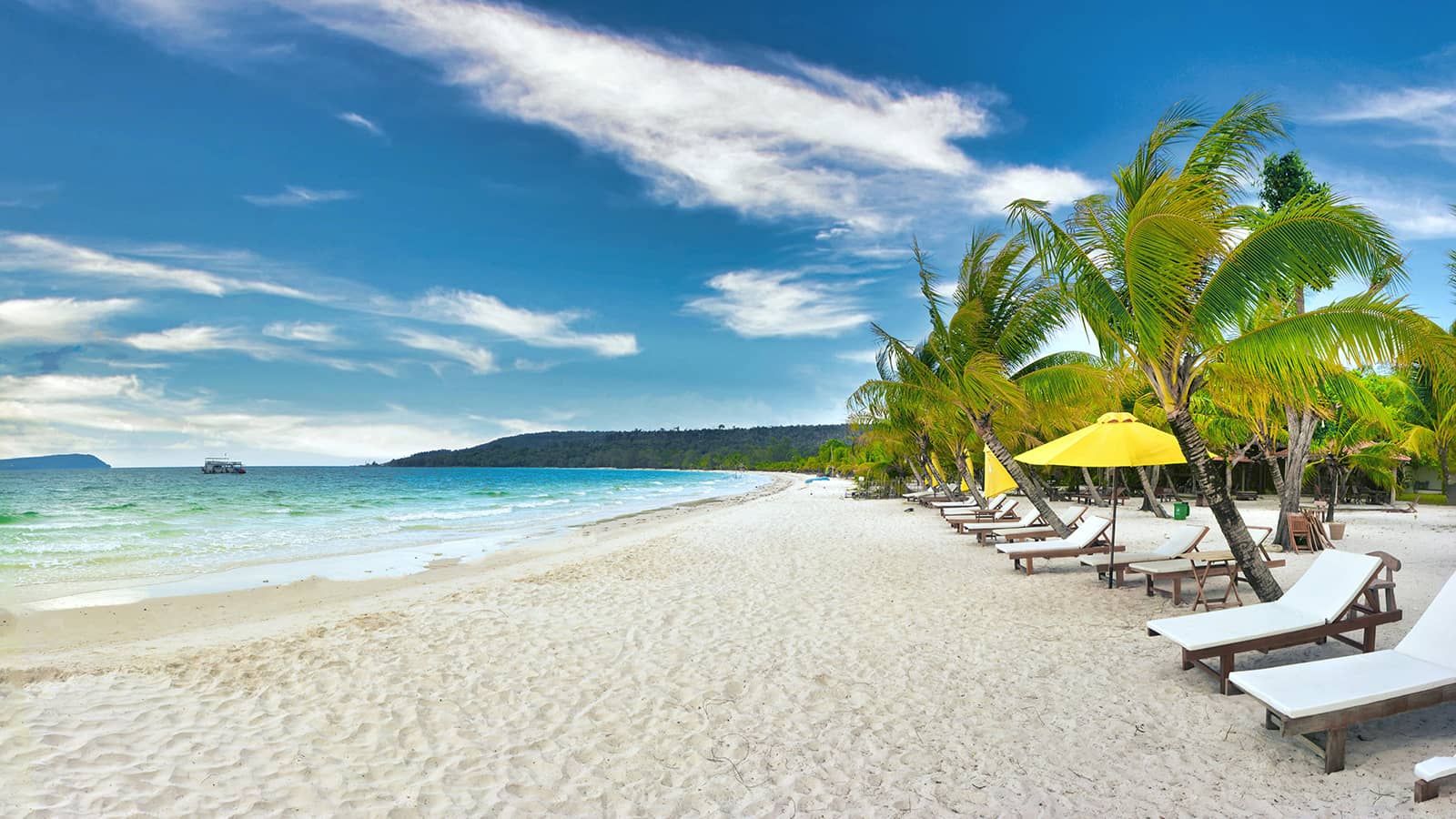
📷 Featured image by Mimi Thian on Unsplash.