On this page
- The Waterfront Strip: Layout and Geography
- What to See: Landmarks and Architecture Along the Esplanade
- What to Do: Activities, Experiences, and Hidden Corners
- Where to Eat and Drink: Best Spots on and Near the Waterfront
- 2026 Budget Reality: What Everything Actually Costs
- Getting to the Waterfront: Practical Transport in 2026
- Best Times to Visit: Morning, Afternoon, and Night Have Different Characters
- Frequently Asked Questions
💰 Click here to see Malaysia Budget Breakdown
💰 Prices updated: August, 2026. Budget figures are estimates — always verify before travel.
Exchange Rate: $1 USD = RM4.03
Daily Budget (per person)
Shoestring: RM100.00 – RM200.00 ($24.81 – $49.63)
Mid-range: RM180.00 – RM400.00 ($44.67 – $99.26)
Comfortable: RM450.00 – RM1,300.00 ($111.66 – $322.58)
Accommodation (per night)
Hostel/guesthouse: RM20.00 – RM70.00 ($4.96 – $17.37)
Mid-range hotel: RM100.00 – RM350.00 ($24.81 – $86.85)
Food (per meal)
Budget meal: RM15.00 ($3.72)
Mid-range meal: RM35.00 ($8.68)
Upscale meal: RM100.00 ($24.81)
Transport
Single metro/bus trip: RM2.00 ($0.50)
Monthly transport pass: RM150.00 ($37.22)
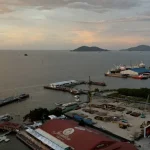
Kuching Waterfront is one of those places that looks better in real life than in any photo. The problem most visitors run into in 2026 is treating it like a quick checkbox — arriving midday, sweating through a lap of the esplanade, and leaving without understanding what makes this stretch of the Sarawak River genuinely worth your time. The waterfront is not just a riverside walkway. It’s a layered neighbourhood with colonial architecture, working jetties, late-night hawker culture, and a view of Kampung Boyan across the river that feels completely unlike anywhere else in Malaysia. This guide covers all of it, practically and honestly.
The Waterfront Strip: Layout and Geography
The Kuching Waterfront runs roughly 1.5 kilometres along the south bank of the Sarawak River, from the Square Tower at the western end to the Kuching Waterfront Bazaar near the Holiday Inn on the eastern side. Most of it is a paved esplanade — wide enough to walk comfortably, with benches, low walls, and old lamp posts that lean slightly as if they’ve seen too many monsoons.
The strip divides naturally into three zones. The western third, near the Square Tower and the Courthouse complex, is the most architecturally dense — this is where the colonial-era buildings sit close together and the jetties (called tambang jetties) are most active. The central section, around the Main Bazaar and the Chinese History Museum, is where most of the souvenir shops and cafes operate. The eastern end near the Waterfront Bazaar is more open, more commercial, and where food stalls set up in the evenings.
Across the river — a five-minute tambang ride — is the north bank, where Fort Margherita and Kampung Boyan sit. Understanding that the waterfront is actually two banks, not one, changes how you plan your visit entirely.
What to See: Landmarks and Architecture Along the Esplanade

The colonial-era buildings along the waterfront are not just decorative backdrop. Several of them have active functions and can be entered.
The Square Tower
Built in 1879 during the Brooke era, the Square Tower sits at the western end of the esplanade. It has been used as a prison, a fort, and a ballroom over the decades. Today it operates as a small venue space and is open for self-guided exploration during the day. The stonework up close — rough-cut sandstone blocks with visible water staining from over a century of river humidity — gives it a weight that photos don’t convey.
The Courthouse Complex
Walking east from the Square Tower, the Courthouse complex includes the original Court House (1874), the Round Tower, and the Charles Brooke Memorial — a tall column topped with a carved figure that faces the river. The complex was renovated in the early 2020s and parts of it now house a boutique hotel and upscale food and beverage outlets. The verandah facing the river is one of the better spots in Kuching to sit with a coffee and watch boat traffic without paying a premium for the privilege.
The Chinese History Museum
This small but well-curated museum sits right on the waterfront in a building that once served as the Chinese Court. Admission in 2026 is free. It covers the migration and settlement of Chinese communities in Sarawak from the 1800s onward, with original photographs, documents, and artefacts. It’s not a long visit — 30 to 45 minutes is enough — but it adds real context to the Chinese shophouses you see throughout the city.
The Waterfront Promenade Murals
Several large murals appeared on building walls along and adjacent to the waterfront between 2022 and 2025. They are not the cutesy tourist murals found in Penang. These are larger-scale works referencing Sarawak’s Dayak motifs, river trade history, and indigenous textile patterns. The most striking one, near the eastern end of the esplanade, features a tightly geometric Iban pua kumbu pattern rendered about six metres tall on a whitewashed wall.

What to Do: Activities, Experiences, and Hidden Corners
Take the Tambang Across the River
The tambang — a small wooden passenger ferry — crosses the Sarawak River between the waterfront jetties and the north bank. The fare in 2026 is MYR 1 per person each way, paid directly to the boatman. The crossing takes about five minutes. The experience of sitting low in the water, watching the south bank recede behind you while the river carries a faint smell of salt and diesel, is genuinely memorable. On the north bank, you can walk to Fort Margherita (entry free, managed by the Sarawak Museum Department) or explore Kampung Boyan, a traditional Malay village that operates as a normal, working neighbourhood rather than a tourist site.
Explore the Sunday Market (Pasar Minggu)
Despite the name, the Kuching Sunday Market runs from Saturday night into Sunday morning, and it’s within walking distance of the eastern end of the waterfront — about 700 metres from the Waterfront Bazaar toward the Satok area. This is where local Sarawakians shop, not tourists. Vendors sell jungle vegetables, wild boar meat, live poultry, fresh river fish, handmade rattan goods, and medicinal plants. Arriving at 6am on Sunday is the right call — by 9am the best produce is gone and the crowds are thick.

Walk the Full Esplanade at Your Own Pace
The complete waterfront walk from Square Tower to the eastern bazaar takes about 25 minutes at a leisurely pace. Benches face the river at regular intervals. Look for the astana — the white Brooke-era palace — visible across the water on the north bank, now used as the official residence of the Yang di-Pertua Negeri Sarawak (the state governor) and closed to visitors. You can photograph it freely from the esplanade.
Catch a Cultural Performance
The Sarawak Tourism Board occasionally stages free cultural performances — traditional Dayak dance, sape music, and craft demonstrations — along the central esplanade on weekend evenings. The schedule changes monthly. Check the Sarawak Tourism Board’s official channels for 2026 event listings rather than relying on hostel noticeboards, which are rarely updated.
Where to Eat and Drink: Best Spots on and Near the Waterfront
The waterfront itself has a mix of sit-down restaurants and hawker stalls, with a clear quality divide. The indoor restaurants facing the river — particularly those inside the Courthouse complex — are mid-range to upscale and not always worth the premium. The better eating is either at the hawker stalls or a short walk into the surrounding streets.
Waterfront Hawker Centre (Evening Stalls)
On the eastern end of the esplanade, open-air hawker stalls set up from around 5:30pm onwards. The air in the early evening carries the smell of charcoal and rendered fat from the grilling satay, mixing with river breeze that keeps the temperature bearable. This is where you’ll find Sarawak staples: Sarawak laksa (a coconut and sambal-based broth, distinct from Penang laksa and genuinely excellent), kolo mee (dry tossed noodles with pork lard, char siu, and shallots), and midin belacan (jungle fern stir-fried with fermented shrimp paste). A full meal here — laksa, kolo mee to share, and a cold soya bean drink — runs MYR 18 to 28 per person.

Top Spot Food Court
Located about 400 metres from the waterfront on Bukit Mata Kuching Road, Top Spot is a rooftop hawker court famous for its seafood. It’s the most reliable place in Kuching for fresh river and sea catch — ikan terubok (Sarawak shad, a locally prized fish, often salted or grilled), butter prawns, and midin. Prices here are higher than the waterfront stalls — expect MYR 40 to 80 per person for a seafood-heavy meal — but the quality justifies it if seafood is your priority.
The Junk Bar
One of Kuching’s better-known bars sits right on the waterfront, housed in a converted shophouse. It opens in the late afternoon and runs until midnight or later on weekends. The cocktail menu is decent without being fancy. The real draw is the front terrace directly facing the river — narrow, a little cramped, but with one of the best views of the north bank available from any licensed venue. Drinks run MYR 20 to 45.
Black Bean Coffee and Tea House
A short walk from the waterfront into the Main Bazaar shophouse row, Black Bean is an institution for Sarawak white coffee — darker and more bitter than white coffee from Ipoh, with a slightly earthy finish from how the beans are roasted. The café is in a restored shophouse with original floor tiles and heavy wooden furniture. In the late morning, when the waterfront is already hot and loud, sitting here with a glass of cold white coffee and a roti kahwin (bread with kaya and butter) for MYR 7 to 12 is one of the quieter pleasures the area offers.

2026 Budget Reality: What Everything Actually Costs
Kuching remains one of the more affordable cities for visitors in Malaysia, but costs have shifted meaningfully since 2024. The expanded domestic flight routes to Kuching via Malaysia Airlines and AirAsia (including new direct routes from Kota Kinabalu and expanded Singapore connections via Scoot) have brought more visitors, and waterfront-area accommodation has priced up accordingly.
Accommodation
- Budget: Hostels and guesthouses in the Old Town area near the waterfront — MYR 45 to 90 per night for a dorm or basic private room.
- Mid-range: Boutique hotels in converted shophouses, mostly within 500 metres of the esplanade — MYR 150 to 280 per night.
- Comfortable: The larger hotels (Hilton, Pullman, and the Courthouse Boutique Hotel) — MYR 350 to 600 per night. The Pullman completed its 2025 renovation and the rooms and pool facilities are noticeably improved.
Food
- Budget: Hawker stalls and kopitiams — MYR 8 to 18 per meal including a drink.
- Mid-range: Casual sit-down restaurants and the better hawker courts — MYR 25 to 55 per person.
- Comfortable: Waterfront restaurants, rooftop seafood, and hotel dining — MYR 70 to 150 per person.
Transport on the Water
- Tambang river crossing: MYR 1 per person each way.
- Hired sampan for a short river tour: MYR 30 to 60 for a 20 to 30 minute trip, negotiate at the jetty.
Activities and Entrance Fees
- Chinese History Museum: Free.
- Fort Margherita (north bank): Free.
- Sarawak Museum main campus (15-minute walk from waterfront): MYR 50 for international visitors as of 2026, following the museum’s updated ticketing structure post-renovation.
Getting to the Waterfront: Practical Transport in 2026
Kuching does not have an MRT or LRT system, and that is unlikely to change in the near term. The 2026 Kuching urban transport situation is still heavily car and taxi dependent, though improvements to the bus network have made some routes more practical for visitors than they were two years ago.

From Kuching International Airport
The airport sits about 12 kilometres south of the waterfront. Options in 2026:
- Grab: The most reliable option. A Grab car from the airport to the waterfront area runs MYR 18 to 30 depending on time of day and demand. The app works well in Kuching.
- Airport bus (Route A1): The Kuching Bus Terminal is the main hub, and the A1 route connects the airport to the city centre. The fare is around MYR 3 to 5. Journey time is 30 to 50 minutes depending on traffic. The bus does not stop at the waterfront directly — you’ll alight near the Kuching Sentral area and walk or take a short Grab to the esplanade.
- Airport taxi: Fixed-rate taxis operate from the official taxi counter at arrivals. Fares to the waterfront area are fixed at MYR 35 to 45. Reliable but more expensive than Grab.
Getting Around the Waterfront Area
Once you’re in the waterfront neighbourhood, almost everything is walkable. The esplanade to the Main Bazaar shophouses, the surrounding kopitiams, the Chinese History Museum, Top Spot Food Court, and the closest markets are all within a 10 to 15 minute walk. For the Sunday Market at Satok, a Grab ride costs MYR 6 to 10 from the waterfront.
Best Times to Visit: Morning, Afternoon, and Night Have Different Characters
The waterfront genuinely changes character depending on when you arrive, and matching your visit to the right time makes a significant difference.
Early Morning (6am–9am)
This is when the waterfront belongs to locals. Elderly residents do their morning walk along the esplanade. The tambang boats start their crossings, carrying workers between the banks. Kopitiams in the Main Bazaar area are at their busiest, steaming with fresh kolo mee and strong black coffee. The light over the river is flat and grey-gold before the sun gets high, and the air is cool enough that you won’t sweat through your shirt. If you’re only visiting once, early morning on a weekday is the most honest version of this place.

Midday (10am–3pm)
Avoid if possible, or limit outdoor time significantly. Kuching sits near the equator, and midday temperatures in 2026 regularly reach 33 to 36 degrees Celsius along the river, with high humidity. The esplanade offers almost no shade. Use this window for indoor visits — the Chinese History Museum, the Sarawak Museum, or a long sit inside an air-conditioned shophouse café.
Evening and Night (5pm–11pm)
The waterfront’s most popular hours. The hawker stalls light up, families walk the esplanade, and the north bank buildings catch the last of the golden light before dark. After sunset, the waterfront is lit by a combination of lamp posts and the glow from open restaurants, and the river surface reflects it all in long, broken lines. This is when the area is most alive and most crowded — weekends bring large numbers of locals alongside visitors, and the atmosphere on the esplanade between 7pm and 9pm is genuinely festive without being chaotic.
Frequently Asked Questions
Is the Kuching Waterfront safe to visit at night?
Yes. The waterfront esplanade is well-lit and busy with families, couples, and food stall crowds until at least 10pm on most nights. Kuching consistently records lower street crime rates than Kuala Lumpur or Penang. Apply the same basic awareness you would in any city — watch your phone in crowded areas — and there is no specific safety concern here.
How long should I spend at the Kuching Waterfront?
A focused half-day — roughly four to five hours — covers the esplanade walk, a tambang crossing to Fort Margherita, the Chinese History Museum, and a proper meal at the hawker stalls. To absorb the morning market culture and evening food scene separately, two visits across one full day is more satisfying than trying to compress everything into one stretch.

Can I visit Kuching Waterfront as a day trip from Kuala Lumpur?
Technically yes, but it’s a waste. The flight from KL to Kuching is just over an hour, but Sarawak offers enough — the Semenggoh Wildlife Centre, Bako National Park, the Sarawak Museum — to justify at least three nights. Treating the waterfront as a day trip means skipping most of what makes Kuching worth the journey in the first place.
What is the best food to try specifically at the Kuching Waterfront?
Sarawak laksa is the non-negotiable order — it is distinct from any other laksa in Malaysia and the waterfront hawker stalls do it well. Kolo mee is the second priority. Midin belacan is the most locally specific vegetable dish and rarely found outside Sarawak. Order all three on your first evening.
Has anything changed at the Kuching Waterfront since 2024?
A few things. New mural installations appeared on buildings near the eastern esplanade in 2024 and 2025. The tambang fare and free museum admission at the Chinese History Museum and Fort Margherita remain unchanged.
Explore more
15 Best Things to Do in Kuching for First-Timers
The Ultimate Kuching Food Guide: Where to Eat Now
The Ultimate Kuching Shopping Guide: Malls, Markets & Must-Buy Souvenirs
📷 Featured image by Jonathan Lim on Unsplash.