On this page
- Secret Streets and Forgotten Lanes
- Offbeat Museums and Quirky Galleries
- Lesser-Known Temples, Shrines, and Sacred Sites
- Hidden Nature and Waterfront Spots
- Underground Food Haunts
- Craft Workshops and Living Heritage
- Day Trip Detours Most Tourists Skip
- Practical Tips for Exploring Off the Beaten Path
- 2026 Budget Reality: What Offbeat Malacca Actually Costs
- Frequently Asked Questions
💰 Click here to see Malaysia Budget Breakdown
💰 Prices updated: August, 2026. Budget figures are estimates — always verify before travel.
Exchange Rate: $1 USD = RM4.03
Daily Budget (per person)
Shoestring: RM100.00 – RM200.00 ($24.81 – $49.63)
Mid-range: RM180.00 – RM400.00 ($44.67 – $99.26)
Comfortable: RM450.00 – RM1,300.00 ($111.66 – $322.58)
Accommodation (per night)
Hostel/guesthouse: RM20.00 – RM70.00 ($4.96 – $17.37)
Mid-range hotel: RM100.00 – RM350.00 ($24.81 – $86.85)
Food (per meal)
Budget meal: RM15.00 ($3.72)
Mid-range meal: RM35.00 ($8.68)
Upscale meal: RM100.00 ($24.81)
Transport
Single metro/bus trip: RM2.00 ($0.50)
Monthly transport pass: RM150.00 ($37.22)
Malacca‘s UNESCO-listed old town pulled in over 2 million visitors in 2025, and in 2026 the pressure is showing. Jonker Street on weekends feels less like a historic quarter and more like a theme park — trishaw operators blasting K-pop, identical souvenir shops, and queues outside the same five restaurants that appear on every travel reel. If that’s all you do, you’ll leave thinking Malacca is overrated. It isn’t. The city has layers that most visitors never reach because the well-worn path is just too comfortable to leave. This guide is for the ones willing to turn off the main street.
Secret Streets and Forgotten Lanes
Jonker Street (Jalan Hang Jebat) gets all the attention, but the streets running parallel and perpendicular to it hold the real texture of old Malacca. Jalan Tukang Emas — also called Goldsmith Street — sits one block north and is almost always quiet on weekday mornings. The shophouses here still have their original timber louvres and you can hear actual residents going about their day: the clatter of a wok, a Cantonese grandmother calling out to a neighbour, the smell of incense drifting from a small altar at a doorstep.
Jalan Tukang Besi (Blacksmith Street) is even less visited. A handful of traditional metalwork and wooden furniture workshops still operate here, and some have been in the same family for four generations. Nobody is going to stop you from watching a craftsman work — just be respectful and don’t point your camera in someone’s face without a nod first.
The Kampung Kling area behind the mosque of the same name has a cluster of pre-war shophouses that the heritage trail maps don’t cover. Walk south from the mosque toward the river and you’ll find walls covered in faded signage advertising goods nobody sells anymore — Bata shoes, Tiger Balm, old Chinese medicine halls. It’s visually extraordinary and almost completely ignored.
For something genuinely hidden, find Lorong Hang Jebat, a narrow side lane off the main street. On weekday afternoons it’s essentially a residential alley. The potted plants spilling from doorways, the old cats sleeping on warm concrete, the scent of frangipani from someone’s courtyard — this is Malacca before the tourist economy arrived.
Offbeat Museums and Quirky Galleries
Malacca has a museum problem — it has too many of them, most of them mediocre. But buried among the forgettable institutions are a few genuinely strange and rewarding places.
The Baba Nyonya Heritage Museum on Jalan Tun Tan Cheng Lock gets some traffic but is still undervisited relative to what it offers. Entry in 2026 is MYR 18 for adults. The guided tour (included in the price) takes you through a 19th-century Peranakan merchant’s home that hasn’t been turned into a gift shop. The carved wooden screens, the Victorian floor tiles imported from England, the wedding bed with its gilded canopy — every room tells you something specific about a culture that existed nowhere else on earth.
Practically no one talks about the Malacca Stamp Museum on Jalan Kota. Entry is free. It sounds boring. It isn’t — the colonial-era stamps document every administration that controlled this port city, from the Portuguese to the Dutch to the British, and the visual storytelling is surprisingly compelling if you spend more than five minutes there.
The Orang Utan House on Jalan Tun Tan Cheng Lock isn’t a museum but deserves mention: it’s an artist studio and gallery run by Charles Cham, whose deliberately irreverent takes on Malaysian political and cultural life cover every wall. You can buy original prints from MYR 30. The man himself is sometimes there and happy to talk.
If you want something genuinely bizarre, find the Fantasea Malacca Miniature Museum on Jalan Laksamana. The miniature dioramas of Malaysian daily life from the 1970s and 80s are obsessively detailed — hawker stalls the size of a matchbox, miniature rubber tappers at work at 4am. Entry is MYR 25. It’s the kind of place that makes no sense on paper and is completely delightful in person.
Lesser-Known Temples, Shrines, and Sacred Sites
Cheng Hoon Teng Temple is magnificent and you should visit it — but do that at 7am before the crowds arrive, then spend the rest of your spiritual exploration somewhere quieter.
Sri Poyatha Vinayagar Moorthi Temple on Jalan Tun Tan Cheng Lock is one of the oldest Hindu temples in Malaysia, built in 1781 on land granted by the Dutch. It sits almost flush with a Chinese temple next door, which tells you everything about how Malacca’s communities have coexisted. Visitors are welcome outside of active prayer times, and the interior is small, fragrant with camphor and marigold garlands, and completely peaceful.

The Kampung Kling Mosque, built in the 18th century, has an architectural style that mixes Sumatran, Portuguese, and British colonial elements because it was rebuilt multiple times under different rulers. The tiered roof structure looks nothing like a typical Malaysian mosque. Non-Muslim visitors can view the exterior and should — it’s architecturally unlike anything else in the city.
Harder to find is the Dewi Sri Temple tucked into the residential streets of Kampung Hulu. This small Balinese-influenced Hindu shrine gets almost no tourist foot traffic. The offerings left by the local community — fresh fruit, small oil lamps burning at dawn — give it an authenticity that more famous sites have lost.
Up on St. Paul’s Hill, most visitors photograph the ruined church and leave. Few walk around the back of the hill where there are several old Portuguese-era gravestones half-buried in the grass, with inscriptions worn almost smooth. The view from this side looks down over the river mouth and the old kampung rooftops — it’s one of the best viewpoints in the city and almost always empty.
Hidden Nature and Waterfront Spots
Malacca is not known as a nature destination, and that’s exactly why its green spaces feel like a secret.
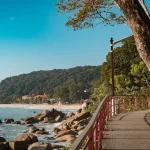
The Malacca River Walk is listed on tourist maps but almost everyone only does the section near Jonker Street. Walk further south, past the painted mural walls, until you reach the stretch near Kampung Morten — the last surviving traditional Malay village within walking distance of a city centre anywhere in Malaysia. The wooden stilt houses with their carved barge boards, the coconut palms leaning over the brown river, the sound of evening prayer from a small surau — it’s extraordinary that this exists within 15 minutes’ walk of a Starbucks.
The Taman Botanikal Ayer Keroh about 11 kilometres from the city centre is a proper botanical garden that almost no foreign tourists visit. Entry is free. Go early morning when the mist is still sitting on the lake and the birds are loud in the trees. The freshness of damp grass and earth after a night of rain, the rustle of wind through banana palms — this is where Malacca breathes.
For something more unusual, the mangrove boardwalk at Pulau Gadong near Sungai Udang — about 20 kilometres from the city — has been upgraded in 2025 with improved walkways. A local fisherman named Pak Razali operates informal morning boat tours for around MYR 50 per person. Ask at your accommodation for contact details — this isn’t bookable online.
Underground Food Haunts
Skip the famous chicken rice ball restaurants with their two-hour queues. Here is where locals actually eat.
Kedai Kopi Chung Wah on Jalan Hang Jebat opens at 7am and sells out of its signature toasted bread with homemade kaya by 10am. The coffee arrives in a thick ceramic mug, jet black and strong enough to rattle your nerves. This kopitiam has been operating since the 1950s and the current owner’s daughter now runs the counter. Nothing costs more than MYR 8.
Geographer Café’s morning market neighbours — the hawker carts that set up on the street beside it before 8am — are invisible to tourists who only arrive for lunch. There’s a regular cendol stall, a nasi lemak cart with sambal that has real heat to it, and an elderly man who sells only one thing: apam balik so thick with creamed corn and peanuts that it takes two hands to hold. Prices start at MYR 2.
Glutton’s Corner at Jalan Merdeka is a local hawker area that predates the tourist economy. Go after 6pm on a weeknight. The asam pedas here — Malacca’s sour, fiery fish stew — is served by a Malay uncle who learned the recipe from his mother. One portion with rice is MYR 12. The broth hits you with a complex sourness from fresh tamarind and a slow-building chilli heat that lingers for twenty minutes after the last spoonful.
Medan Selera Bunga Raya near the General Hospital is where hospital staff, government workers, and nearby residents eat lunch. No tourist infrastructure, full plastic chairs, corrugated metal roof, rotating fans. The economy rice stall (nasi campur) here has the widest spread of dishes you’ll find in Malacca for MYR 8–12 a plate.
Craft Workshops and Living Heritage
A few artisans in Malacca still practise crafts that have almost disappeared from the rest of Malaysia. Finding them takes effort, but they are genuinely accessible.
Hang Kasturi Walk behind the shopping area has two batik workshops where you can do a hands-on wax-resist dyeing session for MYR 60–80, inclusive of materials and a piece to take home. These aren’t the tourist-polished experiences from big operators — they’re messy, informal, and run by craftspeople who will correct your technique bluntly and effectively.
Peter Piper Pottery on Jalan Hang Jebat is one of the few remaining traditional Nyonya pottery workshops in Malaysia. The blue-and-white ceramic work references Chinese export porcelain but with local motifs — the phoenix, the peony, local birds. Watching the painter work is mesmerising: the brush moves with the kind of certainty that comes from 30 years of repetition. Small pieces start at MYR 45.
The Malacca Rattan Association workshop near Kampung Hulu accepts visitors who call ahead. Rattan furniture-making is a dying craft — there are fewer than a dozen active workshops left in Malaysia. The smell of raw rattan being steamed and bent, the rhythmic weaving sound — it’s a working environment, not a performance, and that’s what makes it worthwhile.
Day Trip Detours Most Tourists Skip
If you have an extra day, these nearby destinations are within striking distance and consistently overlooked.
Muar — 45 minutes north by bus (MYR 8 from Malacca Sentral) — is a rivertown with a perfectly preserved colonial waterfront, outstanding Johorean cuisine, and almost no foreign tourists. The town’s otak-otak (spiced fish cake grilled in banana leaf) is famous among Malaysians and unknown abroad. Budget a full half-day.
Alor Gajah — 25 kilometres north — is Malacca state’s administrative town with a different character entirely. The weekend morning market here is a proper rural wet market with produce you won’t find in the city. The drive takes 30 minutes by Grab (roughly MYR 25–35 each way).
Pulau Besar — the small island accessible by ferry from Umbai jetty (MYR 10 return, journey 15 minutes) — is a quietly significant Islamic pilgrimage site with a handful of old graves of Sufi saints. The island has basic accommodation for MYR 80–120 per night, a small beach, and almost no commercial activity. It feels like another century.
Rembia Forest Reserve, about 35 kilometres from Malacca city, has a small canopy walkway and trail system managed by the Malacca Forestry Department. In 2025, the reserve upgraded its trail markers and added a small visitor centre. Grab will get you there for MYR 40–50. Bring your own water and enter before 8am for wildlife sightings.
Practical Tips for Exploring Off the Beaten Path
Getting around Malacca’s hidden spots requires a bit more planning than sticking to Jonker Street. Here’s what actually works in 2026.
- Grab is your best tool. The trishaws look fun but are for Jonker Street performance, not transport. Grab rides within the city typically cost MYR 8–18. The app is reliable and most drivers know the city well.
- Rent a bicycle. Several shops around Dutch Square rent decent bikes for MYR 10–15 per hour or MYR 35–50 per day. The flat terrain makes cycling practical and the lanes off the main roads are manageable even in light traffic.
- Weekday mornings are gold. Malacca’s hidden spots get even quieter before 10am on weekdays. Weekend afternoons are the worst time to explore anything off the tourist trail — the traffic and crowd spillover reaches even the quiet streets by 2pm.
- Some sites require a Malay phrase or two. Not everyone running a local kopitiam or workshop speaks comfortable English. A simple boleh tengok? (may I look?) and terima kasih (thank you) go a long way.
- Carry cash. Smaller establishments, market stalls, and workshop operators often don’t accept card or e-wallet. Keep MYR 50–100 in small notes on you.
2026 Budget Reality: What Offbeat Malacca Actually Costs
One of the best things about exploring the lesser-known side of Malacca is that it’s consistently cheaper than the tourist trail.
Budget Tier (MYR 80–150 per day)
Street food and kopitiam meals for every meal: MYR 6–15 per meal. Free or low-cost sites (St. Paul’s Hill, river walk, Kampung Morten): MYR 0–10. Bicycle rental: MYR 35–50 per day. Budget guesthouse in the heritage zone: MYR 60–90 per night. This is genuinely achievable and doesn’t require skimping on experiences.
Mid-Range Tier (MYR 200–350 per day)
A mix of hawker food and one sit-down meal: MYR 40–70 per day on food. Entry to paid museums and a craft workshop: MYR 60–100. Grab for transport: MYR 30–50. Mid-range hotel with character in the heritage zone: MYR 150–250 per night. Day trip to Muar or Pulau Besar adds MYR 30–60 for transport.
Comfortable Tier (MYR 400–600 per day)
Heritage boutique hotel: MYR 280–450 per night. Private car hire for offbeat day trips: MYR 180–250 per day. Private craft workshop sessions: MYR 120–200. Fine dining Peranakan meal: MYR 80–150 per person. Everything is still excellent value by regional standards at this tier.
Frequently Asked Questions
What are the most underrated things to do in Malacca?
Walking the side streets behind Jonker — particularly Jalan Tukang Emas and the Kampung Kling lanes — rewards visitors with the city’s real residential character. The Baba Nyonya Heritage Museum, a morning at Kedai Kopi Chung Wah, and a ferry trip to Pulau Besar are consistently overlooked by first-time visitors focused on the main tourist circuit.
Is Malacca worth visiting beyond Jonker Street?
Absolutely. The heritage zone is only a fraction of what Malacca offers. Kampung Morten, the botanical garden at Ayer Keroh, the craft workshops near Hang Kasturi Walk, and day trips to Muar or Rembia Forest Reserve show a completely different side of the city. Most visitors who return to Malacca say they wish they’d explored beyond the main strip the first time.
When is the best time to visit Malacca’s hidden spots?
Weekday mornings between 7am and 11am. Malacca gets heavy domestic tourist traffic on weekends and Malaysian public holidays. If you’re visiting during a peak period, the offbeat spots are still significantly quieter than Jonker Street — but arriving early gives you the best experience, especially at food stalls and living heritage workshops.
How do I get around Malacca without joining tour groups?
Rent a bicycle for flat inner-city exploration (MYR 35–50 per day) and use Grab for anything beyond a 3-kilometre radius. Malacca Sentral bus terminal connects to nearby towns like Muar and Alor Gajah cheaply. In 2026, there’s no MRT or LRT — the city is small enough that cycling and Grab cover everything you need independently.
Are the lesser-known museums in Malacca worth paying for?
The Baba Nyonya Heritage Museum at MYR 18 is genuinely excellent value. The Fantasea Miniature Museum at MYR 25 is more niche but worthwhile if you have 45 minutes. Most other smaller museums in Malacca are free or under MYR 10. The Malacca Stamp Museum, free of charge, surprises most visitors who give it more than a cursory glance.
📷 Featured image by Sanush Radalage on Unsplash.