On this page
- Accommodation Costs: What You Actually Pay Month to Month
- Food and Groceries: Hawker Stalls, Wet Markets, and Supermarkets
- Transport: Getting Around Without a Car
- The DE Rantau Visa: What It Costs to Stay Legally
- Health Insurance: What Coverage You Need and What It Costs
- Tax Reality: The 183-Day Rule and What It Means for Your Money
- 2026 Budget Reality: Three Tiers of Monthly Living Costs
- Frequently Asked Questions
Malaysia has been on the digital nomad radar for years, but 2026 has introduced some real changes that affect how much you spend and how you structure your stay. The DE Rantau digital nomad visa program has matured, the ringgit has stabilised against major currencies, and rental prices in Kuala Lumpur have crept up after a surge in remote worker arrivals through 2024 and 2025. If you are planning to base yourself here for anywhere from one to twelve months, the numbers below reflect what people are actually paying right now — not what travel blogs were quoting three years ago.
Accommodation Costs: What You Actually Pay Month to Month
Accommodation is your biggest monthly expense and the one with the widest range depending on city, apartment type, and how long you commit. Malaysia’s four main bases for digital nomads — Kuala Lumpur, Penang, Langkawi, and Kota Kinabalu — have meaningfully different rental markets.
In Kuala Lumpur, a furnished studio apartment in a serviced residence with Wi-Fi, a pool, and a gym runs between MYR 1,800 and MYR 2,800 per month in 2026. These are the kind of units that have become standard for the remote worker crowd — short-stay leases of one to three months are widely available, though you pay a premium compared to a twelve-month lease. If you want a one-bedroom apartment with more space and a proper kitchen, budget MYR 2,500 to MYR 3,800 monthly depending on the district.
Penang’s George Town is cheaper. A decent furnished studio runs MYR 1,200 to MYR 1,800, and a one-bedroom apartment sits around MYR 1,600 to MYR 2,400. The island has older building stock than KL, so air-conditioning reliability and building maintenance vary more — inspect before you commit.
Langkawi is an outlier. It is duty-free and lower cost for goods, but rental inventory is thin. You are mostly looking at long-stay guesthouses, Airbnb-style units, or holiday villas not really designed for month-long stays. Expect MYR 2,000 to MYR 3,500 for something liveable with fast internet — and fast internet is not guaranteed everywhere on the island. Kota Kinabalu in Sabah has grown its remote worker scene since 2024. A furnished studio runs MYR 1,000 to MYR 1,800, making it the most affordable of the four cities for accommodation.

Food and Groceries: Hawker Stalls, Wet Markets, and Supermarkets
Food is where Malaysia earns its reputation. Eating at hawker centres and mamak stalls — the open-air Indian Muslim restaurants that stay open late and serve everything from roti canai to mee goreng — keeps your food budget remarkably low. A full hawker meal of nasi campur, where you point at dishes you want piled onto rice, costs MYR 6 to MYR 10. At a mamak, you can eat a hot breakfast of roti canai with dhal and a teh tarik — the thick, sweetened pulled milk tea that arrives in a frothy glass — for MYR 4 to MYR 6.
If you eat out almost every meal at this level, your monthly food spend can sit between MYR 600 and MYR 900. This is realistic because cooking at home requires paying for gas, utensils, and a kitchen stocked from scratch, which offsets the savings unless you are staying somewhere long-term.
Supermarket grocery costs have risen since 2024 due to subsidy reforms affecting cooking oil and chicken prices. A weekly grocery run for basic staples — eggs, vegetables, local chicken, rice, and fruit — runs around MYR 80 to MYR 130 depending on whether you shop at a wet market (cheaper, fresher) or a chain supermarket like Jaya Grocer or Village Grocer (more expensive but more imported variety). Imported goods, Western packaged foods, and specialty items cost noticeably more in Malaysia than in Western countries.
Transport: Getting Around Without a Car
In Kuala Lumpur, the MRT and LRT network expanded significantly in 2025 with the completion of the Putrajaya Line Phase 2 extension and additional stations on the Kajang Line. In 2026, you can reach most of the city without a car. A single MRT or LRT ride costs MYR 1.20 to MYR 4.50 depending on distance. Monthly unlimited rail passes (Touch ‘n Go integrated passes) are available from around MYR 100 to MYR 150 and make sense if you use the rail system daily.
Ride-hailing through Grab remains the standard for trips the rail network does not cover. A typical in-city Grab ride of 5 to 10 kilometres costs MYR 10 to MYR 22 depending on time of day and demand. Budget around MYR 150 to MYR 300 monthly for Grab use on top of rail costs if you are living without a car in KL.
Penang and Kota Kinabalu are less public-transport-friendly. In Penang, you will likely rely on Grab or a rented scooter. Scooter rentals for monthly use cost around MYR 300 to MYR 500. In Langkawi, a scooter or car rental is essentially mandatory — budget MYR 600 to MYR 1,000 monthly for a basic car rental or MYR 300 to MYR 500 for a scooter.
The DE Rantau Visa: What It Costs to Stay Legally
The DE Rantau digital nomad visa is Malaysia’s formal pathway for remote workers. In 2026, the program has processed tens of thousands of applications and the process is better understood than it was at launch. Here is what the application requires and costs.
To qualify, you must be employed by or running a registered company outside Malaysia, earning a minimum of USD 24,000 per year (approximately MYR 113,000 at 2026 exchange rates). The application fee is MYR 1,000 for a single applicant. Dependants can be added for MYR 500 each. The visa is issued for twelve months and is renewable once, giving you a maximum of two years under the same visa.
Processing time in 2026 is typically three to six weeks when submitted through Malaysia Digital (the government body managing the program). The application is done online via the Malaysia Digital portal. You will need proof of employment or business ownership, bank statements showing consistent income for the past three months, a valid passport, and proof of health insurance coverage. The health insurance requirement is enforced at application — you cannot submit without a policy in place.
If you are staying shorter than 90 days, citizens of most Western countries (UK, US, EU members, Australia) can enter Malaysia visa-free and work remotely without the DE Rantau visa, as Malaysia has not implemented enforcement against short-stay remote workers. The DE Rantau visa matters when you want to stay beyond the standard tourist entry period or need the formal documentation for opening a Malaysian bank account or registering for a TIN.
Health Insurance: What Coverage You Need and What It Costs
Malaysia’s private healthcare system is good quality relative to cost. A GP consultation in a private clinic costs MYR 50 to MYR 120. Specialist visits run MYR 150 to MYR 400. Private hospital care is significantly cheaper than in Western countries but still expensive without insurance if something serious happens.
The DE Rantau visa requires health insurance that covers you in Malaysia with a minimum coverage of USD 50,000 (around MYR 235,000) for hospitalisation and medical evacuation. Most international health insurance policies qualify. In 2026, monthly premiums for a 30-year-old on a standard international health insurance plan with USD 1 million coverage sit between MYR 350 and MYR 700, depending on the insurer and deductible level. For a 45-year-old, premiums typically run MYR 650 to MYR 1,200 monthly.
Major international insurers operating in Malaysia in 2026 include AXA, Cigna, AIA, and Allianz. Some digital nomad-specific insurers offer shorter-term policies of one to twelve months that satisfy the DE Rantau requirement and work out slightly cheaper than annual plans if you are not staying the full year.
Tax Reality: The 183-Day Rule and What It Means for Your Money
This is the part most digital nomads underestimate. Malaysia’s tax residency rule is tied directly to physical presence. If you spend 183 days or more in Malaysia in a calendar year, you become a Malaysian tax resident. As a resident, you pay income tax on a progressive scale starting at 0% on the first MYR 5,000 of chargeable income and rising to 24% at higher income levels — but crucially, Malaysia in 2026 taxes foreign-sourced income that is remitted into Malaysia.
This changed significantly in 2022 and the rule has been enforced more consistently since 2024. If you bring money from overseas into a Malaysian bank account — which you will need to do to pay rent, buy groceries, and live — that remitted income is taxable if you are a tax resident. The exemption that existed earlier has been narrowed. You need to register for a Malaysian Tax Identification Number (TIN) with the Inland Revenue Board (LHDN) if you earn income while resident, and file a tax return if your remitted income exceeds MYR 34,000 in a year.
If you are a non-resident (under 183 days), income you earn from foreign sources and spend in Malaysia is not subject to Malaysian income tax. Non-residents who receive income from Malaysian sources are taxed at a flat rate of 30%. The practical implication: if you are planning a six-month stay and will cross the 183-day threshold, speak to a Malaysian tax consultant before you arrive. Several firms in KL offer fixed-fee digital nomad tax consultations for around MYR 300 to MYR 600.
2026 Budget Reality: Three Tiers of Monthly Living Costs
The following figures reflect all-in monthly costs for a single person living in Kuala Lumpur in 2026, covering accommodation, food, transport, health insurance, and incidentals. Penang will run roughly 15% to 20% cheaper on accommodation. Kota Kinabalu is similarly affordable. Langkawi sits closer to KL prices for accommodation but cheaper on everything else due to duty-free status.
Budget Tier — MYR 3,500 to MYR 4,800 per month
- Studio apartment in an older but functional serviced residence: MYR 1,600 to MYR 1,900
- Eating mostly at hawker stalls and mamak restaurants: MYR 600 to MYR 800
- Public transport plus occasional Grab: MYR 200 to MYR 300
- Basic health insurance (entry-level international policy): MYR 350 to MYR 500
- Phone and internet (SIM data + apartment Wi-Fi): MYR 80 to MYR 120
- Incidentals, personal care, entertainment: MYR 400 to MYR 600
Mid-Range Tier — MYR 5,500 to MYR 7,500 per month
- One-bedroom apartment in a well-maintained serviced block: MYR 2,500 to MYR 3,200
- Mix of hawker meals and occasional restaurant dinners: MYR 1,000 to MYR 1,400
- Grab-heavy transport or monthly rail pass plus Grab: MYR 350 to MYR 500
- Solid international health insurance with MYR 1,000 deductible: MYR 500 to MYR 700
- Phone, internet, streaming services: MYR 150 to MYR 200
- Gym membership, social activities, day trips: MYR 500 to MYR 900
Comfortable Tier — MYR 8,000 to MYR 12,000 per month
- Spacious one-bedroom or two-bedroom apartment in a premium building: MYR 3,800 to MYR 5,500
- Flexible eating including restaurants and imported groceries: MYR 1,500 to MYR 2,000
- Car rental or heavy Grab use: MYR 800 to MYR 1,500
- Comprehensive international health insurance with low deductible: MYR 700 to MYR 1,200
- Phone, internet, streaming, productivity tools: MYR 200 to MYR 300
- Weekend travel, fitness, social and lifestyle costs: MYR 1,000 to MYR 1,800
To put this in perspective, the mid-range tier of MYR 5,500 to MYR 7,500 converts to roughly USD 1,170 to USD 1,600 per month at 2026 exchange rates. For someone earning a remote income in USD, EUR, or GBP, this represents a meaningful reduction in living costs compared to most Western cities while maintaining a comfortable and well-serviced lifestyle.
Frequently Asked Questions
Can I live in Malaysia as a digital nomad for under MYR 4,000 a month?
Yes, but it requires careful choices. Budget accommodation in Penang or Kota Kinabalu, eating almost entirely at hawker stalls and mamak restaurants, and using public transport keeps costs in this range. Health insurance is non-negotiable if you are on the DE Rantau visa, so factor that in regardless of how tight you run everything else.
Do I need to pay tax in Malaysia if I only stay for five months?
If you stay fewer than 183 days in a calendar year, you are a non-resident for Malaysian tax purposes. Foreign-sourced income you spend in Malaysia is generally not taxed at the non-resident rate. You should still check your home country’s rules on foreign income and residency, as Malaysia’s position does not override your home country’s tax obligations.
Is the DE Rantau visa worth applying for if I am only staying six months?
If your income meets the USD 24,000 threshold and you want to open a Malaysian bank account, stay legally beyond your standard visa-free period, or access DE Rantau partner benefits, it is worth it. If you are only staying five to six months and will stay under the visa-free limit for your nationality, the MYR 1,000 application fee may not justify the paperwork.
Are rental prices in Kuala Lumpur still affordable in 2026 compared to earlier years?
Rents in KL have risen about 15% to 25% from 2022 levels following increased demand from international remote workers through 2024 and 2025. They remain affordable compared to Singapore, Hong Kong, or most European cities. A furnished one-bedroom apartment in a modern building now typically starts at around MYR 2,500 per month in KL.
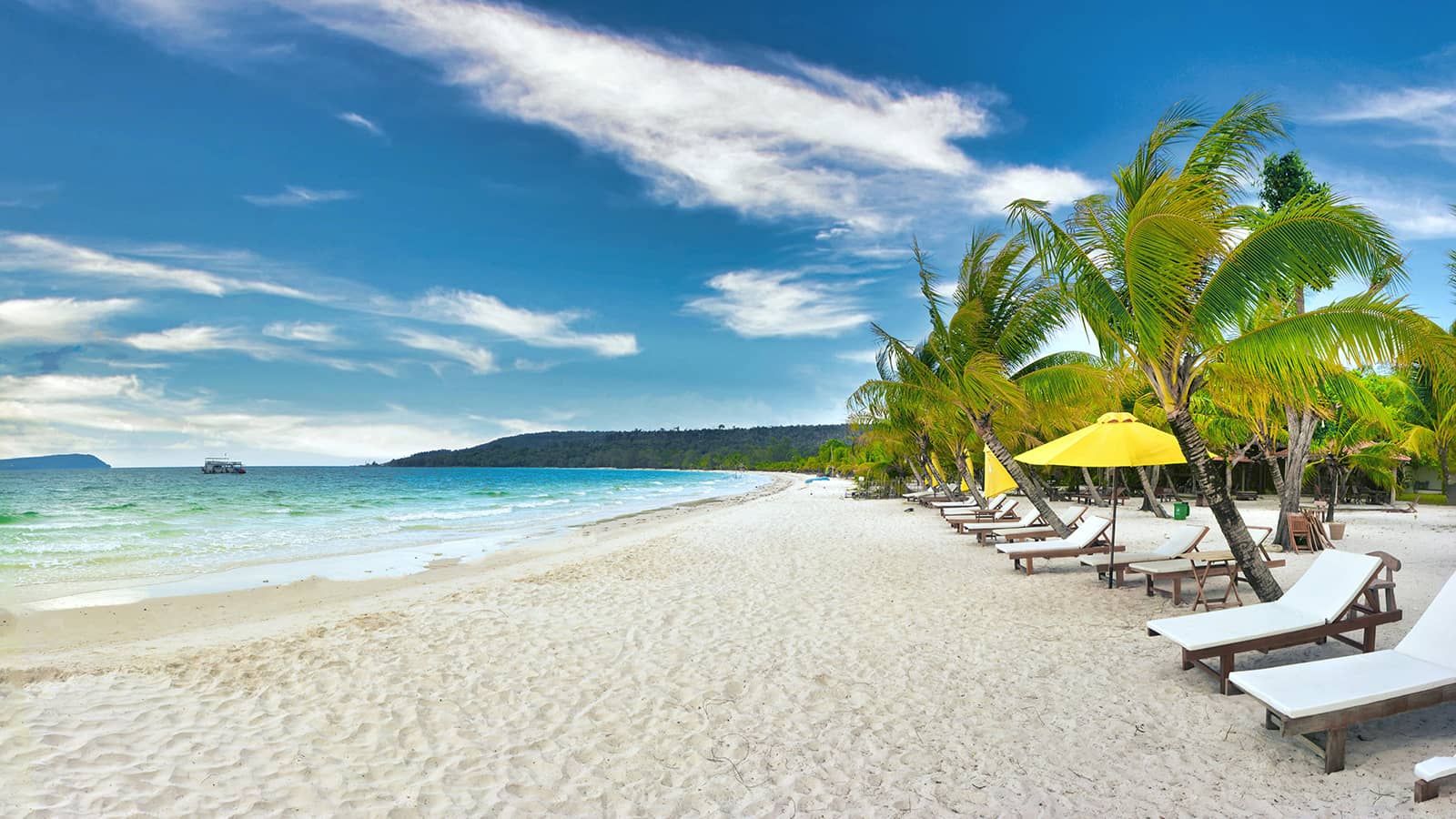
📷 Featured image by Kemal Esensoy on Unsplash.