On this page
- Why Malaysia is Becoming a Top Digital Nomad Destination
- The DE Rantau Visa: Malaysia’s Official Digital Nomad Pathway
- Tax Residency Rules Every Remote Worker Must Understand
- What It Actually Costs to Live Here in 2026
- Healthcare and Insurance: Getting Covered Before You Arrive
- The Residence Permit Process Step by Step
- Why Malaysia’s Infrastructure Makes Remote Work Viable
- Frequently Asked Questions
Why Malaysia is Becoming a Top Digital Nomad Destination
Finding a country that combines affordable living, reliable internet, a functioning visa pathway, and genuine quality of life has always been the hardest part of the digital nomad equation. In 2026, Malaysia has quietly moved to the front of that shortlist — not because of hype, but because the practical boxes actually get ticked. Flight connections have expanded, the DE Rantau programme has matured with clearer processing timelines, and the ringgit’s relative value against the USD and EUR continues to stretch remote incomes further than most Southeast Asian alternatives. If you are seriously considering Malaysia for one to twelve months of location-independent work, here is what the move actually looks like on the ground.
The DE Rantau Visa: Malaysia’s Official Digital Nomad Pathway
Malaysia launched the DE Rantau Digital Nomad Pass under the Malaysia Digital Economy Corporation (MDEC) framework, and by 2026 it has become one of the more straightforward nomad visas in Asia. It is not a tourist extension workaround — it is a formal residence pass designed specifically for remote workers employed by or earning from companies outside Malaysia.
The core eligibility requirements as of 2026:
- Minimum monthly income: USD 24,000 per year (approximately MYR 113,000 at mid-2026 rates) for individual applicants. This has remained stable since the programme’s revision in late 2024.
- Employment type: You must be a freelancer, contractor, or employee of a foreign-registered company. You cannot be earning from Malaysian clients or Malaysian-registered businesses under this pass.
- Valid passport: Minimum six months validity beyond your intended stay.
- Health insurance: Proof of coverage valid in Malaysia for the duration of your stay (more on this below).
- Clean criminal record: A police clearance certificate from your home country, typically issued within the last six months.
The pass is issued for twelve months and is renewable. Dependants — spouse and children under 18 — can be included on the same application. Processing through the official MDEC portal typically runs three to six weeks in 2026, an improvement from the eight to twelve week waits reported in 2023. Applications are submitted entirely online, and the pass is stamped upon arrival at a Malaysian port of entry.
The application fee sits at MYR 1,000 per applicant (MYR 500 per dependant). This is a one-time government processing fee, not an annual charge. If your application is rejected, the fee is non-refundable, so ensuring your documentation is complete before submitting is worth taking seriously.

Tax Residency Rules Every Remote Worker Must Understand
Tax is where most digital nomad guides gloss over the details, and that can be an expensive mistake. Malaysia’s tax rules operate on a residency basis, and the 183-day threshold changes your obligations significantly.
The 183-day rule: If you spend 183 days or more in Malaysia in a calendar year, you are classified as a tax resident by the Inland Revenue Board of Malaysia (LHDN). Tax residents are taxed on a progressive scale starting at 0% on the first MYR 5,000 of chargeable income, rising through brackets to a maximum of 30% on income above MYR 2,000,000.
Non-resident status: Spend fewer than 183 days in Malaysia in a year, and you are taxed as a non-resident at a flat rate of 30% on all Malaysian-sourced income. For most DE Rantau holders whose income is entirely foreign-sourced, this distinction matters less practically — but it becomes critical if you begin taking on any Malaysian clients or income streams.
Foreign-sourced income: Malaysia introduced taxation on foreign-sourced income remitted into Malaysia in 2022, but exemptions for individuals have been extended through 2026 for most categories of employment income. Practically speaking, the majority of DE Rantau pass holders with foreign employment income are not currently subject to Malaysian income tax on those earnings. This is not a loophole — it reflects deliberate government policy to attract remote workers. However, the exemptions are reviewed annually, and you should check the LHDN website or consult a local tax agent for any updates before your arrival.
Getting a Malaysian Tax Identification Number (TIN): If you plan to stay beyond 183 days, registering for a TIN with LHDN is the correct step. Registration is done at any LHDN branch or through the MyTax online portal. You will need your passport, DE Rantau pass, and proof of address in Malaysia. Processing takes five to ten working days. Having a TIN does not automatically mean you owe tax — it simply puts you in the system correctly, which matters if you want to open a Malaysian bank account or deal with any formal financial institutions.
Your home country obligations: Malaysia cannot dissolve your tax obligations to your home country. Many nomads from the US, UK, Australia, and EU nations continue filing taxes at home based on citizenship or prior residency rules. Get clarity on your home country exit tax requirements before you leave — this is non-negotiable.

What It Actually Costs to Live Here in 2026
The ringgit has stabilised considerably compared to its 2023-2024 volatility, sitting roughly in the MYR 4.40–4.60 range against the USD in mid-2026. For remote workers earning in foreign currencies, this means your income goes meaningfully further than equivalent cities in Western Europe, Australia, or even Thailand’s more expensive urban centres.
Here is a realistic monthly cost breakdown across three living tiers:
Budget Living (MYR 2,500–3,800/month)
- Room in a shared apartment or basic studio: MYR 800–1,200
- Food (hawker centres, mamak stalls, occasional supermarket cooking): MYR 600–900
- Transport (MRT, LRT, Grab): MYR 150–300
- Utilities and mobile data: MYR 150–200
- Co-working pass or café spending: MYR 300–500
- Incidentals, entertainment, toiletries: MYR 400–600
Mid-Range Comfortable (MYR 4,500–7,000/month)
- One-bedroom apartment in a central urban area (KL, Penang): MYR 1,800–3,000
- Mixed dining — restaurants, hawker food, home cooking: MYR 1,000–1,500
- Transport including occasional car rental or Grab convenience: MYR 400–600
- Utilities, broadband, mobile: MYR 200–300
- Leisure, gym membership, weekend travel within Malaysia: MYR 600–1,000
Comfortable Expat Standard (MYR 8,000–14,000/month)
- Two-bedroom serviced apartment or luxury condo with pool and gym: MYR 3,500–6,000
- Regular restaurant dining, international groceries, occasional fine dining: MYR 2,000–3,000
- Private car or frequent Grab Premium: MYR 800–1,500
- Private health insurance top-up, gym, international school fees (if applicable): MYR 1,500–3,000
Apartment rental costs vary significantly by city. In Kuala Lumpur, a decent one-bedroom in a central area runs MYR 1,800–2,800 per month. Penang’s Georgetown is slightly cheaper at MYR 1,400–2,200 for equivalent quality. Kota Kinabalu in Sabah remains the most affordable major city for quality apartments, with good one-bedrooms available from MYR 1,000–1,600. Langkawi, with its duty-free status, offers cheaper alcohol and petrol but fewer apartment options — expect MYR 1,200–2,000 for a furnished unit.
Healthcare and Insurance: Getting Covered Before You Arrive
The DE Rantau pass requires proof of valid health insurance for your entire stay, and this is checked during the application process — not just ticked and forgotten. Malaysia’s private healthcare system is genuinely excellent by regional standards, with well-equipped private hospitals in KL, Penang, and Kota Kinabalu staffed by English-speaking doctors. The public system, while functional, has long wait times and is not set up to serve non-citizens efficiently.
What a compliant policy needs to cover for the DE Rantau application:
- Inpatient hospitalisation in Malaysia
- Emergency medical treatment
- Medical evacuation (required for Sabah and Sarawak applicants particularly)
- Minimum coverage of USD 50,000 (approximately MYR 235,000 at mid-2026 rates) per incident is the recommended floor — check MDEC’s current published minimum

International nomad health insurance policies from providers such as SafetyWing, Cigna Global, and AXA International are widely used by DE Rantau applicants and accepted by MDEC. Monthly premiums vary by age and coverage level:
- Basic nomad coverage (e.g. SafetyWing Nomad Insurance): Approximately MYR 180–350/month for adults under 40
- Mid-tier international health policy: MYR 500–900/month depending on age and deductible choice
- Comprehensive expat plan with dental and outpatient: MYR 900–1,800/month
If you plan to stay for twelve months or longer and become a tax resident, some nomads choose to supplement their international policy with a local Malaysian private hospital card (a product offered by Prudential, Great Eastern, AIA Malaysia, and others). These cost MYR 150–400/month and give direct billing access at major private hospitals, which removes the need to pay upfront and claim reimbursement.
Walking into a private clinic for a routine consultation costs MYR 50–120 in 2026. A specialist outpatient visit at a private hospital runs MYR 150–350. These are numbers that make out-of-pocket decisions on minor issues genuinely manageable for most remote workers.
The Residence Permit Process Step by Step
The DE Rantau pass is processed through MDEC, not through the Immigration Department of Malaysia directly — this confuses many first-time applicants. Here is the actual sequence:
- Create an account on the DE Rantau portal (derantau.mdec.com.my). You will need a working email and a phone number for OTP verification.
- Prepare your document package. This includes your passport scan, employment contract or proof of freelance income (bank statements for the past three months showing consistent foreign income, client contracts, or employer letter), police clearance certificate, health insurance certificate of coverage, and passport-sized photo meeting MDEC’s specifications.
- Submit the application and pay the MYR 1,000 fee. Payment is processed through the portal via credit or debit card.
- Wait for MDEC review. In 2026, most complete applications receive an initial response within fifteen working days. If additional documents are requested, you have thirty days to respond before the application is voided.
- Receive your approval letter. This is a digital document issued by MDEC confirming your eligibility for the DE Rantau pass.
- Arrive in Malaysia and present your approval letter at immigration. The pass stamp is placed in your passport at the port of entry. Kuala Lumpur International Airport (KLIA) has a dedicated MDEC-assisted immigration lane during peak arrival hours — check the MDEC website for current operating times before your flight.
- Register with the Immigration Department if required for your nationality. Citizens of certain countries must also register at the nearest Immigration Department office within fourteen days of arrival. MDEC will notify you if this applies.

For dependants joining you, additional documentation is needed: marriage certificate (officially translated to English or Malay if in another language), birth certificates for children, and proof of your relationship. Dependants cannot work in Malaysia under a DE Rantau dependant pass.
Why Malaysia’s Infrastructure Makes Remote Work Viable
Visa and cost aside, the physical experience of working remotely from Malaysia in 2026 holds up well. The country’s digital infrastructure has improved consistently, and the 2025 rollout of expanded 5G coverage across Peninsular Malaysia — now reaching most urban and suburban areas through the national 5G network operated by Digital Nasional Berhad — means connectivity is no longer the gamble it was three years ago.
Fixed broadband in apartments typically comes through TIME dotCom or Unifi (Telekom Malaysia), with 300 Mbps to 1 Gbps plans costing MYR 89–189 per month. Installation in a new apartment takes five to ten working days. SIM-only mobile plans with 100GB+ data are available for MYR 50–80/month from Maxis, Celcom, Digi (now merged into CelcomDigi), or U Mobile — useful as a backup or for travel days.
Getting around without a car is genuinely practical in Kuala Lumpur in 2026 following the completion of the Putrajaya Line MRT Phase 2 extensions and the continued LRT3 service improvements. Rapid KL covers most of the Klang Valley, and the Grab ride-hailing network fills the last-mile gaps. Penang’s rapid bus network has improved significantly since 2024, though a car or scooter remains useful there for those living outside Georgetown proper. Kota Kinabalu is still largely car-dependent outside the central district.
Frequently Asked Questions
Can I apply for the DE Rantau pass while already in Malaysia on a tourist visa?
Yes, as of 2026 you can apply while in Malaysia on a valid tourist entry stamp. However, your DE Rantau pass will only be formally activated when you exit and re-enter Malaysia — or at your next entry if you are applying from abroad. MDEC recommends completing your application before your tourist stamp expires to avoid complications.
Do I need to pay Malaysian income tax on my foreign salary under the DE Rantau pass?

For most DE Rantau holders in 2026, foreign-sourced employment income remitted to Malaysia remains exempt from Malaysian income tax under current LHDN rules. However, this exemption is reviewed annually. You remain responsible for tax obligations in your home country based on your citizenship or prior residency status. Consult a licensed tax agent for your specific situation.
Can my spouse work in Malaysia if they come as my dependant?
No. Dependants on a DE Rantau pass are not permitted to work in Malaysia, whether for Malaysian or foreign employers. If your spouse also earns remote income independently, they should apply for their own DE Rantau pass — provided they meet the individual income threshold — rather than joining as a dependant.
What happens if I want to stay longer than twelve months?
The DE Rantau pass is renewable for another twelve months, provided you still meet the eligibility criteria and your health insurance and income documentation remains current. MDEC recommends beginning the renewal process at least sixty days before your pass expiry. There is no stated limit on the number of times you can renew, though long-term permanent residency requires a different application pathway entirely.
Is Malaysia safe for solo digital nomads, including solo women travellers?
Malaysia is generally considered safe for solo travellers, including solo women, by regional and global standards. Violent crime against foreigners is uncommon in major urban areas. Standard urban precautions apply, particularly at night in less-lit areas. The country has a functioning emergency services system, English is widely understood, and the expat and nomad community is large enough that finding local support networks is straightforward in KL, Penang, and Kota Kinabalu.
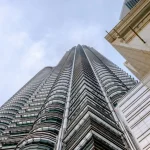
📷 Featured image by Kelvin Zyteng on Unsplash.