On this page
- Langkawi Beyond the Sun Lounger
- Mangrove Rivers, Sea Eagles, and the Kilim Karst
- Jungle Ridges and Waterfall Trails
- Sky Adventures: Above the Treeline
- Island-Hopping Off the Tourist Circuit
- Cultural Depth: Craft Workshops and Kampung Life
- Where to Eat Without the Resort Markup
- Getting Around Langkawi in 2026
- Day Trips Worth the Boat Ride
- Timing Your Trip for Adventure
- Budget Breakdown: What Langkawi Costs in 2026
- Practical Tips for Langkawi in 2026
- Frequently Asked Questions
💰 Click here to see Malaysia Budget Breakdown
💰 Prices updated: October, 2026. Budget figures are estimates — always verify before travel.
Exchange Rate: $1 USD = RM4.08
Daily Budget (per person)
Shoestring: RM100.00 – RM180.00 ($24.51 – $44.12)
Mid-range: RM250.00 – RM450.00 ($61.27 – $110.29)
Comfortable: RM500.00 – RM1,000.00 ($122.55 – $245.10)
Accommodation (per night)
Hostel/guesthouse: RM30.00 – RM60.00 ($7.35 – $14.71)
Mid-range hotel: RM110.00 – RM200.00 ($26.96 – $49.02)
Food (per meal)
Budget meal: RM15.00 ($3.68)
Mid-range meal: RM35.00 ($8.58)
Upscale meal: RM100.00 ($24.51)
Transport
Single metro/bus trip: RM2.00 ($0.49)
Monthly transport pass: RM50.00 ($12.25)
Langkawi Beyond the Sun Lounger
Here is the problem with how most people visit Langkawi in 2026: they book a beach resort, spend four days on Pantai Cenang, pick up cheap duty-free liquor, and fly home thinking they have seen the island. They have not seen it at all. Langkawi is a UNESCO Global Geopark — one of the oldest geological formations in Southeast Asia — and beneath its beach-resort surface sits a genuinely wild, textured destination with mangrove rivers, jungle ridges, ancient limestone karsts, and a food scene that has nothing to do with hotel buffets. This guide is for the traveller who wants the full picture.
Mangrove Rivers, Sea Eagles, and the Kilim Karst
The Kilim Karst Geoforest Park in Langkawi’s northeast is one of the most biologically dense environments in Malaysia, and most visitors drive straight past it on the way to the cable car. A boat tour through the mangrove channels here feels nothing like a tourist attraction — the waterways narrow to the width of two kayaks, roots form cathedral arches overhead, and the air carries the sharp, mineral smell of tidal salt mixing with decaying leaf matter.
Sea eagle feeding is the headline act, and it delivers. Boat operators toss raw chicken into the water and within seconds a brahminy kite or white-bellied sea eagle drops in at speed — wingspans stretching past a metre, talons breaking the water surface cleanly. The moment is visceral in a way that photographs fail to capture.
- Jeti Kilim: The main departure jetty for mangrove tours, located near Tanjung Rhu on the northeast coast. Most tours run between 9am and 1pm.
- Kayaking option: Several operators offer self-paddle kayak tours through narrower channels inaccessible to motorboats. Budget around MYR 120–180 per person for a guided kayak session.
- Bat Cave: Most boat tours include a stop at a limestone cave inhabited by thousands of bats — worth it, even if it sounds gimmicky.
- Duration: Standard boat tour is 2.5 to 3 hours. Full-day kayaking packages run 5–6 hours.
Beyond Kilim, the Sungai Kisap mangrove trail on the island’s west side is almost completely overlooked by tourists. It is a shorter, quieter experience — a 45-minute boardwalk through dense mangrove — but you are often the only person there.
Jungle Ridges and Waterfall Trails
Langkawi’s interior is a continuous ridge of rainforest-covered limestone and granite, and it receives almost no serious hiking attention compared to the beach strips. That is changing slowly, but for now the trails are refreshingly quiet.
Durian Perangin Waterfall
Located inland from Ayer Hangat village, Durian Perangin is a multi-tiered cascade that drops roughly 90 metres across 14 levels of rock shelf. The lower pools are accessible and popular; the upper tiers require scrambling over slick granite and are worth every scraped knee. Go before 10am on a weekday and you will often have the upper pools entirely to yourself. The sound of the water — a constant white-noise roar that builds as you climb — is reason enough to make the effort.
Gunung Raya Summit Trail
At 881 metres, Gunung Raya is the highest peak on the island. There is a paved road to the top, which most people drive or motorcycle up, but the jungle trail from the base is a legitimate half-day hike through primary rainforest. Expect leech socks to be necessary during and after the wet season. The summit on a clear morning offers a view across the entire archipelago — on the best days you can make out the Thai coast to the north. The hike takes approximately 3–4 hours return from the base.

Temurun Waterfall and the Hidden Trail Network
Temurun Waterfall, near Datai Bay, is accessed via a short trail from the roadside. It is smaller than Durian Perangin but arguably more dramatic — a single 200-metre drop into a clear pool, framed by forest that has barely been touched. The surrounding area has informal trail networks used by locals and a small number of adventure operators. Bring proper footwear and avoid these trails immediately after heavy rain.
Sky Adventures: Above the Treeline
The Langkawi Cable Car at Oriental Village remains one of the best aerial experiences in Southeast Asia — not because the infrastructure is particularly new, but because the view it delivers is genuinely extraordinary. The gondola rises 708 metres over primary rainforest, and by the top station the air temperature drops noticeably. On a clear day the panorama extends across the Andaman Sea toward Thailand’s Tarutao archipelago.
The Skybridge at the top — a curved pedestrian suspension bridge hanging over a 700-metre drop — has seen significant upgrades since 2024. The viewing platforms are now extended and the bridge itself has been reinforced following the 2025 refurbishment. Book the cable car online in advance; weekend queues at the base station regularly stretch past 45 minutes during peak season (November to February).
- Cable car hours: 9:30am to 7pm daily (last gondola up around 6pm). Closed on Tuesdays for maintenance.
- Prices (2026): Adult cable car + Skybridge combo runs approximately MYR 55–65 per person depending on nationality.
- Paragliding: Tandem paragliding launches from Ulu Melaka hill near the cable car base. Operators run sessions from approximately MYR 350–400 per flight. Flights last 15–20 minutes and land on the beach below.
- Zip-lining: The Umgawa zip-line circuit in the forest near Datai Bay runs a series of lines through rainforest canopy. Minimum age 7, minimum weight requirements apply. Sessions run approximately 2.5 hours and cost around MYR 230–260 per adult.

Island-Hopping Off the Tourist Circuit
Most island-hopping tours out of Langkawi follow the same route: Pulau Dayang Bunting (Lake of the Pregnant Maiden), Pulau Singa Besar, and maybe Pulau Beras Basah. These are fine, but they are also extremely crowded during peak season and the snorkelling on the standard circuit is mediocre at best.
The better approach is to hire a private boat and head to the lesser-trafficked islands in the southern archipelago. Pulau Rebak Kecil has cleaner reef than anything on the standard tour. Pulau Bumbon, a tiny uninhabited island near the Malacca Strait side, has shallow reef patches with visibility reaching 8–10 metres on calm days. Pulau Tuba is inhabited and worth a half-day — the village has a handful of small restaurants and the island has almost no tourist infrastructure whatsoever.
- Private boat hire: Negotiate at Telaga Harbour or Kuah Jetty. Full-day private boat (6–8 person capacity) costs MYR 450–700 depending on the itinerary and fuel distance.
- Snorkelling gear: Bring your own or rent from operators at Pantai Cenang for MYR 15–20/day — quality varies wildly.
- Best visibility months: March to May and October to November, outside peak monsoon and tourist rush.
Cultural Depth: Craft Workshops and Kampung Life
Langkawi has a functioning craft industry that most visitors walk past entirely. The Langkawi Craft Cultural Complex (Kompleks Budaya Kraf) near Padang Matsirat is the formal version — large, government-run, with demonstrations of weaving, pottery, and batik printing. It is genuinely worth a stop for the craft context, though the shopping prices here are higher than the night market.

More interesting are the smaller, independent workshops. Atelier Langkawi near Kuah runs batik printing workshops where you design and print your own fabric — sessions run about 2 hours and cost MYR 80–100 including materials. The finished pieces are usable, not just souvenirs.
For a more unscripted cultural encounter, the village of Kampung Tok Senik in the island’s interior is a working traditional Malay village with a small heritage museum. The drive in takes you past rubber smallholdings and fruit orchards — rambutan and langsat trees line the road — and the pace is genuinely different from the beach strip 15 kilometres away.
The paddy fields around Laman Padi (the living rice museum near Pantai Cenang) offer free walking access around the field edges in the early morning. Sunrise over active paddy cultivation with mist sitting low over the water is one of those experiences that recalibrates the entire trip.
Where to Eat Without the Resort Markup
Pantai Cenang has plenty of restaurants, but the best eating on the island happens elsewhere.
Kuah Town
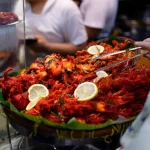
The island’s administrative capital is where locals actually eat. The hawker stalls along Jalan Pandak Mayah and around the Kuah Jetty waterfront serve nasi campur, char kway teow, and fresh seafood at prices that feel almost jarring after the beach-strip menus. A full meal with drinks rarely exceeds MYR 12–18 per person. The waterfront night market near Dataran Lang (Eagle Square) runs on Thursday and Saturday evenings and is one of the better night markets in the island for local snacks.
Padang Matsirat Night Market
The Tuesday and Friday night market at Padang Matsirat is where island residents shop for dinner. Grilled corn, apam balik (folded pancakes with peanut and sweet corn filling, their surfaces crisp and buttery), fresh-squeezed sugarcane juice, and whole grilled fish wrapped in banana leaf. It is crowded, noisy, and costs almost nothing. Arrive before 7pm for the best selection.

Seafood in Ayer Hangat
The northeast coast around Ayer Hangat has a cluster of open-air seafood restaurants operating from late afternoon. Butter prawns, steamed siakap (barramundi), and stir-fried kangkung with belacan are the staples. Prices depend on weight and market rates — expect MYR 60–120 for a full seafood dinner for two, significantly less than equivalent resort-area restaurants.
Telaga Harbour
For a mid-range dinner with atmosphere, the marina restaurants at Telaga Harbour on the northwest coast offer a mixed international and local menu with water views. It caters to a slightly more international crowd but the food quality is consistent and prices are reasonable compared to Pantai Cenang.
Getting Around Langkawi in 2026
There is no public bus network to speak of, and Grab coverage on Langkawi remains unreliable outside Pantai Cenang and Kuah. This is not a destination where you can get around comfortably without your own wheels. This has not changed in 2026 and is unlikely to change soon.
Car Rental
Renting a car is the standard solution and it works well. A small hatchback (Perodua Axia or similar) costs MYR 80–120/day from airport operators or agents in Pantai Cenang. Book ahead during peak season (November–February) — supply tightens and prices rise. International driving licences are accepted. Roads are in good condition and signage is clear.
Motorcycle/Scooter Rental
Scooters are available from MYR 40–60/day and are genuinely the most efficient way to explore the island’s smaller roads and jungle-edge tracks. A valid motorcycle licence is required. Avoid scooters in heavy rain — some of the interior roads become slick quickly.
Airport and Ferry Connections
Langkawi International Airport handles direct flights from Kuala Lumpur (AirAsia, Malaysia Airlines), Penang, Singapore, and several direct international routes. The 2025–2026 expansion of the terminal’s international pier added two new gates, reducing bottlenecks during peak arrivals. Taxis from the airport to Pantai Cenang cost MYR 25–35 on fixed meter; the journey takes 15–20 minutes.

The ferry from Kuala Perlis takes approximately 45 minutes and costs MYR 23–28 one way. From Penang, the high-speed ferry runs in approximately 2 hours 45 minutes and costs MYR 60–70 one way. Schedules have been consolidated in 2026 under Langkawi Ferry Services with cleaner online booking available through their updated portal.
Day Trips Worth the Boat Ride
Koh Lipe, Thailand
Koh Lipe is approximately 1.5 hours by speedboat from Telaga Harbour. In 2026, direct cross-border ferry services run daily during the high season (October to May) with operators like Tigerline and Bundhaya Speed Boat. A day trip is possible but rushed — most travellers prefer an overnight. Immigration clearance operates at the Telaga Harbour customs point; bring your passport. The Thai island offers cleaner reef, a more developed beach-bar scene, and some of the best snorkelling in the Andaman. Day return tickets run approximately MYR 150–180.
Kuala Perlis and the Mainland
The small port town of Kuala Perlis on the mainland is 45 minutes by ferry and makes a surprisingly worthwhile half-day trip. The town’s seafood market is functional and unembellished — wholesale crates of fresh catch, dried anchovy stalls, and a waterfront that has not been touched for tourism. Take the morning ferry (8am), explore the market, eat a proper laksa at one of the shophouse kopitiams on the main street, and return on the afternoon service.
Alor Setar, Kedah
Kedah’s state capital is 90 minutes from Kuala Perlis by bus or taxi (approximately MYR 40–50 for a hired car one-way from the ferry terminal). Alor Setar contains some of the best-preserved colonial and royal architecture in northern Malaysia: the Balai Besar (Grand Hall), Zahir Mosque, and the State Museum. A full day is well spent. The city’s food scene — especially the nasi dagang and northern-style laksa around the central market — is worth the trip on its own.

Timing Your Trip for Adventure
Langkawi sits just north of the equator and has a more complex weather pattern than the standard “dry season November to April” summary suggests.
- November to February: Peak season, lowest rainfall, best beach conditions. Cable car and Skybridge are operational most days. Most crowded and most expensive. Book accommodation 6–8 weeks ahead.
- March to May: Shoulder season with fewer crowds, comfortable temperatures (28–32°C), and cleaner water for snorkelling. Best overall window for adventure activities.
- June to August: Langkawi is in Kedah state, which sits on the west coast — meaning the southwest monsoon hits the peninsula’s west coast while Langkawi gets a milder version. Rain is heavier and more frequent but rarely all-day. Waterfalls are at full flow and the jungle is intensely green. Many adventure operators stay open.
- September to October: The quietest period. Some resort facilities scale back operations and a handful of smaller operators close. Water clarity in the sea is lower. Best for budget travel — accommodation prices drop 30–40%.
The Langkawi International Maritime and Aerospace Exhibition (LIMA) runs every two years and is scheduled for May 2026. The event draws significant crowds to the island and hotel prices spike during the exhibition week. Adventure bookings should be made well in advance if your trip overlaps.
Budget Breakdown: What Langkawi Costs in 2026
Budget Tier (MYR 150–250/day per person)
- Accommodation: Hostel dorm or basic guesthouse in Pantai Cenang or Kuah — MYR 45–80/night
- Food: Hawker stalls and night markets — MYR 25–40/day
- Transport: Shared scooter rental split between two people — MYR 20–30/day
- Activities: One paid attraction per day (waterfall entry is free; kayak hire or cable car uses most of the budget) — MYR 50–100

Mid-Range Tier (MYR 400–700/day per person)
- Accommodation: 3-star resort or boutique hotel — MYR 180–350/night
- Food: Mix of hawker meals and mid-range restaurants — MYR 60–100/day
- Transport: Car rental — MYR 80–120/day split or solo
- Activities: Island-hopping private boat, zip-line, or paragliding — MYR 200–400/day depending on choices
Comfortable/Luxury Tier (MYR 900–2,500+/day per person)
- Accommodation: Four or five-star properties (The Datai, Andaman, Four Seasons) — MYR 600–2,000+/night
- Food: Resort dining and Telaga Harbour restaurants — MYR 150–300/day
- Transport: Private driver — MYR 250–400/day
- Activities: Private guided mangrove tour, private boat charter, spa — MYR 400–800/day
Duty-free savings: Langkawi’s duty-free status means alcohol and tobacco are significantly cheaper than the mainland. A bottle of mid-range whisky costs MYR 60–90 at duty-free shops compared to MYR 180–250 equivalent on the peninsula. Factor this into overall trip budgeting — it offsets activity costs considerably for drinkers.
Practical Tips for Langkawi in 2026
Duty-Free Rules
Langkawi is a designated duty-free island. Alcohol, chocolate, cigarettes, and cosmetics are all exempt from the standard Malaysian taxes that apply on the mainland. The duty-free allowance for bringing goods back to the peninsula is 1 litre of alcohol and 200 cigarettes per person. Customs checks operate at Kuala Perlis and Penang ferry terminals and at the airport departure hall.
Wildlife Safety
The island has a healthy population of long-tailed macaques, particularly around Teluk Datai, the cable car area, and some beach fringes. Do not feed them and keep food in sealed bags — they are bold and will enter vehicles or bungalows if given the chance. Monitor lizards (biawak) are common around the mangroves and are harmless but large; give them space.
SIM Cards and Connectivity
Pick up a tourist SIM at the airport arrivals hall. Celcom and Maxis have the strongest coverage across the island including the interior road network. Coverage drops in parts of the deep jungle and northern coastal areas. A 15-day tourist data SIM (20–30GB) costs approximately MYR 30–45.

Safety and Health
Langkawi is genuinely safe for solo travellers and families. The main risks are related to outdoor activities — flash flooding on jungle trails after heavy rain, jellyfish (box jellyfish are occasionally present in shallow coastal areas between May and September), and sunburn. Carry reef-safe sunscreen; several marine protected areas around Langkawi now restrict certain chemical sunscreen formulations under the 2025 Geopark Conservation Guidelines.
Water and Food Safety
Tap water is technically treated but most residents and travellers use filtered or bottled water. Bottled water costs MYR 1.50–2.50 for a 1.5-litre bottle. Food at hawker stalls and night markets is generally safe — high turnover means fresh preparation. Stick to stalls with a visible cooking queue.
Language
Bahasa Malaysia is the first language. English is widely spoken in tourist areas, at car rental desks, and with most activity operators. In Kampung Tok Senik and smaller inland villages, English is limited — a few words of Malay go a long way and are always appreciated.
Frequently Asked Questions
Is Langkawi good for adventure activities or just beaches?
Langkawi is excellent for adventure beyond its beaches. The island offers jungle trekking, waterfall hikes, mangrove kayaking, paragliding, zip-lining, and island-hopping to remote snorkelling spots. The interior rainforest and Kilim Karst Geoforest alone justify the trip for travellers with no interest in beach time at all.
Do I need a car to explore Langkawi properly?
Yes, practically speaking. Grab operates but coverage is patchy and availability unpredictable outside the main tourist strip. Car rental from MYR 80–120/day gives you the freedom to reach waterfalls, the cable car, mangrove jetties, and night markets at your own pace. Scooters work well for lighter itineraries.

When is the best time to visit Langkawi for outdoor activities?
March to May is the sweet spot — lighter crowds than peak season (November to February), comfortable temperatures around 28–32°C, and good water clarity for snorkelling. The cable car, jungle trails, and boat tours all operate normally. Avoid September to October if activities are your priority, as some operators scale back.
Can I do a day trip to Koh Lipe in Thailand from Langkawi?
Yes, it is possible but tight. The speedboat takes around 1.5 hours each way from Telaga Harbour. Day trips leave around 9–9:30am and return by 4–5pm, giving you roughly 4–5 hours on Koh Lipe. An overnight stay is more rewarding. Services run daily during high season (October–May) and require a valid passport for Thai immigration.
Is Langkawi safe for solo female travellers?
Langkawi is generally safe for solo female travellers. The island has a relaxed, tourism-accustomed population and the main areas — Pantai Cenang, Kuah, Telaga Harbour — are well-lit and active into the evening. Standard precautions apply: share your location when doing solo jungle hikes, avoid isolated beaches after dark, and book accommodation with solid reviews from solo travellers.
Explore more
The Ultimate Guide to Day Trips from Kuala Lumpur
Kuala Lumpur Shopping Guide: Best Malls, Markets & Must-Buy Items
📷 Featured image by Catalin Pop on Unsplash.