On this page
- Why Community Matters More Than Location for Long-Term Nomad Success
- The DE Rantau Visa: Your Legal Foundation for Joining Malaysia’s Nomad Ecosystem
- Online Communities and Digital Channels Active in 2026
- Nomad Meetup Culture: What Actually Happens and How to Plug In
- Industry-Specific Tribes: Finding Your Professional Niche in Malaysia
- 2026 Budget Reality: What Community Participation Actually Costs
- Navigating Cultural Integration: Going Deeper Than the Expat Bubble
- Frequently Asked Questions
By 2026, Malaysia has cemented itself as Southeast Asia’s most accessible long-term base for remote workers — and the DE Rantau visa pipeline has brought a critical mass of people here who are genuinely building lives, not just passing through. The problem most newcomers run into isn’t finding a fast internet connection or an affordable apartment. It’s arriving in Kuala Lumpur, Penang, or Kota Kinabalu and realising that the digital nomad “scene” isn’t handed to you at the airport. You have to find your people deliberately. This guide is about exactly that.
Why Community Matters More Than Location for Long-Term Nomad Success
There’s a pattern that repeats itself constantly among people who try the nomad life in Malaysia and leave within three months: they chose their accommodation carefully, they sorted their visa paperwork, they found reliable internet — and then they worked alone in silence every day until the novelty wore off and they booked a flight home.
Isolation is the number one reason remote workers abandon otherwise excellent bases. Malaysia is an incredibly functional country to work from, but functionality alone doesn’t create a reason to stay. Community does. Research consistently shows that belonging to even one active professional or social group reduces the chance of early departure from a chosen base by a significant margin.
In practical terms, a community in Malaysia gives you several things that no app or co-working space can replicate. You get referrals — freelancers and consultants regularly pick up clients through nomad networks here. You get local knowledge that genuinely saves money: which immigration agent handles DE Rantau renewals without the runaround, which private hospital has the most straightforward billing process for foreign health insurance claims, where to get a Malaysian tax identification number (TIN) processed without hiring a full accountant. You also get the kind of low-stakes social friction that turns a foreign country into a home — someone to have nasi lemak with on a slow Wednesday morning, the smell of pandan and coconut drifting from a bamboo-wrapped parcel opened at a shared table.
The communities described in this article are not tourist social scenes. They are working networks for people who are serious about being in Malaysia for months, not weeks.
The DE Rantau Visa: Your Legal Foundation for Joining Malaysia’s Nomad Ecosystem
You cannot meaningfully participate in Malaysia’s nomad community without the right legal status. The DE Rantau Nomad Pass — Malaysia’s official digital nomad visa — is the starting point. As of 2026, the programme has been refined significantly from its 2022 launch. Here is what the current structure looks like.
Eligibility and Requirements
- Minimum monthly income of USD 24,000 per year (approximately MYR 113,000 at 2026 exchange rates) for individual applicants
- Employment by a company registered outside Malaysia, or freelance/self-employed with clients based outside Malaysia
- Valid health insurance covering Malaysia — minimum coverage of MYR 150,000 is expected by 2026 processing officers, though the official published minimum remains lower
- A clean criminal record certificate from your home country, issued within six months
- Passport valid for at least 18 months from application date
Duration and Renewal
The DE Rantau pass is issued for 12 months and is renewable for a further 12 months, giving a maximum stay of 24 months in a single cycle. After that, applicants must exit and reapply. Processing time through the Malaysia Digital Economy Corporation (MDEC) online portal has improved to roughly 3–4 weeks for complete applications in 2026, down from the 6–8 weeks seen in 2023–2024.
Tax Residency Implications
This is the point most people misunderstand. Staying in Malaysia for 183 days or more in a calendar year makes you a Malaysian tax resident under the Income Tax Act 1967. As a tax resident, your Malaysian-sourced income is taxed on a progressive scale starting at 1% and rising to 30% for income above MYR 2 million. DE Rantau holders whose income is entirely foreign-sourced are currently exempt from Malaysian income tax on that foreign income under the foreign-sourced income exemption, which has been extended through at least 2026. However, this exemption is reviewed annually, and you should register a Tax Identification Number (TIN) with the Inland Revenue Board of Malaysia (LHDN) regardless — it is required for any financial or legal process in the country and takes 1–3 working days to obtain online through MyTax portal.
Non-residents (those staying fewer than 183 days) are taxed at a flat 30% on any Malaysian-sourced income — a strong incentive to either commit fully or stay short.
Online Communities and Digital Channels Active in 2026
Before you land, you can already begin building your network. Malaysia’s nomad community is unusually well-organised online for a Southeast Asian hub, partly because MDEC has actively promoted networking infrastructure as part of the DE Rantau programme.

Facebook Groups
The primary online hubs remain Facebook-based, which surprises people expecting something more modern. “Digital Nomads Malaysia” and “DE Rantau Community Malaysia” are the two most active groups as of 2026, with combined membership above 28,000. The tone is practical — questions about visa renewals, apartment hunting, health insurance providers, and SIM card plans dominate. Lurking for two weeks before arrival will answer 80% of your logistical questions.
WhatsApp and Telegram Networks
City-specific WhatsApp groups for KL, Penang, and Kota Kinabalu operate as real-time logistics channels. These are invitation-only and the easiest entry point is asking in the Facebook groups. Telegram is preferred by the tech and crypto communities, with several channels running regular AMA sessions with Malaysian tax lawyers and immigration consultants — genuinely useful content, not promotional fluff.
Discord Servers
The “Remote Malaysia” Discord server, launched in late 2024, has grown into a structured hub with channels organised by city, profession, visa type, and lifestyle interest. It is moderated more actively than the Facebook groups and has a lower tolerance for spam. The #visa-and-legal channel alone contains over 4,000 messages of crowd-sourced immigration experience as of mid-2026.
Malaysia’s professional nomad scene is more LinkedIn-active than most Southeast Asian nomad hubs, driven partly by the relatively high income threshold of the DE Rantau visa attracting senior professionals. Searching “DE Rantau” or “Malaysia digital nomad” on LinkedIn filters and connecting with recent arrivals is a legitimate and effective networking strategy, particularly for those in finance, technology, and consulting.
Nomad Meetup Culture: What Actually Happens and How to Plug In
Online communities convert into real relationships at in-person events, and Malaysia has a meetup culture that is more structured than many nomads expect.
MDEC-Organised DE Rantau Events
MDEC hosts quarterly DE Rantau community events in Kuala Lumpur and has expanded to Penang and Kota Kinabalu since 2025. These are free to attend and skew toward new arrivals, covering practical topics like banking for foreigners, TIN registration, and healthcare navigation. They are not glamorous events — think a community hall, decent free food, and a panel of people who have already solved the problems you’re currently facing. That makes them valuable.
Independently Organised Meetups
Outside MDEC events, community-organised meetups happen weekly in Kuala Lumpur and at least twice monthly in Penang. These are typically announced 5–7 days in advance in the WhatsApp and Facebook groups. Formats vary: some are structured presentations, some are straightforward dinners, some are outdoor activities that function as social time rather than networking. The key is showing up consistently — most people who report strong community connections in Malaysia attended at least six events before they started feeling genuinely embedded.
Professional Skill Shares
A growing format in 2026 is the informal skill share: a two-hour session where someone in the community presents on their professional area. These have covered topics from structuring freelance contracts under Malaysian law to running paid advertising for SaaS products. They happen in private spaces rather than public venues and are circulated only within established community channels — another reason to get plugged in early.
Industry-Specific Tribes: Finding Your Professional Niche in Malaysia
The broadest nomad communities are useful for logistics. But for real professional connection and potential collaboration or referral work, industry-specific groups are where the meaningful relationships form.
Technology and Software
Malaysia has a substantial local tech industry centred in KL’s Cyberjaya corridor and the Penang Silicon Island corridor — the latter receiving significant infrastructure investment through 2025–2026. Foreign nomads in software development, product management, and UX often find natural overlap with Malaysian tech professionals at events organised through Malaysian Global Innovation and Creativity Centre (MaGIC) and local tech meetup series. These are not nomad-exclusive events, which makes them more valuable for genuine professional integration.
Creative Industries
Writers, photographers, videographers, and designers have a distinct community that organises loosely around content creation for Southeast Asian markets. Several established content agencies based in KL actively work with DE Rantau holders on a contract basis, and introductions typically happen through community channels rather than job boards.
Finance and Consulting
Senior professionals in finance, strategy consulting, and business development have formed smaller, more private networks in KL in particular. These circles tend to be Telegram-based and require personal introduction to join. The entry point is usually the broader DE Rantau community events where members of these networks occasionally appear.
Health, Wellness, and Coaching
Coaches, wellness practitioners, and consultants in this space have a particularly active community in Penang, where the cost of living is lower and the lifestyle pace attracts longer-term residents. Monthly gatherings in this community are consistent and well-attended.
2026 Budget Reality: What Community Participation Actually Costs
Joining communities in Malaysia is largely free in terms of direct costs, but there are real living expenses that shape how long you can sustain your time here. Below are honest 2026 figures.
Accommodation
- Budget: MYR 1,200–1,800/month for a basic studio apartment in KL’s outer suburbs or a decent room in a shared house in Penang
- Mid-range: MYR 2,200–3,500/month for a furnished 1-bedroom apartment in a central KL location or a comfortable apartment in Georgetown, Penang
- Comfortable: MYR 4,000–7,000/month for a modern serviced apartment in KLCC/Mont Kiara (KL) or a premium unit in Batu Ferringhi (Penang)
- Kota Kinabalu runs 15–20% cheaper than Penang at every tier, with a growing DE Rantau community since the Sabah state government began active promotion in 2025
Health Insurance
Private health insurance adequate for Malaysia costs MYR 3,600–8,400/year for a healthy adult aged 25–45, depending on the level of coverage and whether maternity or dental is included. Malaysia’s public healthcare system is technically accessible to DE Rantau holders in emergencies, but private hospitals are the practical choice for non-emergency care, and costs without insurance are significant — a standard specialist consultation runs MYR 150–350.
Daily Living and Food
- Budget: MYR 800–1,200/month covering food mostly from hawker stalls and markets, local transport, and occasional social events
- Mid-range: MYR 1,800–2,800/month mixing local food with regular restaurant meals, Grab rides, and active social participation
- Comfortable: MYR 3,500+/month with frequent restaurant dining, gym membership, and travel within Malaysia on weekends
DE Rantau Visa Fees
The application fee is MYR 1,060 per applicant (including a one-time registration fee), with dependant passes costing MYR 520 per person. Renewal fees are equivalent to the original application. Budget an additional MYR 500–800 if you use an immigration agent to prepare and submit your renewal documentation.
Navigating Cultural Integration: Going Deeper Than the Expat Bubble
The most satisfied long-term nomads in Malaysia are consistently those who moved beyond the expat and nomad bubble and built genuine relationships with Malaysians. This is not a soft suggestion — it is practical advice with real benefits.
Malaysia is a multilingual, multi-ethnic society where English is widely spoken and social navigation is, frankly, easier for foreigners than in most other Southeast Asian countries. Malaysians are generally receptive to foreign residents who show genuine curiosity about local culture rather than treating the country as a backdrop.
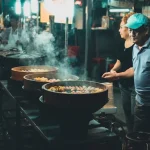
Learning basic Bahasa Malaysia (even 50–100 words) generates disproportionate goodwill and opens conversations that simply don’t happen in English. The sound of a foreigner attempting “terima kasih” at the right moment in a pasar malam stall — the smoky warmth of the night market rising around you, vendors calling out in a mix of Malay, Cantonese, and Tamil — changes the nature of an interaction entirely. People laugh, they correct you warmly, and then they tell you what to actually order.
Joining Malaysian professional associations relevant to your industry is an underused strategy. Many industries — creative, technology, finance — have active Malaysian professional bodies that welcome foreign professional members. These memberships cost MYR 100–400 annually and place you in rooms where the conversations are about building something in Malaysia long-term, not just passing through.
Volunteering with local organisations is another genuine integration path. NGOs in KL and Penang working on education, environmental issues, and community development regularly need English-proficient volunteers for specific projects. This is not about résumé-building — it is about being present in Malaysian social life in a context where your professional identity is irrelevant and your human one is what counts.
Frequently Asked Questions
How long does it take to genuinely feel connected to a community in Malaysia?
Most DE Rantau holders report that meaningful community connection takes 6–10 weeks of consistent effort — attending events, engaging in online groups, and following up after introductions. Arriving with no prior online community engagement and expecting to feel connected within two weeks is unrealistic. Start engaging in the Facebook and Discord communities at least a month before you land.
Do I need the DE Rantau visa to participate in nomad communities, or can I join on a tourist visa?
Nomad communities in Malaysia are open to everyone regardless of visa type, and no one checks at the door. However, tourist visas (typically 30–90 days for most nationalities) limit your ability to build lasting connections. The community functions best for those who are staying 6–24 months — on DE Rantau or MM2H. Short-stay visitors are welcome but will experience the community differently.
Is Malaysia’s nomad community welcoming to solo women and LGBTQ+ remote workers?
The nomad community itself — primarily foreigners — is generally diverse and inclusive. Malaysia as a country has conservative laws regarding LGBTQ+ relationships, and public discretion is practically important. Solo women report feeling safe in KL, Penang, and Kota Kinabalu, with the usual urban awareness sensible anywhere. Several women-specific nomad sub-groups operate within the broader community channels.
Can I find freelance or contract work through these communities once I’m in Malaysia?
Yes, though it requires the right visa status. DE Rantau holders can perform work for foreign clients freely. Picking up work from Malaysian-registered companies is a grey area that requires separate work authorisation. Referrals within nomad communities typically involve connecting members with foreign clients or businesses rather than Malaysian employers, which keeps everyone within their visa terms.
How has Malaysia’s nomad community changed since 2024?
The community has matured significantly. Early DE Rantau cohorts (2022–2023) were largely first movers navigating an untested system. By 2026, there is an established knowledge base, refined event infrastructure, and a critical mass of people who have completed full 24-month cycles and can offer tested advice. The community is less chaotic and more practically useful than it was two years ago.
📷 Featured image by Anete Lūsiņa on Unsplash.