On this page
- Why JB’s Food Scene Hits Different from the Rest of Malaysia
- JB Breakfast Culture — How Locals Start the Day
- The Iconic Dishes You Must Eat in Johor Bahru
- Best Hawker Centres and Kopitiams to Know
- JB’s Underrated Night Food Scene
- Johor-Style Chinese Food — A Distinct Regional Identity
- Where Singaporeans Go to Eat (Local Favourites Near the Causeway)
- 2026 Budget Reality — What Food Costs in JB
- Practical Tips for Eating Your Way Around JB
- Frequently Asked Questions
💰 Click here to see Malaysia Budget Breakdown
💰 Prices updated: August, 2026. Budget figures are estimates — always verify before travel.
Exchange Rate: $1 USD = RM4.03
Daily Budget (per person)
Shoestring: RM100.00 – RM200.00 ($24.81 – $49.63)
Mid-range: RM180.00 – RM400.00 ($44.67 – $99.26)
Comfortable: RM450.00 – RM1,300.00 ($111.66 – $322.58)
Accommodation (per night)
Hostel/guesthouse: RM20.00 – RM70.00 ($4.96 – $17.37)
Mid-range hotel: RM100.00 – RM350.00 ($24.81 – $86.85)
Food (per meal)
Budget meal: RM15.00 ($3.72)
Mid-range meal: RM35.00 ($8.68)
Upscale meal: RM100.00 ($24.81)
Transport
Single metro/bus trip: RM2.00 ($0.50)
Monthly transport pass: RM150.00 ($37.22)
Since the full reopening of the Johor–Singapore land border, Johor Bahru has been dealing with a different kind of food tourism problem: too many people who don’t know where to eat. Singapore day-trippers flood the Causeway every weekend, many of them clutching outdated lists that lead them to tourist-facing spots while the real neighbourhood gems stay uncrowded — for now. This guide focuses on the food that locals actually queue for in 2026, from pre-dawn breakfast rituals to late-night supper runs, with real addresses and real price expectations.
Why JB’s Food Scene Hits Different from the Rest of Malaysia
Johor Bahru doesn’t get the same culinary press as Penang or Kuala Lumpur, and that’s part of what makes eating here so good. The city sits at the confluence of Malay, Hokkien, Teochew, Hakka, and Javanese food traditions — a mix you won’t find in quite the same proportions anywhere else in Malaysia. Johor’s Malay cooking in particular has deep Javanese and Bugis roots that push it in a different direction from the Malay food you’d eat in the Klang Valley.
The cross-border dynamic matters too. Because Singaporeans have been coming here for affordable food for decades, JB’s food economy has developed a quiet competitiveness. Stalls know they’re being compared, so quality pressure is real. At the same time, because the local ringgit economy keeps costs anchored, a genuinely excellent meal here still costs a fraction of what you’d pay across the bridge.
In 2026, the Johor–Singapore Special Economic Zone (SEZ) development has brought more young professionals into the city, creating demand for a new layer of café culture and modern kopitiams alongside the traditional hawker scene. The two coexist well. You can eat a MYR 4 bowl of laksa in the morning and a MYR 35 craft coffee brunch three blocks away.
JB Breakfast Culture — How Locals Start the Day

Breakfast in JB is treated with the same seriousness as dinner. The city wakes up early — Muslim-owned nasi lemak stalls open before 6:00 AM, and the old-school kopitiams in the city centre are busy by 7:30 AM. If you arrive after 9:00 AM expecting to find the best options still available, you’ll be disappointed at many of the top spots.
The breakfast item most associated with JB is Mee Rebus Johor — yellow egg noodles drenched in a thick, slightly sweet gravy made from sweet potato, beef stock, and ground dried shrimp, then topped with sliced egg, fried shallots, and a squeeze of calamansi lime. The broth has a dense, almost stew-like consistency that you don’t find in the Mee Rebus served further north. The smell when a fresh pot of gravy is ladled — earthy, savoury, faintly sweet — immediately tells you this is something built on long simmering rather than shortcuts.
For roti canai and teh tarik, the mamak culture here leans strong. Restoran Ali Bistro near Jalan Petrie and the string of mamak stalls along Jalan Dato’ Onn are reliable morning choices. Order your teh tarik pulled properly — ask for kurang manis if you want it less sweet, which is worth doing so you can actually taste the tea underneath the condensed milk.
The Iconic Dishes You Must Eat in Johor Bahru
1. Laksa Johor
This is not Penang laksa. Laksa Johor uses spaghetti-style rice noodles (or sometimes actual spaghetti, a colonial-era quirk that stuck) in a thick fish-based curry broth infused with coconut milk, lemongrass, galangal, and daun kesom. It’s eaten with fresh cucumber, bean sprouts, and long beans on the side. The broth is rich and deeply fragrant — you’ll smell the lemongrass and coconut steam rising from the bowl before you even pick up a spoon. Stalls at Pasar Larkin and the food court at KSL City Mall serve reliable versions.

2. Ikan Bakar (Grilled Fish)
JB’s position on the Strait of Johor means fresh fish is never far away. The grilled fish scene here — whole fish marinated in sambal belacan and wrapped in banana leaf before hitting the charcoal grill — is outstanding, particularly along the waterfront at Lido Beach (Pantai Lido). Stingray, siakap (barramundi), and grouper are the most common choices. Eat with kangkung belacan and white rice.
3. Nasi Ambeng
A Javanese-origin communal rice dish that Johor has made its own. A large flat tray or banana leaf is loaded with steamed rice, serunding (spiced coconut floss), sayur lodeh (vegetable coconut milk curry), sambal goreng, and bergedil (potato patties). It’s traditionally served to groups sharing one plate — ordering it solo at a warung is accepted but you’ll get a smaller portion plate. Find it at Malay warungs in Kampung Tun Hussein Onn and around Jalan Genuang.
4. Otak-Otak
While otak-otak exists across Malaysia, the JB and broader Johor version is grilled directly over charcoal on a flat banana leaf parcel, giving it a smoky char on the outside while the fish mousse inside stays silky and heavily spiced with turmeric and chilli. Muar-style otak-otak sold at stalls in JB is slightly softer and less rubbery than the Penang version. You’ll find hawkers selling these by the dozen near Jalan Wong Ah Fook.
5. Cendol Durian
Johor is durian country. Adding fresh durian flesh to an already cold, creamy cendol — with its pandan rice flour jelly, palm sugar syrup, and coconut milk — creates something that’s either magnificent or overwhelming depending on your tolerance for the fruit’s intensity. During durian season (roughly June–August), roadside stalls near Kluang Road exits and in Taman Pelangi serve this with real durian, not flavouring.

6. Roti Canai Banjir
Flaky, layered roti canai “flooded” with dal curry and fish curry poured directly over the top rather than served on the side. The bread softens in the curry as you eat. Simple, deeply satisfying, costs around MYR 3–4 at any decent mamak.
7. Char Kuey Teow (Johor Style)
JB’s Chinese community does a version of char kuey teow with a slightly wetter, darker sauce and often adds cockles more generously than you’d find in KL versions. Look for it at Hiap Joo Char Kuey Teow in Jalan Lumba Kuda area and at old coffee shops in Jalan Dhoby.
8. Wonton Mee (Old Town Style)
The old-school kopitiams in JB’s historic downtown serve a dry wonton mee that’s tossed in dark soy, lard, and char siu oil, with wontons on the side in clear broth. It’s a quiet masterpiece of balance. Fong Chuan near Jalan Trus has been doing this for decades.
9. Sup Tulang (Bone Marrow Soup)
A Malay-Indian fusion dish: large beef bones slow-cooked in a fiery red tomato-based gravy, served with bread for dipping into the marrow. This is a JB supper staple. Expect to get your hands dirty and a dark red stain on your shirt if you’re not careful. Worth it.
10. Apam Balik (Thin Version)
While the thick version is sold nationwide, JB has a strong tradition of the thin, crispy-edged apam balik — a folded pancake filled with crushed peanuts, sugar, and creamed corn. The best ones are cooked on blackened griddles at night markets, and the sound of the batter sizzling as it hits the hot iron is half the experience.

Best Hawker Centres and Kopitiams to Know
Pasar Larkin is the biggest and most local-facing wet market cum food court in JB. It opens from around 5:30 AM and the nasi lemak, mee rebus, and laksa stalls here are cooking for residents, not tourists. Prices are among the lowest in the city.
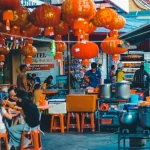
Jalan Petrie Food Street in the older part of JB is where you’ll find a cluster of Chinese kopitiams operating from pre-independence-era shophouses. The marble-topped tables, ceiling fans, and old wooden chairs are original, not curated. Order kopi-o (black coffee with sugar) or kopi-C (coffee with evaporated milk) here — these shops source their own roasted beans.
Medan Selera Hj. Yahya (City Square area) is a good mid-point option if you’re staying near the Causeway and want accessible variety without venturing too far. It has Malay, Chinese, and Indian stalls under one roof.
Taman Abad Hawker Centre in Taman Abad is popular with the local Chinese community for evening meals. The economy rice (nasi campur) stalls here are excellent value and the selection of braised dishes — tofu, pork belly, eggs — is extensive.
JB’s Underrated Night Food Scene
Most food guides send you home after dinner. That’s a mistake in JB. The city’s supper culture runs until well past midnight, particularly among the local Chinese and Malay communities. The stretch along Jalan Kebun Teh comes alive after 10:00 PM with seafood supper stalls. Steamed clams, butter prawns, and tofu cooked in claypot are all on offer at prices that make the same meal in Singapore feel like a different planet.
For late-night Malay food, the area around Jalan Serampang in Taman Pelangi has 24-hour nasi campur operations and the sup tulang stalls mentioned earlier. The atmosphere is casual — plastic chairs on the five-foot way, ceiling fans on the covered portion, fluorescent lights overhead. No ambience to speak of, except that of a city that genuinely enjoys eating late.

The night market scene (pasar malam) rotates by day of the week across different neighbourhoods. Check which area hosts it on which night — Taman Daya and Taman Johor Jaya both have well-attended weekly night markets with more street food variety per 100 metres than most dedicated food courts.
Johor-Style Chinese Food — A Distinct Regional Identity
The Chinese communities in JB are predominantly Teochew and Hokkien, with a smaller Hakka presence. This matters for the food. Teochew cooking principles — lighter broths, preserved vegetables, steamed fish — run through a lot of JB’s Chinese food culture in a way that’s noticeably different from the Cantonese-dominant palate of Kuala Lumpur.
Look for Teochew braised duck (lor ark) at old coffee shops — the duck is slow-braised in a spiced, soy-forward master stock and served sliced with braised tofu and hard-boiled eggs. The braising liquid at the best stalls has been running for years and has a depth that’s impossible to fake.
Bak Kut Teh in JB leans toward the Teochew dry style — darker, more herbal, with a stronger five-spice and pepper presence than the lighter Klang-style broth. Restoran Yong Peng branches in JB and the original in Yong Peng (90 kilometres north, worth the drive) are reference points for this style.
Hakka mee — flat noodles in a salty, minced pork sauce — appears at a few old-school spots and is worth seeking out if you encounter it. It doesn’t get the attention of Hokkien mee or char kuey teow but it’s quietly excellent.

Where Singaporeans Go to Eat (Local Favourites Near the Causeway)
Singaporeans who cross regularly don’t go to the same places as first-time visitors. They have their own circuit, built around value and specific dishes they can’t get affordably at home. Understanding this circuit helps you eat better.
The area around Jalan Wong Ah Fook and the surrounding streets is walkable from the Johor Bahru City Square (JB Sentral) area and has a dense concentration of kopitiam food. Regular cross-border visitors treat this as a first stop — roti canai, kopi, and sometimes a bowl of mee rebus before heading further into the city.
KSL City Mall and the food courts inside it are popular with Singaporean families who want air-conditioning and variety. The hawker-style food court on the upper levels serves everything from laksa to economy rice to bak kut teh at prices significantly below what the same dishes cost in Singapore food courts.
For seafood, the long-standing favourite is the cluster of seafood restaurants along Jalan Skudai heading toward Taman Pelangi — places like Long Long Seafood and similar restaurants where live seafood is priced per 100g and a table of four can eat very well for MYR 120–180 total.
2026 Budget Reality — What Food Costs in JB
JB remains one of the most affordable eating cities in Malaysia, but prices have adjusted since 2023. Hawker food has seen incremental increases, mostly tied to ingredient costs and the labour shifts from the SEZ development pulling workers into higher-paying construction and service roles. Here’s a realistic breakdown for 2026:
- Budget (street stalls and market food): MYR 3–7 per dish. A full breakfast of nasi lemak or mee rebus with a drink lands around MYR 6–9 total. A bowl of laksa Johor from a hawker stall is MYR 5–6.
- Mid-range (hawker centres with seats, food courts in malls): MYR 8–18 per dish. A plate of char kuey teow at a sit-down hawker centre is MYR 8–12. Seafood fried rice in a kopitiam setting runs MYR 12–16.
- Comfortable (restaurant seafood, newer modern-concept spots): MYR 20–50 per person per meal. A seafood dinner for two at a proper restaurant with butter prawns, steamed fish, and vegetables will cost MYR 80–130 depending on the seafood choices and portion sizes.

Drinks pricing: kopi or teh at old kopitiams is MYR 2–3. Bubble tea chains (everywhere in JB in 2026) run MYR 7–12 per cup. Fresh coconut from a street vendor is MYR 4–5.
The overall cost advantage over Singapore remains substantial. A meal that would cost SGD 20–25 in Singapore typically costs MYR 15–25 in JB — even accounting for the exchange rate, that’s a meaningful difference for a family eating out multiple times a day.
Practical Tips for Eating Your Way Around JB
Getting around to food spots: JB is not walkable beyond the central area near JB Sentral. The best hawker spots are spread across residential neighbourhoods — Taman Pelangi, Taman Abad, Taman Daya — that require a car or ride-hailing. Grab operates well in JB in 2026, and fares across the city typically stay under MYR 15 for most food trip routes.
Timing: The best breakfast stalls are done by 10:00–11:00 AM. Lunch hawker stalls peak between 12:00 and 2:00 PM and sell out. Arrive early or go slightly off-peak. Night food starts properly after 8:00 PM and runs until 1:00–2:00 AM at the busiest spots.
Language: English is spoken and understood at virtually all food spots in JB, especially those near the Causeway corridor. At older kopitiams and Malay warungs in residential areas, some basic Malay phrases help. “Boleh kurang manis?” (can you make it less sweet?) and “Berapa ringgit?” (how much?) will take you a long way.

Halal considerations: JB has a large Muslim population and halal options are available everywhere. The Malay and Indian food scenes are entirely halal. Many Chinese restaurants and kopitiams serve pork, so if this is a consideration, look for the halal certification sign or stick to Malay and Indian establishments.
Weekends vs. weekdays: Saturday and Sunday see significant influx from Singapore. Popular spots near the Causeway and in malls get noticeably busier. If you’re visiting from within Malaysia or staying in JB, weekday mornings offer a calmer, more local experience at most food spots.
Frequently Asked Questions
What is the most iconic food to eat in Johor Bahru?
Laksa Johor is the dish most unique to the region — its spaghetti-like noodles in a thick coconut-fish broth are unlike any other Malaysian laksa. Nasi Ambeng (Javanese communal rice dish) and Mee Rebus Johor are close runners-up. These are dishes you genuinely cannot eat elsewhere in quite the same way.
Is it safe to eat street food in JB?
Yes, with normal food hygiene awareness. Busy stalls that turn over food quickly are always the safer bet than slow ones. In 2026, JB’s food hygiene grading system is actively enforced, and most stalls at established hawker centres display their ratings. Look for the “A” or “B” grade certificate displayed at the stall.
How much should I budget for food per day in JB?
A realistic daily food budget for someone eating well across three meals is MYR 40–70. That covers a proper breakfast, a hawker lunch, and a seafood or Chinese dinner at a mid-range restaurant. If you’re sticking to hawker centres and street stalls all day, MYR 25–35 is genuinely achievable without sacrificing quality.
What time do JB hawker centres open and close?
Morning hawker stalls open as early as 5:30–6:00 AM and most sell out or wind down by 11:00 AM. Lunch stalls run noon to 3:00 PM. Dinner hawker centres start around 5:30–6:00 PM. Night supper spots operate 9:00 PM to 2:00 AM. The city has food available at almost any hour if you know where to look.
Can I get to JB’s best food spots without a car?
The central area around JB Sentral and Jalan Wong Ah Fook is walkable. For neighbourhood hawker centres in Taman Pelangi, Taman Abad, and Pasar Larkin, you’ll need transport. Grab is reliable and affordable in JB in 2026. Budget MYR 8–15 per ride for most cross-city food trips. A full day of food tourism using Grab costs less than renting a car.
📷 Featured image by Simon Wiedensohler on Unsplash.