On this page
- Why Penang Street Food Still Demands Your Full Attention in 2026
- Hawker Centres & Kopitiams: The Best Addresses in George Town
- Night Markets & Pasar Malams: Where Penangites Actually Eat After Dark
- Breakfast & Morning Eats: Starting the Day the Penang Way
- The Noodle Map: Which Dish, Which Street, Which Stall
- Rice, Meat & Everything Savoury: Beyond the Noodle Bowl
- Snacks, Rojak & Street Bites You Should Not Walk Past
- Drinks & Desserts: Cooling Down Between Meals
- Eating on a Budget vs Eating Well: 2026 Price Reality
- Getting Around the Food Trail: Practical Logistics
- Pro Tips for First-Timers and Return Visitors
- Frequently Asked Questions
💰 Click here to see Malaysia Budget Breakdown
💰 Prices updated: August, 2026. Budget figures are estimates — always verify before travel.
Exchange Rate: $1 USD = RM4.03
Daily Budget (per person)
Shoestring: RM100.00 – RM200.00 ($24.81 – $49.63)
Mid-range: RM180.00 – RM400.00 ($44.67 – $99.26)
Comfortable: RM450.00 – RM1,300.00 ($111.66 – $322.58)
Accommodation (per night)
Hostel/guesthouse: RM20.00 – RM70.00 ($4.96 – $17.37)
Mid-range hotel: RM100.00 – RM350.00 ($24.81 – $86.85)
Food (per meal)
Budget meal: RM15.00 ($3.72)
Mid-range meal: RM35.00 ($8.68)
Upscale meal: RM100.00 ($24.81)
Transport
Single metro/bus trip: RM2.00 ($0.50)
Monthly transport pass: RM150.00 ($37.22)
Why Penang Street Food Still Demands Your Full Attention in 2026
In 2026, Penang still holds its ground as one of the most serious food destinations in Southeast Asia — not because of marketing, but because the cooking here is genuinely obsessive. Locals will argue for twenty minutes over which stall makes the best char kway teow. A kopitiam owner might refuse to serve you if you order the wrong thing. That level of food culture intensity is exactly what you came for.
The pain point most visitors hit in 2026 is information overload. Food listicles are everywhere, but many link to stalls that have moved, closed, or changed hands. This guide is built around current addresses, current hours, and honest advice about what is worth the queue and what is not. Prices have risen since 2024 — a bowl of asam laksa that cost MYR 7 two years ago now typically runs MYR 9 to MYR 11 — so the budget section here reflects real 2026 numbers.
Hawker Centres & Kopitiams: The Best Addresses in George Town
George Town is the operational heart of Penang’s street food scene. The UNESCO heritage zone concentrates an extraordinary density of old-school kopitiams and open-air hawker centres within walking distance of each other, which makes it the logical base for any serious food tour.
New Lane Hawker Centre (Lorong Baru)
New Lane operates from roughly 6pm and runs until midnight or later. It is a proper old-school hawker street — long tables under fluorescent lights, plastic stools, and vendors who have been cooking the same thing for decades. The char kway teow here is cooked over charcoal by one of the last remaining charcoal-fire operators in George Town. The smoke hits you before you even sit down, and the wok hei in the noodles is the kind you remember for years. Come early or queue.

Gurney Drive Hawker Centre
Gurney Drive sits along the northern waterfront and operates in the evenings. It draws both tourists and locals, and the variety is exceptional — laksa, rojak, cendol, oyster omelette, and satay all within one stretch. The seabreeze coming off the Straits of Malacca makes this one of the more pleasant places to eat in the evening without the stuffy heat of an indoor food court.
Kimberley Street Food Court
Kimberley Street is active in the evenings and is a local favourite for its concentration of old-timer stalls. The lor bak vendor here (braised pork rolls) operates from a tiny cart and typically sells out before 9pm. The street itself is narrow and loud with scooters passing through, which gives it a lived-in energy that the more tourist-polished spots lack.
Sin Guat Keong Coffee Shop (Transfer Road)
Transfer Road has a cluster of morning kopitiams that Penangites treat as sacred ground. Sin Guat Keong is one of the anchors — a cavernous old shophouse where multiple independent vendors set up inside. It operates during morning hours and is the place to stack a Penang breakfast properly: nasi lemak from one vendor, roti canai from another, and a pulled Penang white coffee from the house counter.
Night Markets & Pasar Malams: Where Penangites Actually Eat After Dark
Beyond the fixed hawker centres, Penang’s rotating pasar malams (night markets) move around by day of the week. They are primarily neighbourhood markets, not tourist attractions, which means the food is cheaper, the portions are more generous, and the language around you is almost entirely Hokkien and Malay.
The Batu Lanchang wet market area hosts one of the most well-regarded pasar malams in Penang, running on specific evenings during the week. Farlim and Jelutong also have active rotating night markets that draw huge crowds from the surrounding residential areas. At these markets, you will find apam balik (crispy peanut pancakes), fried oysters, grilled corn, and vendors selling nasi goreng kampung from massive woks. A full meal here comfortably comes in under MYR 15.
The Penang Hill night market, running on weekends near the lower base station, has grown significantly since the funicular expansion completed in late 2024 brought more evening visitors to the area. Food here skews toward Malay snacks and deep-fried things, which is exactly what you want after a late-afternoon hill visit.
Breakfast & Morning Eats: Starting the Day the Penang Way
Penang mornings are serious. By 7am, the best kopitiams already have queues forming outside. The morning ritual here is not just about food — it is about sitting with a glass of kopi-o (black coffee brewed from local Robusta beans, slightly bitter with a caramelised edge) and watching the city open up. The humidity is already building by 8am, so eating early is both cultural and practical.
Roti Canai & Teh Tarik
For the most satisfying roti canai in George Town, the stalls around Chulia Street and around the Kapitan Keling Mosque area open before 7am. The roti canai at its best arrives at your table still blistered from the tawa griddle, with a thin crispy exterior giving way to soft, layered dough inside. Dip it into a dark, spiced dhal or a bowl of fish curry and the combination is worth waking up early for.
Nasi Lemak in the Morning

The Penang version of nasi lemak is wrapped in banana leaf and sold from styrofoam containers at the morning kopitiams. The rice carries the faint sweetness of coconut and pandan, and the sambal here tends to be darker and more savoury than the KL style. Nasi Lemak Antarabangsa on Jalan Utama is a Penang institution — open from early morning, usually sold out by 10am, and worth the slight trek out of the heritage zone.
Chee Cheong Fun
Penang-style chee cheong fun (steamed rice rolls) is a morning dish, not a dim sum item. It is served room temperature, dressed with a sweet shrimp paste called hae ko, sesame seeds, and chilli. The texture contrast — soft, slippery rice rolls against the sticky, intensely savoury hae ko — is one of those combinations that only makes sense once you have tasted it. Find it at the older kopitiams in Penang Road and around Cintra Street.
The Noodle Map: Which Dish, Which Street, Which Stall
Penang has more distinct noodle dishes than most cities have total street food. Navigating them requires a rough map in your head so you are not ordering char kway teow three times in a row and missing the dishes that are harder to find elsewhere.
Char Kway Teow — New Lane & Lorong Selamat
Char kway teow is flat rice noodles stir-fried over fierce heat with cockles, egg, Chinese sausage, and bean sprouts. The benchmark stalls in George Town are on New Lane (evening) and Lorong Selamat, where one particular stall — run by an elderly woman — has been operating for decades and regularly draws a 45-minute queue. The cockles here are plump and still slightly undercooked by design, which is exactly correct.
Asam Laksa — Air Itam Market
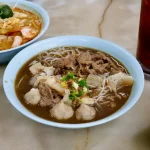
Penang asam laksa is a sour, fish-based broth with thick rice noodles, shredded mackerel, torch ginger flower, and hae ko stirred in at the table. The Air Itam market version, particularly the stall that has been running at the base of the market slope for generations, is widely considered the definitive version. The broth is sharp and aromatic — the tamarind sourness hits first, followed by a deep fishiness and the floral note from the torch ginger.

Hokkien Mee (Prawn Noodle Soup) — Penang Road & Lorong Baru
Penang Hokkien mee is a deep, dark prawn and pork rib broth served over yellow noodles and rice vermicelli, topped with prawns, eggs, and crispy shallots. This is not a light dish. The broth is slow-cooked for hours and tastes like it. Look for stalls with a large stockpot constantly on the boil — that is the signal that the broth is being maintained properly.
Curry Mee — Penang Road & Gurney Area
Penang curry mee uses a coconut milk broth that is thinner and more fragrant than the KL version. It comes with cockles, tofu puffs, blood cake (optional), and long beans. The stall near Penang Road wet market is one of the early-morning anchors for this dish, operating from around 6:30am until stock runs out.
Rice, Meat & Everything Savoury: Beyond the Noodle Bowl
Penang’s identity is so tied to noodles that the rice and meat dishes sometimes get underattended by visitors. That is a mistake — several of Penang’s most distinctive savoury dishes come without a noodle in sight.
Nasi Kandar
Nasi kandar is Penang’s version of Indian-Muslim rice with curry. You pile plain rice onto your plate and then point at what you want — fried chicken, fish head curry, squid, mutton, fried vegetables — and the server ladles everything over the rice in a puddle of mixed curries called banjir (flooding). The key is that the curries mix together on the plate, and experienced eaters choose combinations that play off each other. Line Clear on Penang Road and Hameediyah on Campbell Street are the two most established names, both operating in 2026. Expect queues at peak lunch hours.

Lor Bak (Five Spice Pork Rolls)
Lor bak is a Hokkien Chinese snack that Penang has elevated to an art form. Pork and water chestnuts are wrapped in tofu skin, seasoned with five spice powder, then deep-fried. It is served with a sticky soy dipping sauce and crispy prawn fritters on the side. The Kimberley Street version is famous, but the hawker at Kafe Kheng Pin on Penang Road also runs an excellent version during morning hours.
Nasi Goreng Cina (Chinese Fried Rice)
This sounds unremarkable until you eat the version from the old-school Chinese wok stalls in George Town. The rice is dry and slightly charred, with lard and soy sauce doing most of the work. Simple, but the wok technique separates the Penang version from what you will find elsewhere.
Snacks, Rojak & Street Bites You Should Not Walk Past
Between main meals, Penang rewards the snacker. The best street bites here are things you eat standing up, at a cart, in the middle of an afternoon walk through the heritage zone.
Penang Rojak
Penang rojak is not the fruit rojak you find elsewhere in Malaysia. It is a savoury-sweet mess of cucumber, pineapple, turnip, youtiao (fried dough), and crispy squid tossed in a thick, dark, tangy prawn paste sauce and showered with crushed peanuts. The sauce is the whole point — funky, caramelised, with a heat that builds slowly. The Penang Road area has several solid rojak operators, including the famous cendol-and-rojak pairing at the old house corner near the junction with Carnarvon Street.

Oh Chien (Oyster Omelette)
Fresh oysters fried into a starchy egg omelette, served with a sharp chilli sauce. The best versions have a crisp exterior and a gooey, almost custard-like centre. Gurney Drive hawker centre has a strong oh chien stall that operates in the evenings.
Pasembur
The Malay cousin of rojak — crispy prawn fritters, boiled potato, cucumber, and turnip dressed in a sweet, spiced peanut sauce. The pasembur stalls along Gurney Drive are the most reliable for this dish and run primarily in the evening.
Drinks & Desserts: Cooling Down Between Meals
Penang’s heat and humidity make the dessert and drinks culture here genuinely functional, not just optional extras. By 2pm in the heritage zone, the heat radiates up off the old granite pavements and the temperature regularly sits above 34°C. Cold desserts are essential.
Cendol
Penang cendol is considered the benchmark version in Malaysia. The essential ingredients are shaved ice, green rice flour jelly worms, thick coconut milk, and dark Gula Melaka (palm sugar syrup). At the famous stall on Penang Road — a narrow shophouse that has been there for decades — the palm sugar is thick and deeply smoky-sweet, the coconut milk is fresh, and the ice is shaved fine enough to absorb both without going watery. The queue moves fast. It is worth it every time.
Ais Kacang (ABC)
Shaved ice over red beans, corn, grass jelly, and attap seeds, then drenched in red syrup and evaporated milk. Lighter than cendol, with more textural variety. Available at most hawker centres throughout the day.
Penang White Coffee (Kopitiam Style)
Penang is the origin point of white coffee in Malaysia. The white coffee here is brewed with Robusta beans roasted in margarine and sugar, giving it a smoothness and slight sweetness that instant white coffee products completely fail to replicate. Order it at any old-school kopitiam — Toh Soon Café on Campbell Street is famous for its charcoal-toasted kaya butter toast alongside, though note that seating is extremely limited and the lane gets packed from 8am onward.

Bandung & Sugarcane
Sugarcane juice with a squeeze of calamansi lime is sold from carts throughout the heritage zone and around the markets — around MYR 3 to MYR 4 per glass in 2026. Bandung (rose syrup with evaporated milk over ice) is the pink drink you will see everywhere at Malay stalls and is harder to dislike than it sounds.
Eating on a Budget vs Eating Well: 2026 Price Reality
Penang has a reputation as a cheap food city, and it still is — relative to Kuala Lumpur and certainly relative to most international destinations. But prices have moved meaningfully since 2023-2024. Inflation, supply chain costs, and the post-pandemic rise in visitor numbers have all pushed street food prices up by roughly 15–25% since 2022.
Budget Tier (MYR 20–40 per day on food)
Entirely achievable if you eat at pasar malams, order at hawker centres without drinks, and avoid the tourist-facing restaurants in the hotel belt. A bowl of Hokkien mee runs MYR 8–10, a plate of char kway teow is MYR 9–12, and an iced drink is MYR 3–4. Three meals and two drinks per day can still land under MYR 40 if you are strategic.
Mid-Range Tier (MYR 60–100 per day on food)
This is comfortable eating — nasi kandar with multiple lauk, a proper seafood meal at a hawker centre once per day, cendol and dessert stops, and a restaurant dinner at one of George Town’s better Chinese restaurant-style places. Expect to pay MYR 20–35 for a full seafood hawker meal with drinks at Gurney Drive.

Comfortable Splurge (MYR 150–250 per day on food)
At this level you are mixing street food with meals at Penang’s better restaurant scene — places like Kebaya, Auntie Gaik Lean’s Old School Eatery, or the newer wave of heritage shophouse restaurants in George Town that do refined Nyonya cuisine. This tier also covers cocktails and rooftop bar visits if you fold in nightlife. These restaurants typically run MYR 60–120 per head for a full dinner.
- Bowl of asam laksa: MYR 9–12 (2026)
- Plate of char kway teow: MYR 9–13
- Nasi kandar with two lauk: MYR 12–18
- Cendol (Penang Road stall): MYR 5–7
- Teh tarik: MYR 2.50–4
- Oyster omelette (evening hawker): MYR 13–16
- Full seafood hawker meal (2 persons): MYR 45–70
Getting Around the Food Trail: Practical Logistics
George Town’s heritage zone is walkable — most of the core hawker streets sit within a 3km radius of each other. But the heat makes extended walking punishing by midday, and several of the best food addresses (Air Itam market, Batu Ferringhi, Batu Lanchang) require a vehicle.
Grab
Grab remains the most practical option for food-specific journeys in Penang. A Grab from George Town centre to Air Itam market runs approximately MYR 8–12 depending on time of day. Grab GrabCar availability has improved since the 2025 driver incentive program expanded, though surge pricing on weekend evenings near Gurney Drive can push rides to MYR 18–22.
Rapid Penang Buses
The Rapid Penang bus network covers most food destinations and is legitimately useful. Bus 101 connects the ferry terminal area to Gurney Drive and further north. The flat fare within George Town is MYR 1.40 with a Touch ‘n Go card. The 2025 route rationalisation updated several bus numbers, so check the MyRapid app for current routes before you go.
Bicycle & E-Scooter
Within the heritage zone, bicycle rentals (available from several shops on Chulia Street) make sense for the morning food circuit when traffic is lighter. E-scooter share services operate in parts of George Town but are not consistently reliable as of 2026.

Airport to George Town
Penang International Airport (PEN) is approximately 16km from George Town. A Grab from the airport runs MYR 25–35. The airport bus (401E) connects to KOMTAR in George Town for MYR 2.70, though journey time with stops is 45–60 minutes.
Pro Tips for First-Timers and Return Visitors
A few practical realities that will save you frustration and improve your eating significantly:
- Eat early and eat often. The best stalls sell out. Coming for asam laksa at Air Itam at 11:30am on a Saturday is almost certainly going to result in disappointment. Arrive by 10am at the absolute latest for the top-tier morning stalls.
- Cash is still king at hawker stalls. Many of the old-school stalls do not accept QR payments or cards. Carry small denomination notes — MYR 10 and MYR 5 — at all times. ATMs are easy to find in George Town’s commercial streets.
- Queue discipline matters. Penang’s best stalls have real queues. Do not try to wave someone down, do not order from a crowded side of the counter, and do not send one person to hold a table while another queues — many single-operator stalls require you to order in person.
- Lard is common in Chinese hawker food. If you are avoiding pork for religious or dietary reasons, stick to Malay or Indian Muslim stalls, which are clearly identifiable and abundant throughout George Town. The nasi kandar shops are halal.
- Weekday mornings are quieter. Weekend mornings at famous food spots like Lorong Selamat char kway teow can involve 45-minute waits. The same stall on a Tuesday morning might have a 10-minute queue.
- Bring a light jacket for evening hawker centres. Some of the covered food courts run industrial-strength air conditioning that is genuinely cold after a day in the heat.
Frequently Asked Questions
What is the most iconic street food dish to eat in Penang?
Most food travellers point to Penang asam laksa as the single most distinctive dish — sour fish broth with thick noodles and shrimp paste that you cannot find in quite this form anywhere else. Char kway teow runs a close second. If you only have time for two dishes, those are your two. Air Itam market for the laksa, Lorong Selamat for the char kway teow.
Is Penang street food safe to eat for tourists?
Yes, with standard precautions. Penang’s hawker food has a long track record of being safe. Stick to stalls with high turnover and hot food. Avoid anything that has been sitting out at room temperature for extended periods, particularly seafood items at slower stalls. Drink bottled or filtered water rather than tap water. Food poisoning incidents are rare when you eat at busy, established stalls.
How much should I budget per day for eating in Penang in 2026?
Eating entirely at hawker centres and street stalls, MYR 40–60 per day covers three meals, snacks, and drinks comfortably. Mix in one sit-down meal per day and budget MYR 80–120. A splurge dinner at a proper restaurant on top of that puts you at MYR 150–200.
What are the best areas in George Town for street food?
Lorong Baru (New Lane) and Kimberley Street for evening hawker food, Penang Road for morning kopitiams and cendol, Transfer Road for breakfast culture, and Gurney Drive for a wide variety in a seafront setting. Air Itam is slightly outside George Town proper but essential for asam laksa. All are reachable by Grab within 15 minutes from the heritage zone.
Do Penang hawker stalls operate on public holidays?
It depends on the community. Chinese-operated stalls often close during Chinese New Year (first two days), though Malay and Indian Muslim stalls typically remain open. During Hari Raya, the reverse applies. Major public holidays can thin out the hawker scene significantly. If your visit coincides with a major festival, check ahead — and consider that some of the best food experiences in Penang actually happen at the festival markets and street bazaars that pop up during these periods.
Explore more
The Ultimate Penang Shopping Guide: Malls, Markets & Must-Buys for Travelers
The Perfect 3-Day Penang Itinerary for First-Timers
Penang Street Art Guide: Discover George Town’s Famous Murals & Hidden Gems
Where to Eat in Penang: The Ultimate Foodie Guide
Penang Food Guide: 15 Must-Try Dishes & Where to Find Them
📷 Featured image by Firdouss Ross on Unsplash.