On this page
- Understanding Kota Kinabalu’s Two Seasons
- Month-by-Month Breakdown
- The Dry Season in Detail — March to October
- The Wet Season Reality — November to February
- Festivals and Events Worth Timing Around
- Mount Kinabalu Climbing Windows
- Crowd Levels and Prices by Season
- Best Time to Visit by Trip Type
- Practical Tips for Any Season
- Frequently Asked Questions
💰 Click here to see Malaysia Budget Breakdown
💰 Prices updated: October, 2026. Budget figures are estimates — always verify before travel.
Exchange Rate: $1 USD = RM4.08
Daily Budget (per person)
Shoestring: RM100.00 – RM180.00 ($24.51 – $44.12)
Mid-range: RM250.00 – RM450.00 ($61.27 – $110.29)
Comfortable: RM500.00 – RM1,000.00 ($122.55 – $245.10)
Accommodation (per night)
Hostel/guesthouse: RM30.00 – RM60.00 ($7.35 – $14.71)
Mid-range hotel: RM110.00 – RM200.00 ($26.96 – $49.02)
Food (per meal)
Budget meal: RM15.00 ($3.68)
Mid-range meal: RM35.00 ($8.58)
Upscale meal: RM100.00 ($24.51)
Transport
Single metro/bus trip: RM2.00 ($0.49)
Monthly transport pass: RM50.00 ($12.25)
Flights into Kota Kinabalu from Kuala Lumpur are cheaper than ever in 2026, with AirAsia and Malaysia Airlines both running daily direct routes and occasional flash sales dropping fares below MYR 100 one-way. The problem is that a lot of travelers are booking those cheap fares without checking what the weather actually does to KK at different times of year — and arriving to find their island-hopping plans washed out, or their Mount Kinabalu permit dates conflicting with monsoon closures. Getting the timing right in KK isn’t complicated, but it does require knowing a few things that most general travel sites gloss over.
Understanding Kota Kinabalu’s Two Seasons
Kota Kinabalu sits on Sabah’s west coast, which means it follows a different weather pattern from the east coast of Malaysian Borneo. The broad division is a dry season roughly from March to October and a wetter period from November to February. But unlike Peninsular Malaysia’s dramatic northeast monsoon, KK’s wet season is relatively mild — it rarely rains all day, and sunshine between showers is common.
The South China Sea sits to KK’s west. During the northeast monsoon (November to February), swells can disrupt boat crossings to Tunku Abdul Rahman Marine Park and the outer islands. That’s the most practical consequence of the wet season for most visitors — not floods or washed-out days, but choppier seas and occasional ferry cancellations. Temperature barely changes year-round. Expect 26°C to 33°C most days, with higher humidity during the wet months and slightly cooler nights at elevation.
Rainfall is spread across the year more evenly than in many other parts of Malaysia. Even in the wettest months, you’re typically looking at afternoon showers rather than sustained downpours. The concept of a “bad” season in KK is largely overstated — what matters is what you plan to do when you’re there.
Month-by-Month Breakdown
January and February
These are the wettest and least visited months. Seas around the marine park islands can be rough, and some boat operators run reduced schedules. That said, KK city itself stays lively, and the Chinese New Year period (usually late January or early February) brings street celebrations and a buzzing atmosphere in the Gaya Street area. Hotel prices are at their lowest outside of the CNY long weekend itself.
March and April
Conditions begin to improve noticeably. Seas calm down, visibility underwater starts climbing for divers and snorkelers, and the islands become more accessible. These are excellent shoulder months — decent weather, reasonable prices, and fewer crowds than the peak summer period.
May and June
May and June mark the start of the high season. The Harvest Festival (Pesta Kaamatan) falls in May, one of the most significant cultural events in Sabah’s calendar. School holiday periods begin to affect crowd levels and accommodation pricing toward the end of June.
July and August
Peak season. Dry, sunny, with calm seas. International visitors arrive in volume, Mount Kinabalu permits sell out weeks in advance, and prices across hotels and tour operators reflect demand. The Sabah Fest cultural showcase typically runs in July. This is KK at its most vibrant — and most expensive.
September and October
Still dry, but school holidays are mostly done. September and October are arguably the sweet spot of the year — weather remains reliable, crowd levels drop compared to July and August, and accommodation prices ease. Dive sites around Tunku Abdul Rahman Marine Park see excellent visibility. A genuinely underrated window.
November and December
The transition into the wetter period. Rain becomes more frequent, particularly in November. December picks up again with the year-end holiday crowd, driving prices back up around Christmas and New Year. The festive atmosphere in KK city is genuine — the waterfront area along Jalan Tun Fuad Stephens lights up with decorations, and the night markets extend their hours.
The Dry Season in Detail — March to October
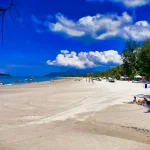
The dry season is when KK performs best across almost every activity category. Island hopping to Pulau Gaya, Pulau Sapi, and Pulau Manukan in Tunku Abdul Rahman Marine Park becomes reliable — boat crossings are smooth, snorkeling visibility peaks, and the powdery sand beaches actually look the way they do in photos. The warm, still air in the early morning carries the faint salt smell of the South China Sea as the first boats load up at Jesselton Point Ferry Terminal, which makes the 7am departure worth the early alarm.
For Mount Kinabalu climbers, the dry season provides the most predictable summit attempt windows. Cloud cover is thinner in the early hours, which matters enormously for the pre-dawn summit push — the difference between a clear view from Low’s Peak at 4,095 metres above sea level and a wall of grey fog.
July and August are the busiest and most expensive months, driven by European and Australian school holidays aligning with KK’s peak weather. If you want dry-season conditions without the peak crowds and pricing, March, April, September, and October deliver almost the same weather with meaningfully lower hotel rates and easier permit availability for Kinabalu.
The Wet Season Reality — November to February
The wet season has a worse reputation than it deserves. Yes, November and December bring more rain, and January and February are the statistically wettest months. But “wetter” in KK terms usually means afternoon or evening showers lasting one to two hours, not days of continuous rain. Mornings are often bright and clear.
The main genuine impact is on sea conditions. Swells in the South China Sea increase during the northeast monsoon, and this directly affects boat trips to the marine park islands. Some operators cancel crossings on rougher days, and snorkeling and diving conditions are less reliable than in the dry season. Scuba divers should note that sites around Sipadan (which requires a separate journey east to Semporna) follow a different pattern — Sipadan’s dive calendar is actually good through much of the year, but that’s a different trip from KK entirely.
For visitors whose itinerary is city-focused — eating their way through the KK Night Market, exploring the Filipino Market, spending time at Signal Hill Observatory Park, or using KK as a base to explore Sabah’s interior — the wet season is a perfectly valid time to visit. Prices are lower, hotels are quieter, and you won’t be competing for restaurant tables at popular spots like the waterfront seafood restaurants along Jalan Pantai.
Budget travelers willing to accept some weather uncertainty can find hotel rates in January and February that are 30 to 40 percent lower than peak July rates at equivalent properties.
Festivals and Events Worth Timing Around
Pesta Kaamatan — May
The Harvest Festival is Sabah’s biggest cultural celebration, observed by the Kadazan-Dusun community. The full month of May sees events across the state, culminating in a grand celebration at the Hongkod Koisaan cultural village in Penampang on May 30 and 31. Traditional music, Kadazan rice wine (tapai), and the crowning of the Unduk Ngadau harvest queen are all part of it. This is one of the most authentic cultural events in Malaysian Borneo and largely underattended by international tourists.
Sabah Fest — July
An annual cultural showcase organized by Sabah Tourism typically held in July, featuring traditional performances, craft exhibitions, and food stalls representing Sabah’s ethnic diversity. Schedules for 2026 confirmed the event continues at the Sabah International Convention Centre (SICC).
Chinese New Year — January or February
KK has a substantial Chinese community, and Gaya Street transforms during CNY. The Sunday Market on Gaya Street — already one of the best morning markets in Borneo — takes on a festive character. The exact dates shift annually based on the lunar calendar.
KK Jazz Festival — October
Held annually at the waterfront, the KK Jazz Festival brings regional and international acts to an outdoor stage with the South China Sea as a backdrop. The October timing puts it neatly in the shoulder season — good weather, manageable crowds, and a genuine reason to be in town on a specific weekend.
Christmas and New Year
KK is one of Malaysia’s most Christmas-friendly cities outside Peninsular Malaysia, with a large Christian population among Sabah’s indigenous communities. Decorations go up early in December, and the waterfront area hosts countdown events for New Year’s Eve that draw both locals and tourists.
Mount Kinabalu Climbing Windows
Timing a Mount Kinabalu summit attempt deserves its own section because the considerations are different from general KK travel planning. The mountain creates its own microclimate, and conditions at 4,095 metres bear little relation to the weather down in KK city.
The clearest summit windows statistically fall between February and April and again in July and August. The pre-dawn ascent to Low’s Peak — typically beginning around 2am from Laban Rata, with cold air biting through base layers and headlamps picking out the granite steps ahead — is the defining experience of the climb. Cloud cover on the summit is the variable that determines whether you see a horizon of orange light breaking over Borneo or a grey void.
October and November bring increasing cloud at summit level. December and January are considered the least favorable for a clear summit experience, though the mountain itself remains open unless there are safety closures. The full mountain closure in early 2024 following seismic activity has since been resolved, and as of 2026 all climbing routes including Via Ferrata options are fully operational.
Note that Kinabalu Park requires climbers to stay overnight at Laban Rata or the newer Pendant Hut facilities — day trips to the summit are not permitted. This means your climbing dates need to align with available accommodation at altitude, not just permit availability. Both need to be booked simultaneously through the Sabah Parks system.
Crowd Levels and Prices by Season
Peak Season — July and August
Highest crowd levels. International and domestic tourists both peak. Budget guesthouses around Jalan Gaya: MYR 80 to 150 per night. Mid-range hotels in the city centre: MYR 250 to 500 per night. Luxury waterfront properties: MYR 700 to 1,500 per night. Mount Kinabalu packages including permit, guide, and Laban Rata accommodation: MYR 900 to 1,400 per person.
Shoulder Season — March to June and September to October
Noticeably fewer crowds. Budget guesthouses: MYR 60 to 120 per night. Mid-range hotels: MYR 180 to 380 per night. Luxury properties: MYR 500 to 1,000 per night. Kinabalu climb packages: MYR 800 to 1,200 per person. Tour operators are easier to negotiate with, and popular tours like the Kinabatangan River trip (which requires traveling east to Sandakan) have more availability.
Off-Peak Season — November to February (excluding CNY and New Year)
Lowest prices and lightest crowds. Budget guesthouses: MYR 50 to 100 per night. Mid-range hotels: MYR 140 to 280 per night. Luxury properties: MYR 380 to 750 per night. Some island-hopping operators run reduced schedules or charge more per person due to smaller group sizes, which partially offsets accommodation savings for island-focused itineraries.
Best Time to Visit by Trip Type
Island Hopping and Snorkeling
March to October. Seas are calm, visibility is high, and all operators run full schedules. September and October give you the best combination of good conditions and manageable crowds.
Mount Kinabalu Summit Attempt
February to April for the best combination of summit clarity and pre-booked permit availability. July and August offer equally good weather but require booking four to five months ahead. Avoid December and January if a clear summit view matters to you.
Wildlife and Jungle Trips into Sabah’s Interior
May to September. Kinabalu Park’s trails and Crocker Range routes are most accessible during drier months. If your trip extends to Danum Valley or Tabin Wildlife Reserve, those areas have their own seasonal considerations — but for accessibility from KK, drier is better.
Cultural Events and Festivals
May for Pesta Kaamatan. July for Sabah Fest. October for the Jazz Festival. February for Chinese New Year street atmosphere.
Budget Travelers
January and February, outside of the CNY public holiday window, represent the lowest prices of the year. The weather compromise is real but manageable for a city-focused trip, and the savings on accommodation are significant enough to extend your stay by a few extra nights.
Practical Tips for Any Season
Packing fundamentals: Lightweight, quick-dry clothing works year-round. A compact rain jacket is worth carrying regardless of season — afternoon showers can appear even in the dry months. For a Kinabalu climb, proper cold-weather layers are non-negotiable: summit temperatures can drop to 2°C or 3°C in the early hours, and wind chill makes it feel colder.
Booking lead times in 2026: KK’s accommodation has grown significantly, with several new mid-range properties opening along the waterfront and around the Sutera Harbour area. Despite this expanded supply, peak season (July to August) still requires booking hotels two to three months out for good options at reasonable prices. Mount Kinabalu permits remain the tightest bottleneck and should always be booked first when planning a Sabah trip.
Flight booking: AirAsia’s KL–KK route regularly features sales, but fares spike during school holiday periods. The best fares from KL to KK in 2026 are typically available eight to twelve weeks ahead. Malaysia Airlines offers more schedule flexibility and slightly more luggage allowance, which matters if you’re packing climbing gear.
Travel insurance: Given the outdoor activity focus of most KK trips — climbing, diving, water sports — travel insurance that explicitly covers adventure activities and emergency medical evacuation is essential, not optional. Several visitors have faced significant out-of-pocket costs on Kinabalu after falls or altitude-related issues without adequate cover.
The night market rhythm: The KK Night Market (Pasar Malam Segama) operates every evening regardless of season, and the smell of grilling seafood and fresh rojak drifting off the waterfront stalls is the same in January as it is in August. Seasonal weather doesn’t close KK’s food scene — it’s one of the things that makes even an off-peak visit worthwhile.
Frequently Asked Questions
What is the best month to visit Kota Kinabalu?
September and October are the most underrated months — dry conditions, calm seas, good snorkeling and diving visibility, and significantly lower crowds and prices than peak July and August. If you need to visit in peak season, March and April are strong alternatives with similar weather and easier permit availability for Mount Kinabalu.
Does Kota Kinabalu have a monsoon season?
KK is on Sabah’s west coast, so it experiences the northeast monsoon’s tail effect from November to February rather than a full-blown monsoon. Rainfall increases and seas get choppier, but it’s not the kind of sustained, all-day rain that characterizes monsoon seasons in other parts of Asia. Morning skies are often clear even in the wetter months.
When should I avoid visiting Kota Kinabalu?
There’s no truly bad time, but January and February present the most challenges for island-hopping and outdoor activities due to rougher seas and higher rainfall. If your trip is built around Tunku Abdul Rahman Marine Park or a Mount Kinabalu summit attempt, avoid these months. For a city-focused or cultural trip, they’re a reasonable budget option.
How far in advance should I book Mount Kinabalu permits?
For July and August, book three to four months ahead — permits and Laban Rata accommodation sell out quickly. For shoulder months like March, April, September, and October, six to eight weeks is generally sufficient. In 2026, all bookings are online-only through Sabah Parks, with no walk-in or last-minute options available on the mountain.
Is Kota Kinabalu suitable for a trip during Malaysian school holidays?
KK handles school holiday crowds reasonably well compared to Langkawi or the Perhentians, but prices and competition for Kinabalu permits rise noticeably. The main Malaysian school holiday periods fall in March, June, August, and November. If traveling with family during these windows, book accommodation and any guided tours at least two months in advance.
Explore more
What Souvenirs Should You Buy in Kota Kinabalu? A Traveler’s Checklist