On this page
- Choosing Your Malaysian Base in 2026
- Kuala Lumpur — Infrastructure, Cost, and the Trade-offs of a Capital City Base
- Penang — Slower Pace, Stronger Culture, Serious Fibre Internet
- Langkawi — Low Costs and Zero Sales Tax, but Know the Limitations
- Kota Kinabalu — East Malaysia’s Underrated Remote Work Option
- The DE Rantau Visa — What It Actually Covers in 2026
- Tax Residency, the 183-Day Rule, and What It Means for Your Income
- Health Insurance — What Malaysia Requires and What You Actually Need
- 2026 Budget Reality — Monthly Cost of Living by City
- Frequently Asked Questions
Choosing Your Malaysian Base in 2026
Malaysia keeps appearing on every digital nomad list, and in 2026 the interest is more than hype. The DE Rantau digital nomad visa has matured, the ringgit remains competitive against the US dollar and euro, and fibre broadband now reaches most urban centres. The real question most people are getting wrong, however, is not whether to come — it is which city actually fits how they work and live. Choosing Penang when you need KL’s international flight connections, or picking KL when your budget is tight, costs you months of frustration. This guide cuts through the general praise and tells you what each city is genuinely like as a base for remote work in 2026.
Kuala Lumpur — Infrastructure, Cost, and the Trade-offs of a Capital City Base
KL is the obvious first choice and often the right one, but not for the reasons most people assume. The city’s strongest argument in 2026 is connectivity, both digital and physical. The Putrajaya Line MRT extension completed in late 2025 now links Kepong, Chow Kit, and Bukit Jalil into one continuous rail corridor, making car-free living genuinely viable across a much wider band of the city. International flights direct to London, Tokyo, Dubai, and Sydney make KL the best option if your remote work involves regular client travel.
Broadband in KL is fast and competitive. Unifi, Maxis Fibre, and TIME Internet all offer 500 Mbps to 2 Gbps home plans. TIME Internet in particular has expanded its residential coverage significantly since 2024 and is consistently rated the most reliable among nomads who rely on video calls. Expect to pay MYR 99–199 per month for a quality fibre plan depending on speed tier.
The trade-off is cost and density. KL is the most expensive Malaysian city by a margin. A decent one-bedroom apartment in Mont Kiara, Bangsar, or Damansara costs MYR 2,000–3,500 per month unfurnished. Furnished short-stay units via platforms like Hostmaker or direct landlord arrangements run MYR 2,500–4,500. Traffic is still significant despite the rail expansion — if your apartment is not within walking distance of an MRT or LRT station, you will feel it daily.
KL also offers the best access to government services. The Immigration Department main office, LHDN (Inland Revenue Board) for tax number registration, and the Malaysia Digital Economy Corporation (MDEC) office handling DE Rantau applications are all based here, which matters when you are setting up your legal presence.
Penang — Slower Pace, Stronger Culture, Serious Fibre Internet
Penang in 2026 is not a compromise pick — it is a deliberate lifestyle choice that many nomads end up preferring after their first month. George Town, the island’s main urban area, has a walkable historic core, genuinely excellent food at every price point, and a local culture that feels lived-in rather than designed for outsiders. The smell of char kway teow crackling in a hot wok at a coffee shop at 7pm, the narrow five-foot-way shophouses lit amber in the evening — Penang has texture that KL’s newer neighbourhoods simply do not.
Internet infrastructure is strong. TIME Internet and Unifi both cover central George Town thoroughly, and the monthly cost is identical to KL. Accommodation is where Penang pulls ahead on value. A furnished one-bedroom apartment in Georgetown’s fringe areas — Pulau Tikus, Greenlane, or Tanjung Bungah — runs MYR 1,200–2,200 per month. Heritage shophouse units in the UNESCO core cost more and can be damp and noisy, so visit before committing.
The main practical limitation is flights. Penang International Airport connects well regionally to Singapore, Bangkok, and Jakarta, but for long-haul destinations you will typically route through KL. If your clients or team require you to fly internationally more than once a quarter, factor in that connection. The Penang LRT project, approved in 2024, is still under construction and will not meaningfully affect daily commuting until 2028 at the earliest, so getting around the island still depends on the Rapid Penang bus network or renting a motorbike.
Langkawi — Low Costs and Zero Sales Tax, but Know the Limitations
Langkawi is a duty-free island, which means alcohol, electronics, and imported goods cost noticeably less than on the Malaysian mainland. There is no Sales and Services Tax (SST) applied to most goods on the island. For nomads who want to keep monthly overheads low and prioritise lifestyle over urban convenience, Langkawi is worth serious consideration.
Rental costs are the lowest of any city in this guide. A one-bedroom apartment or studio in Kuah or Pantai Cenang runs MYR 800–1,500 per month furnished. Long-term lease deals of six months or more regularly come in at MYR 900–1,200, which is difficult to match anywhere else in Malaysia with decent infrastructure.
The honest limitation is internet reliability. Fibre coverage on Langkawi has improved since 2024, with Unifi expanding its residential footprint, but coverage is still patchy outside Kuah town and the main tourist corridor. Many areas rely on 4G home broadband via Celcom or Digi, which performs well on good days and drops frustratingly during tropical storms. If your work involves constant video conferencing or large file uploads, do a thorough speed test at your specific unit before signing any lease.
Langkawi also has limited domestic flight options compared to KL and Penang. Malaysia Airlines and AirAsia both fly to KL, and there are regional routes to Penang and Singapore, but the schedule is thinner. Think of Langkawi as a high-quality slow base, not a transit hub.
Kota Kinabalu — East Malaysia’s Underrated Remote Work Option
Kota Kinabalu (KK) sits on the northwest coast of Sabah in East Malaysia and is genuinely underused by the international nomad community. The city is compact, clean by Malaysian urban standards, and surrounded by some of the most dramatic natural scenery in Southeast Asia. For nomads who value access to nature — Mount Kinabalu, the Tunku Abdul Rahman Marine Park, and Danum Valley all within reach — KK offers a quality of life that the peninsula cities cannot replicate.
Costs sit between Langkawi and Penang. A furnished one-bedroom apartment in Kota Kinabalu city centre or the Api-Api area runs MYR 1,200–2,000 per month. Fibre internet from Unifi is available in most central areas and performs reliably at 100–500 Mbps. The city runs on a slightly different rhythm to peninsula Malaysia — people generally leave the office earlier, traffic peaks are shorter, and the food scene centres on fresh seafood at prices that feel remarkable compared to KL.
The main practical consideration for nomads is the time zone. Sabah operates on Malaysia Standard Time (UTC+8), the same as KL, but if your clients are in Europe or the US East Coast, you are already working across a significant gap. KK does not change this equation compared to KL, but it is worth acknowledging that East Malaysia’s flight connections are thinner. Direct international routes from KK have improved — AirAsia expanded its KK-to-Singapore and KK-to-Taipei routes in 2025 — but KL remains the gateway for most long-haul connections.
The DE Rantau Visa — What It Actually Covers in 2026
Malaysia’s DE Rantau digital nomad visa has been running since 2022 and the process has stabilised considerably. In 2026, the requirements are as follows. You must be a foreign national employed by or running a company registered outside Malaysia. The minimum income threshold is USD 24,000 per year (approximately MYR 113,000 at 2026 exchange rates). You must have valid health insurance covering Malaysia for the duration of your stay.
The visa is issued for 12 months with a single renewal option, giving a maximum continuous stay of 24 months under this category. It covers the primary applicant plus dependants (spouse and children under 18). Applications go through MDEC’s online portal. Processing time in 2026 is typically 4–6 weeks from submission of complete documents — a meaningful improvement over the 8–12 weeks that plagued the programme in 2023.
Required documents include: a valid passport with at least 18 months remaining, proof of remote employment or business ownership (employment contract or business registration), three months of bank statements showing income, and proof of health insurance. Fees are USD 500 for the primary applicant and USD 200 per dependant, payable online. The visa does not grant you the right to work for Malaysian companies — your income must come from abroad.
One change worth noting: since early 2026, MDEC has tightened documentation requirements for freelancers and independent contractors. If you earn from multiple clients rather than one employer, you need to show a consistent income pattern across all three bank statement months, not just one large payment. Plan your timing accordingly.
Tax Residency, the 183-Day Rule, and What It Means for Your Income
Malaysia’s tax residency rules are straightforward but have real financial consequences. If you spend 183 days or more in Malaysia in a calendar year, you are considered a tax resident. Tax residents pay income tax on a progressive scale starting at 0% on the first MYR 5,000 of chargeable income and rising to 30% on income above MYR 2 million. Non-residents — those spending fewer than 183 days — are taxed at a flat rate of 30% on all Malaysian-sourced income.
The critical detail for DE Rantau holders: income earned from foreign employers or foreign clients, deposited into foreign bank accounts, is generally not subject to Malaysian income tax regardless of your residency status. Malaysia does not tax foreign-sourced income remitted into Malaysia for individuals — a rule that has remained intact through 2026 despite some revisions to corporate foreign income rules in 2024 and 2025.
If you do cross the 183-day threshold and become a tax resident, you should register for a Malaysian Tax Identification Number (TIN) with LHDN. Registration can be done online via the MyTax portal or in person at any LHDN branch. The process takes approximately 1–3 business days online. You will need your passport, a local address, and your DE Rantau visa details. Even if your income is fully foreign-sourced and not taxable in Malaysia, having a TIN on record keeps you compliant and avoids issues if you open a local bank account or make significant local transactions.
Always get advice from a licensed Malaysian tax agent before making assumptions about your specific situation — the interaction between your home country’s tax treaties with Malaysia and your residency status can create nuances that general guidance cannot cover.
Health Insurance — What Malaysia Requires and What You Actually Need
The DE Rantau visa mandates health insurance coverage valid in Malaysia. The minimum requirement is a policy that covers hospitalisation and emergency treatment. In practice, MDEC accepts most international health insurance policies from recognised providers — Cigna Global, AXA International, and Allianz Care are commonly used by successful applicants.
Malaysia’s private healthcare system is genuinely good. Major private hospitals like Pantai, Gleneagles, and KPJ operate to international standards, particularly in KL and Penang. Costs are substantially lower than in Australia, the UK, or the US. A GP consultation at a private clinic runs MYR 50–120. A specialist consultation is MYR 150–400. Day surgery procedures that would cost thousands in Western countries often land under MYR 5,000 in Malaysia.
That said, a serious incident — a road accident, a cardiac event, complex surgery — can accumulate costs quickly at private facilities. A policy with at least USD 100,000 annual coverage limit is recommended. Premiums for a healthy 30–35 year old on a standard international health plan run approximately MYR 4,000–7,500 per year (MYR 330–625 per month). If you are over 45, expect significantly higher premiums and consider plans specifically designed for longer Southeast Asia stays.
Malaysia’s public healthcare system is available to visa holders but is not designed for non-citizens as a primary care option. Access is restricted, waiting times are long, and the facilities vary significantly outside major cities. Treat it as an emergency backstop, not a plan.
2026 Budget Reality — Monthly Cost of Living by City
These figures represent a realistic single-person monthly budget covering rent, utilities, groceries, local transport, and a modest food and leisure allowance. They do not include visa fees, flights, or health insurance premiums, which are annual costs.
Kuala Lumpur
- Budget: MYR 3,200–4,000 (shared accommodation or older apartment, public transport, hawker food)
- Mid-range: MYR 4,500–6,500 (furnished one-bedroom in a mid-tier condo, mix of hawker and restaurant dining)
- Comfortable: MYR 7,000–10,000+ (Mont Kiara or Bangsar apartment, dining variety, gym membership)
Penang
- Budget: MYR 2,200–3,000
- Mid-range: MYR 3,200–5,000
- Comfortable: MYR 5,500–8,000
Langkawi
- Budget: MYR 1,800–2,500 (significantly lower rent offsets limited amenity access)
- Mid-range: MYR 2,800–4,000
- Comfortable: MYR 4,500–6,500
Kota Kinabalu
- Budget: MYR 2,000–2,800
- Mid-range: MYR 3,200–4,800
- Comfortable: MYR 5,500–8,000
Utilities in Malaysia — electricity, water, and fibre internet — typically add MYR 250–500 per month for a one-bedroom unit depending on air-conditioning usage. Electricity costs rise noticeably in the March–May and September–October hot periods when air-conditioning runs constantly.
Frequently Asked Questions
Can I apply for the DE Rantau visa from inside Malaysia on a tourist visa?
Yes, in most cases. MDEC allows applications from people already in Malaysia on a social visit pass, provided you submit before your current pass expires. Given the 4–6 week processing time in 2026, apply as early as possible after arrival. Do not let your social visit pass lapse while waiting for approval.
Is Kuala Lumpur actually affordable compared to European or Australian cities?
At a comfortable mid-range level, KL costs roughly 40–55% less than London, Sydney, or Amsterdam for equivalent housing quality and lifestyle. The gap is widest on rent, dining, and healthcare. Mobile data, flights, and imported electronics are where the savings shrink considerably.
Do I need to speak Malay to live comfortably as a long-term nomad in Malaysia?
No. English is widely spoken in urban Malaysia across government offices, hospitals, shops, and landlord communications. In KL, Penang, and KK, you can handle daily life, lease negotiations, and official processes entirely in English. Basic Malay phrases are appreciated socially but not necessary.
Which Malaysian city has the most stable and fastest internet for remote work?
Kuala Lumpur and Penang are the most reliable, with TIME Internet in particular delivering consistent gigabit fibre in both cities. Kota Kinabalu performs well in central areas. Langkawi is the weakest option for high-bandwidth work due to partial reliance on 4G home broadband in many residential areas.
Can my spouse work in Malaysia if they join me on a DE Rantau dependant pass?
As of 2026, DE Rantau dependant pass holders do not automatically receive work authorisation in Malaysia. Your spouse can live in Malaysia with you but cannot take up local employment or contracts with Malaysian companies. They can, however, continue working remotely for a foreign employer under their own arrangement.
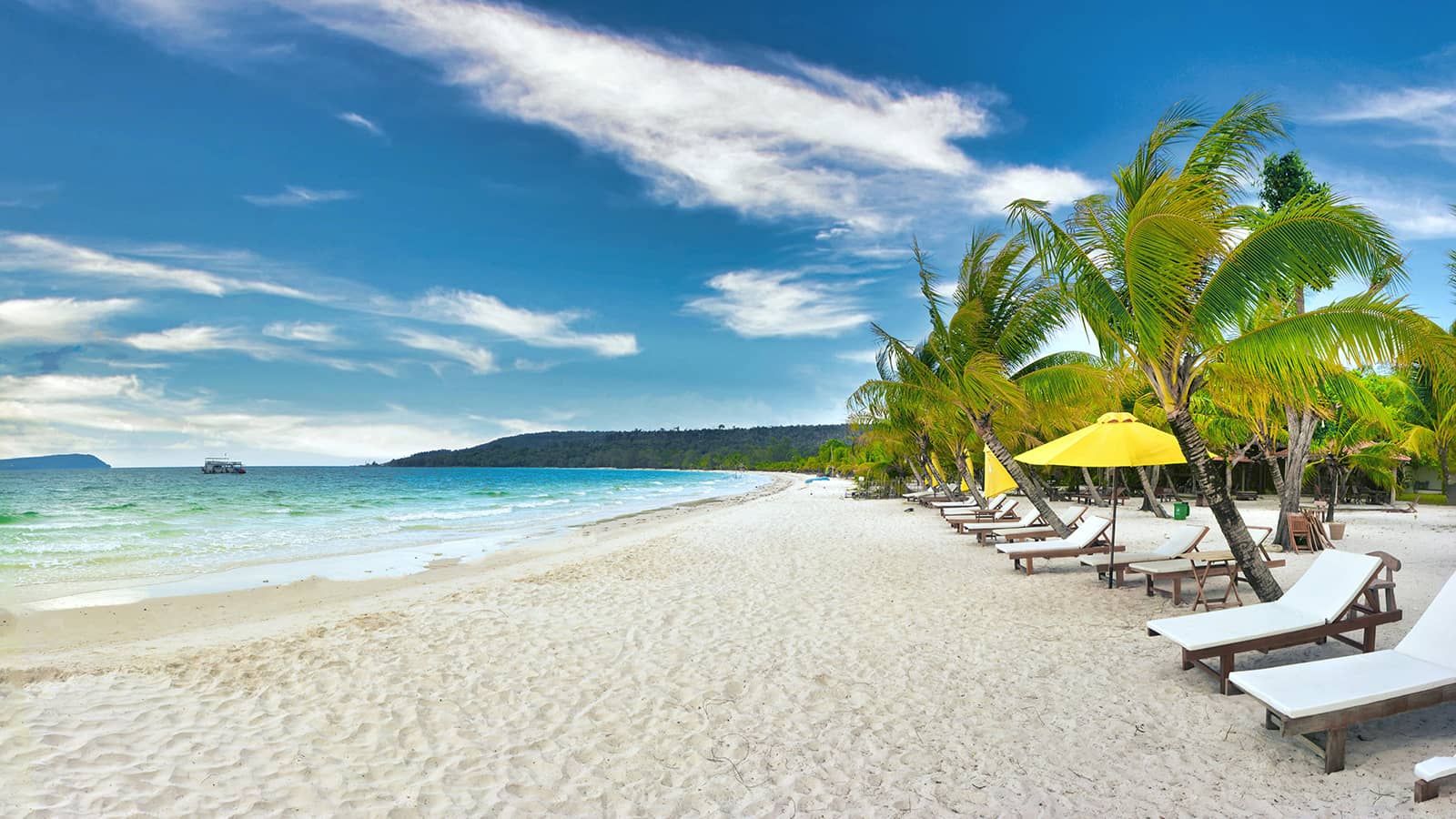
📷 Featured image by David L. Espina Rincon on Unsplash.