On this page
- Bukit Bintang: The Commercial and Entertainment Spine of KL
- KLCC & Ampang Park: Luxury, Expats, and the Twin Towers Radius
- Chow Kit & Masjid India: Old KL, Markets, and Authentic Daily Life
- Brickfields (Little India) & KL Sentral: Transport Hub with Cultural Depth
- Bangsar & Bangsar South: Upscale Eating, Nightlife, and the Local Professional Crowd
- Mont Kiara & Publika: Expat Enclave, Family Stays, and Modern Malls
- Cheras & Taman Connaught: Local Residential Life and Night Market Culture
- Damansara: New-Money Suburbs and the Foodie Frontier
- 2026 Budget Reality: What to Expect to Spend Per Neighborhood
- How to Choose the Right Neighborhood for Your Travel Style
- Frequently Asked Questions
💰 Click here to see Malaysia Budget Breakdown
💰 Prices updated: August, 2026. Budget figures are estimates — always verify before travel.
Exchange Rate: $1 USD = RM4.03
Daily Budget (per person)
Shoestring: RM100.00 – RM200.00 ($24.81 – $49.63)
Mid-range: RM180.00 – RM400.00 ($44.67 – $99.26)
Comfortable: RM450.00 – RM1,300.00 ($111.66 – $322.58)
Accommodation (per night)
Hostel/guesthouse: RM20.00 – RM70.00 ($4.96 – $17.37)
Mid-range hotel: RM100.00 – RM350.00 ($24.81 – $86.85)
Food (per meal)
Budget meal: RM15.00 ($3.72)
Mid-range meal: RM35.00 ($8.68)
Upscale meal: RM100.00 ($24.81)
Transport
Single metro/bus trip: RM2.00 ($0.50)
Monthly transport pass: RM150.00 ($37.22)
Kuala Lumpur is not a city you can navigate with a single base. Staying in the wrong neighborhood can mean 45-minute Grab rides to everything you actually want to see, sky-high hotel prices for zero walkability, or a sterile business district when you wanted street food and chaos. In 2026, with the expanded MRT Putrajaya Line now fully operational and two new MRT3 Circle Line stations open in the city core, where you stay genuinely shapes the entire trip. This guide cuts through the noise and matches neighborhoods to travel styles — not to hotel affiliate deals.
Bukit Bintang: The Commercial and Entertainment Spine of KL
If you only have three or four days in KL and want everything within walking distance, Bukit Bintang is the answer. This is the densest concentration of hotels, malls, street food, rooftop bars, and night entertainment in the entire city. Jalan Alor — the famous open-air food street — runs parallel to the main shopping strip, and on a busy evening the smell of grilling chicken wings and wok-tossed rice hangs thick in the humid air, hawkers calling out from either side of a narrow lane crammed with plastic stools and red lanterns.
The Pavilion KL mall anchors the northern end of Bukit Bintang, while Lot 10, Fahrenheit88, and the newer Pavilion Bukit Jalil extension connect the retail circuit. Budget backpacker hostels share streets with five-star properties like the Westin and the Four Seasons (which sits at the boundary with KLCC). This compression is the point — you can eat a MYR 8 char kway teow at a hawker stall at midnight, then walk back to a hotel with a rooftop pool.
The neighborhood has a 24-hour energy that not everyone loves. If you need quiet streets and low foot traffic, Bukit Bintang will frustrate you. But for first-timers, solo travelers, and anyone on a short trip, its walkability and density of options make it the default choice in 2026.

Best for: First-timers, solo travelers, short stays, nightlife seekers.
Avoid if: You want a peaceful, residential atmosphere.
KLCC & Ampang Park: Luxury, Expats, and the Twin Towers Radius
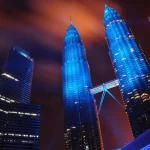
The KLCC neighborhood is defined entirely by the Petronas Twin Towers and the sprawling park and mall complex beneath them. Hotels here — the Mandarin Oriental, the Traders, the Impiana — charge a significant premium for that tower view, and much of the daytime crowd is a mix of international tourists, business travelers, and well-heeled residents from the surrounding embassy belt.
What most visitors miss is that KLCC is genuinely walkable within its own bubble. Suria KLCC mall connects directly to the KLCC MRT station (Putrajaya Line and Kelana Jaya Line both stop here now), and the park itself is a legitimate green escape in the middle of the city — morning joggers, families with strollers, and the fountain light show at night drawing crowds until 10pm.
The Ampang Park area, just east of the towers, has more lived-in character. Jalan Ampang and Jalan U-Thant have Korean, Japanese, and Middle Eastern restaurants serving the large expat communities who live in the low-rise apartment blocks and bungalows nearby. Groceries at Isetan or Ben’s Independent Grocer in Suria KLCC are expensive. The street food scene is thinner here than in Bukit Bintang — you’ll need a Grab to reach proper hawker centres.
Best for: Luxury travelers, business trips, couples wanting a prestige base.
Avoid if: You’re budget-conscious or want authentic local street food at your door.

Chow Kit & Masjid India: Old KL, Markets, and Authentic Daily Life
Chow Kit is the neighborhood that gives you the KL that most tourists don’t see. The wet market on Jalan Haji Taib is one of the largest and most active in the city — stalls selling fresh coconut, pungent dried fish, whole durians, and live seafood packed into a covered labyrinth that hums with Malay, Bangladeshi, and Indonesian voices every morning from around 6am. The smell is confrontational and entirely authentic.
This is a working-class district with a large migrant worker population and an energy that is rough around the edges. It is not a polished tourist zone. But that’s precisely the appeal for travelers who want to see how the city actually functions outside the malls and luxury corridors.
Just south, Masjid India (the area around Jalan Masjid India and Jalan Tuanku Abdul Halim) offers a denser, more pedestrian-friendly version of the same character. Textile shops, gold jewelry vendors, street food stalls selling roti john, murtabak, and Malay kuih, and a weekend pasar malam (night market) that takes over the entire street. The Masjid India LRT station connects directly to the Kelana Jaya Line, making it easy to reach from most parts of the city.
Best for: Culture-curious travelers, photographers, market enthusiasts, budget stays.
Avoid if: You’re uncomfortable with crowded, unpolished urban environments.
Brickfields (Little India) & KL Sentral: Transport Hub with Cultural Depth
KL Sentral is the city’s main transport interchange — ERL to KLIA, KTM Komuter, LRT, MRT, Monorail, and intercity buses all converge here. Staying in this area means you can reach the airport in 28 minutes without touching traffic, and connect to almost any part of KL without a Grab.

Directly adjacent to KL Sentral is Brickfields, KL’s official Little India. This is not a tourist recreation — it is a dense, functioning South Indian neighborhood with genuine Tamil Nadu-style restaurants, flower garland vendors, Hindu temples, and saree shops. The banana leaf rice at places like Vishal Food & Catering or Annalakshmi draws long queues at lunch, and the sound of Tamil film music drifts out from shops onto the narrow five-foot walkways. In 2026, the neighborhood has benefited from the Nu Sentral mall extension which added a covered pedestrian link to reduce exposure to KL’s afternoon heat.
Hotels in this area tend to be mid-range and offer considerably better value than KLCC or Bukit Bintang. The trade-off is that while transit connectivity is exceptional, the immediate nightlife and entertainment scene is limited compared to Bukit Bintang, which is one MRT stop or a short Monorail ride away.
Best for: Transit-dependent travelers, families, those arriving and departing by KLIA Express, budget-to-mid-range stays.
Avoid if: You want to be in the middle of nightlife and dining clusters.
Bangsar & Bangsar South: Upscale Eating, Nightlife, and the Local Professional Crowd
Bangsar is where KL’s young professionals eat, drink, and socialize. It sits about 6 kilometres southwest of KLCC, connected by the Kelana Jaya LRT line (Bangsar station) and by a dense network of Grab routes. The neighborhood has a completely different register from Bukit Bintang — it feels like a city neighborhood rather than a tourist district, with independent restaurants, wine bars, specialty coffee roasters, and a weekend farmers market at Bangsar Village.
Jalan Telawi (the main restaurant and bar strip) is worth a dedicated evening. The mix of Malaysian, Japanese, Italian, and modern Asian restaurants is serious — this is where KL chefs who trained internationally tend to open their first solo projects. Pub culture is also well-developed here, with a handful of live music venues and craft beer bars that stay busy until 2am on weekends.

Bangsar South, a planned development about 2 kilometres further south, is newer and more corporate in feel. It is home to several large tech and banking offices and has its own mall (The Vertical) and a Kerinchi LRT station. It suits business travelers or longer-stay visitors who want a quieter residential base with good café access and a weekend market at nearby Pantai Dalam.
Best for: Return visitors, food-focused travelers, those wanting local professional nightlife over tourist bars.
Avoid if: You’re on a tight budget or want constant pedestrian energy.
Mont Kiara & Publika: Expat Enclave, Family Stays, and Modern Malls
Mont Kiara is the address of choice for KL’s long-term expat community — international schools, large condominiums with pools and gyms, Japanese supermarkets, and the Publika shopping mall, which functions as a kind of creative community hub with an arts space, independent boutiques, a weekend farmers market, and one of the best selections of specialty food stores in KL.
For tourists, Mont Kiara makes sense primarily for families or travelers visiting friends who live there. The neighborhood is about 10 kilometres north of the city center and has no direct rail connection — Grab is the primary transport. This is a significant practical limitation. In 2026, the MRT3 Circle Line route does not pass through Mont Kiara, meaning the car-dependency remains a real issue for those without a vehicle.
That said, the environment is genuinely comfortable. Streets are cleaner, traffic (outside rush hour) is manageable, and the density of Japanese, Korean, Western, and international restaurants around Jalan Kiara and Plaza Mont Kiara reflects the community’s cosmopolitan makeup. It does not feel like Malaysia in the same way Chow Kit or Brickfields does — which is either a plus or a minus depending on why you’re visiting.

Best for: Families, longer stays, travelers visiting local expat friends.
Avoid if: You rely on public transport or want immersion in local Malaysian culture.
Cheras & Taman Connaught: Local Residential Life and Night Market Culture
Cheras is where KL residents actually live — vast middle-class housing estates, kopitiam coffee shops open from 6am, and hawker centres doing serious business from 6pm onwards. It is not a destination most travel guides mention, which is exactly why certain types of travelers should consider it.
The Taman Connaught night market, held every Wednesday evening along a 2-kilometre stretch of Jalan Cerdas, is widely considered the longest pasar malam in KL. The variety of food alone — lok lok skewers, Hakka noodles, roasted chestnuts, Portuguese egg tarts, fresh cut fruit, and grilled seafood — makes it worth the trip even if you’re staying elsewhere. Getting there on the MRT (Connaught station on the Putrajaya Line) takes about 20 minutes from Bukit Bintang.
Accommodation here is very affordable. Cheras has several clean, basic hotels and serviced apartments aimed at the local business traveler market, with rates that are 40–60% lower than equivalent quality in Bukit Bintang. The trade-off is that many tourist sights require a 20–30 minute transit journey. For travelers on extended stays who want to understand everyday KL life, this payoff makes sense.
Best for: Budget travelers, long stays, those specifically interested in local food culture.
Avoid if: You need to be close to major tourist sights daily.
Damansara: New-Money Suburbs and the Foodie Frontier
The Damansara corridor — which technically straddles KL and Petaling Jaya — has become one of the most exciting food and café destinations in Greater KL. Taman Tun Dr Ismail (TTDI), Damansara Uptown, and Damansara Perdana each have distinct characters but share a common thread: high-quality independent food businesses serving a wealthy, food-literate local crowd.

TTDI in particular has a market (the Pasar Tani TTDI) and a density of specialty coffee shops, ramen restaurants, and modern Malaysian eateries that rivals anything in Bangsar. The neighborhood is primarily residential and feels very suburban compared to the city center — wide roads, low-rise buildings, residents in cars. The Damansara Damai MRT station (Putrajaya Line) has improved access considerably since its 2024 opening, but most of the best eating is still a Grab ride from any station.
As a place to stay, Damansara is best for those renting a serviced apartment for a week or more, especially families or groups where someone has a car. Day-tripping in for a meal or a Sunday morning market visit from a Bukit Bintang or KLCC base is also a practical option.
Best for: Food-focused travelers, families with cars, long-term visitors.
Avoid if: You need consistent public transport links to city-center attractions.
2026 Budget Reality: What to Expect to Spend Per Neighborhood
Hotel and accommodation prices in KL shifted noticeably in 2025–2026 as domestic tourism demand remained strong and several new hotel openings in Bukit Bintang increased mid-range supply. Here’s a practical breakdown of nightly accommodation rates and daily costs by area:
Bukit Bintang
- Budget (hostel dorm / basic hotel): MYR 40–90 per night
- Mid-range (3-star hotel with pool): MYR 180–320 per night
- Comfortable (4–5 star): MYR 380–800+ per night
- Daily food spend (hawker + one sit-down meal): MYR 35–60
KLCC
- Budget: Limited options — MYR 150+ even for basic properties
- Mid-range: MYR 280–450 per night
- Comfortable (luxury): MYR 500–1,400+ per night
- Daily food spend: MYR 60–100 (mall dining dominant)
Brickfields / KL Sentral

- Budget: MYR 60–110 per night
- Mid-range: MYR 160–280 per night
- Daily food spend: MYR 25–50 (excellent value Indian and Malay food nearby)
Bangsar
- Mid-range to comfortable: MYR 200–380 per night (primarily serviced apartments)
- Daily food spend: MYR 50–90 (dining skews upscale)
Cheras / Taman Connaught
- Budget to mid-range: MYR 50–160 per night
- Daily food spend: MYR 20–40 (some of the best value eating in KL)
How to Choose the Right Neighborhood for Your Travel Style
After reading the above, the decision usually comes down to three variables: how long you’re staying, whether you’re using public transport, and whether you prioritize convenience or authenticity.
- First trip, 3–5 days: Stay in Bukit Bintang. The walkability and density of options will serve you better than any other choice.
- Returning visitor who’s done the tourist circuit: Bangsar or TTDI/Damansara for the food scene and local atmosphere.
- Luxury or business trip: KLCC, specifically a hotel with a direct Twin Towers view if the budget allows.
- Family with children: Mont Kiara (with a rental car) or KL Sentral (for transit ease and the quieter Brickfields streets).
- Budget backpacker: Bukit Bintang hostels for social energy, or Cheras for the lowest costs and local experience.
- Extended stay (2+ weeks): Bangsar South or Damansara serviced apartments — better value, quieter, more liveable.
- Airport arrival/departure focus: KL Sentral gives you the fastest, most reliable KLIA Express link — 28 minutes, no traffic risk.
One practical note for 2026: the MRT3 Circle Line partial opening has improved east-west connections through the city center, but the outer neighborhoods (Mont Kiara, Damansara, parts of Cheras) still rely on Grab for most movement. Budget MYR 10–25 per Grab trip within the city, and MYR 25–45 from outer suburbs to the center during peak hours.
Frequently Asked Questions
Which KL neighborhood is best for first-time visitors?
Bukit Bintang is the strongest choice for first-timers. It offers the highest concentration of hotels across all budgets, street food on your doorstep, mall access, and solid MRT and Monorail connections. You can reach most major KL attractions from here without relying heavily on taxis or Grab.

Is KLCC worth the higher hotel prices?
Only if the Twin Towers experience is central to your trip — the iconic view from a high-floor hotel room is genuinely different from anything else in KL. For most visitors, the premium is hard to justify when Bukit Bintang (10 minutes away by MRT) costs significantly less and offers far better street-level options.
Which neighborhood has the best public transport links in 2026?
KL Sentral wins outright for sheer connectivity — ERL, MRT, LRT, KTM Komuter, Monorail, and bus routes all intersect there. Bukit Bintang comes second, with the Bukit Bintang MRT station (Putrajaya and Kajang Lines) and Imbi and Raja Chulan Monorail stops all within walking distance.
Is it safe to stay in Chow Kit?
Chow Kit has a rough reputation that is somewhat exaggerated for tourists. Street crime exists and the area is edgy at night, but it is not inherently dangerous for alert travelers. Keep your phone out of sight, avoid isolated streets after midnight, and you will most likely have no issues. Most budget hotels here are clean and secure.
Can I use public transport to get between these neighborhoods easily?
Most central neighborhoods — Bukit Bintang, KLCC, Masjid India, Brickfields, Bangsar — are well connected by the MRT and LRT network. Outer areas like Mont Kiara, Damansara, and deeper into Cheras require Grab for most journeys. The 2026 MRT3 partial Circle Line opening helps east-west movement in the core city but does not yet serve the western suburbs.
Explore more
Kuala Lumpur Must-Dos: Top Attractions & Experiences for First-Timers
Where to Stay in Kuala Lumpur: Best Neighborhoods & Hotels for Your Trip
Kuala Lumpur Itinerary: The Perfect 3 Days in KL for First-Timers
📷 Featured image by CHUTTERSNAP on Unsplash.