On this page
- City Centre: KK Waterfront and Gaya Street
- Tanjung Aru: Sunsets, Sand, and the KTM Connection
- Sutera Harbour and Sembulan: The Marina Enclave
- Damai and Luyang: Everyday KK Life
- Lintas and Kepayan: KK’s Most Improved Neighbourhoods
- 2026 Budget Reality: What to Expect to Pay
- Matching Your Neighbourhood to Your Trip
- Getting Between Neighbourhoods in 2026
- Frequently Asked Questions
💰 Click here to see Malaysia Budget Breakdown
💰 Prices updated: August, 2026. Budget figures are estimates — always verify before travel.
Exchange Rate: $1 USD = RM4.03
Daily Budget (per person)
Shoestring: RM100.00 – RM200.00 ($24.81 – $49.63)
Mid-range: RM180.00 – RM400.00 ($44.67 – $99.26)
Comfortable: RM450.00 – RM1,300.00 ($111.66 – $322.58)
Accommodation (per night)
Hostel/guesthouse: RM20.00 – RM70.00 ($4.96 – $17.37)
Mid-range hotel: RM100.00 – RM350.00 ($24.81 – $86.85)
Food (per meal)
Budget meal: RM15.00 ($3.72)
Mid-range meal: RM35.00 ($8.68)
Upscale meal: RM100.00 ($24.81)
Transport
Single metro/bus trip: RM2.00 ($0.50)
Monthly transport pass: RM150.00 ($37.22)
Kota Kinabalu has quietly transformed since 2024. New hotels have opened along the waterfront, the Tanjung Aru beachfront strip has been upgraded, and a wave of mid-range properties has appeared in previously overlooked suburbs like Lintas and Kepayan. For first-time visitors in 2026, this is both good news and a genuine headache — there are simply more choices than ever, and picking the wrong neighbourhood can mean spending half your trip stuck in traffic or paying for a sea view you never actually see. This guide cuts through the noise and tells you exactly where to base yourself in KK, depending on what kind of trip you’re planning.
City Centre: KK Waterfront and Gaya Street
If you want to step outside your hotel and immediately feel like you’re in Kota Kinabalu — the noise, the food smells, the ferry boats heading to the islands — the city centre is where you belong. The area roughly bounded by Jalan Gaya, the Jesselton Point Ferry Terminal, and the KK Waterfront Esplanade is the most walkable part of the entire city. Almost nothing requires a grab or a taxi if you’re based here.
Gaya Street itself is the social spine of KK. On Sunday mornings it closes to traffic for the famous tamu market, where local vendors sell everything from fresh jungle produce to hand-carved wooden crafts. The smell of freshly steamed dim sum drifts from the coffee shops before 8am, and the covered five-foot-ways stay busy well into the evening. Staying here means you’re never more than a ten-minute walk from Jesselton Point, where boats leave for Tunku Abdul Rahman Marine Park.
The city centre suits solo travellers, couples, and anyone prioritising island day trips. The accommodation mix is wide — backpacker hostels sit alongside business hotels and a handful of proper boutique properties. The only real downside is noise: streets around the waterfront stay lively past midnight, and rooms on lower floors of budget properties can be loud.
The KK Waterfront redevelopment, which added a new promenade section in late 2025, has improved the evening walking experience considerably. You can now walk continuously from the old Hyatt site all the way past the KK Times Square shopping complex without navigating traffic.
Tanjung Aru: Sunsets, Sand, and the KTM Connection
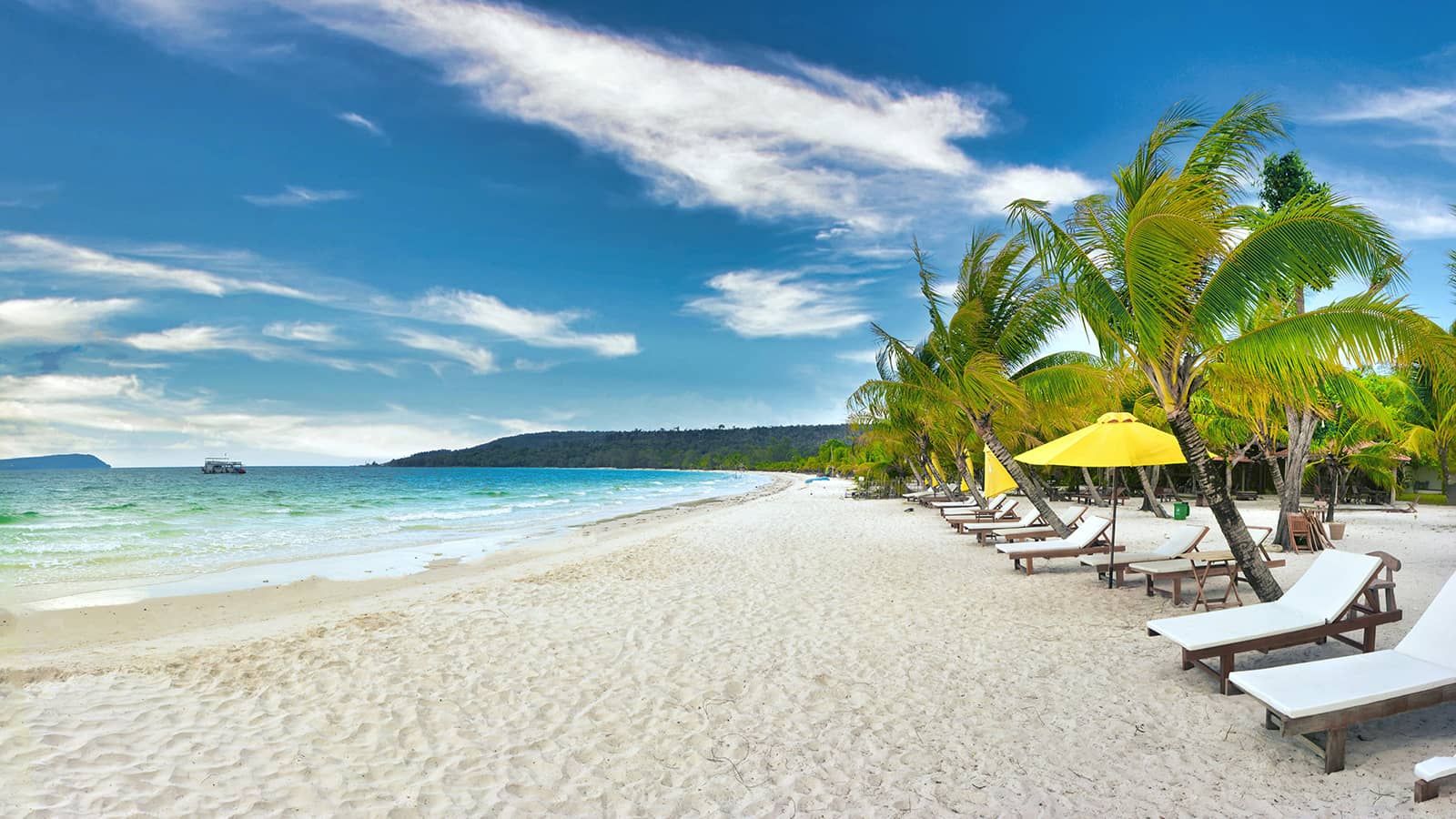
Tanjung Aru sits about 5 kilometres south of the city centre, and its personality is completely different. This is where KK locals come to watch the sunset — and it is genuinely one of the best free sunset experiences in all of Borneo. The beach itself is not swim-quality (it’s calm and clean-ish, but not the crystal water of the Tunku Abdul Rahman islands), but the wide grassy foreshore, the coconut palms bending toward the water, and the hawker stalls firing up at dusk create an atmosphere that’s hard to replicate anywhere else in the city.
Practically speaking, Tanjung Aru has two major logistical advantages. First, it’s the closest neighbourhood to Kota Kinabalu International Airport — roughly 3 kilometres from Terminal 1. For early morning flights or late arrivals, this matters a lot. Second, the Tanjung Aru KTM station is the southern terminus of the Sabah State Railway, which in 2026 runs a revamped schedule with more frequent services north toward Beaufort and Tenom. If you’re planning a day trip into the interior — the Padas River or the Crocker Range — starting from Tanjung Aru makes far more sense than fighting city traffic from the centre.

The accommodation scene here skews toward the higher end. The Shangri-La Tanjung Aru Resort anchors the neighbourhood as its most prominent property, and several newer boutique resorts have opened on the quieter roads behind the beach since 2025. Budget travellers will find limited options — this is predominantly a comfortable and luxury zone.
Families with young children tend to love Tanjung Aru. The beach park is genuinely safe and relaxed, the hawker food at the evening market is outstanding (the grilled fish with sambal is the thing to eat here, eaten at a plastic table with the sea breeze cooling everything down), and the pace of life feels slower than the city centre.
Sutera Harbour and Sembulan: The Marina Enclave
Sutera Harbour is its own world. The integrated resort complex — which includes the Magellan and Pacific Sutera hotels, a full marina, a golf course, and a small shopping arcade — sits on reclaimed land between the city centre and Tanjung Aru. Guests staying here rarely need to leave the complex at all, which is either a feature or a bug depending on how you travel.
The marina itself has expanded since 2024. Private yacht berths fill up with dive operators and charter boats during peak season (July to September), and the waterfront restaurants have become a legitimate dining destination for KK residents who drive in specifically for the setting. At night, the reflections of mast lights on the still water and the glow of the Crocker Range in the distance on clear evenings gives the place a particular quiet glamour.
Sembulan, the neighbourhood immediately adjacent to Sutera Harbour, is a different proposition. It’s a commercial and light-industrial area that has developed quickly over the past two years, with several newer mid-range business hotels catering to corporate travellers. It’s less atmospheric than anywhere else on this list, but it’s well-connected and generally offers better value per night than comparable properties in the city centre, simply because leisure tourists rarely think to look here.

Sutera Harbour suits honeymooners, golfers, and anyone who genuinely wants resort-style relaxation without flying to a remote island. It’s also one of the few areas in KK where the pool, gym, and beach facilities are consistently well-maintained at the level you’d expect from international resort standards.
Damai and Luyang: Everyday KK Life
Most visitors to Kota Kinabalu never spend a night in Damai or Luyang, which is exactly what makes these neighbourhoods worth considering if you want to see the city as residents actually experience it. Both are established residential and commercial districts sitting roughly 4–6 kilometres from the waterfront, with no tourist polish and absolutely no pretension.
Luyang is the more developed of the two, with a busy commercial strip along Jalan Luyang that includes everything from hardware shops to some of KK’s best local coffee shops. The neighbourhood has a strong Chinese-Malaysian character — old coffee shops where kopitiam aunties still brew kopi-o in traditional sock filters alongside newer boba tea outlets that cater to the university crowd. Damai, slightly further out, has a more mixed demographic and a cluster of mid-range hotels near the Damai Plaza shopping area that consistently offer among the best value accommodation per room in the city.
The trade-off here is pure convenience. You will need a Grab or a car for almost every trip to the waterfront or the ferry terminal. But if you’re in KK for more than three nights, basing yourself in Damai or Luyang for at least part of your stay — particularly if you’re doing land-based activities like visiting Mari Mari Cultural Village or heading to Kinabalu Park — can save you real money and give you access to authentic hawker food that has no tourist markup at all.

Lintas and Kepayan: KK’s Most Improved Neighbourhoods
Five years ago, recommending Lintas or Kepayan to a visitor would have been unusual. Today in 2026, these two adjacent suburbs in the southern part of the city have genuinely emerged as practical bases, particularly for longer-stay visitors and digital nomads.
Lintas has seen the most dramatic change. The Lintas Square commercial area now has multiple co-working spaces, a strong concentration of cafés with reliable WiFi, and several new apartment-style hotels that opened between 2024 and 2026. These properties typically offer kitchenette-equipped rooms at mid-range prices, targeting the growing segment of remote workers who base themselves in KK for weeks at a time while exploring Sabah on weekends.
Kepayan, which runs south from Lintas toward the Penampang road, is quieter and more residential. A new hotel cluster near the KK City Mall and Centre Point Sabah has made it a reasonable option for shoppers and families. The Centre Point Sabah mall itself was significantly expanded in 2025 and now includes a larger supermarket, a cinema upgrade, and a new food court that has become genuinely popular with KK residents — a good sign that an area has real local life rather than just tourist infrastructure.
Transport from Lintas and Kepayan to the city centre is straightforward via Grab, typically MYR 10–15 per trip depending on time of day. There is also a new MyBas route (Route 17A, introduced mid-2025) that connects Kepayan to the Wawasan Plaza bus hub near the waterfront for MYR 2 per ride — slow, but functional for budget travellers with time to spare.

2026 Budget Reality: What to Expect to Pay
Accommodation prices in Kota Kinabalu have risen roughly 12–15% since 2024, driven by increased regional tourism from South Korea, China, and Australia, as well as the weaker US dollar making KK an attractive long-haul destination. Here is what the market looks like by tier in 2026:
Budget (under MYR 120 per night)
- Hostel dorm beds in the city centre: MYR 35–60 per night
- Basic guesthouses in Luyang and Damai: MYR 75–120 per night
- Budget hotels in Kepayan near Centre Point: MYR 90–120 per night
Mid-Range (MYR 120–350 per night)
- Three-star business hotels in Sembulan and Lintas: MYR 130–200 per night
- Mid-range waterfront hotels in the city centre: MYR 180–280 per night
- Newer boutique properties near Gaya Street: MYR 200–350 per night
Comfortable (MYR 350–700+ per night)
- Four-star properties along the KK Waterfront: MYR 350–500 per night
- Sutera Harbour (Magellan or Pacific Sutera): MYR 450–700 per night
- Shangri-La Tanjung Aru Resort: MYR 550–900 per night, higher during July–September peak
One important 2026 note: the Malaysian government’s updated tourism tax now applies at MYR 10 per room per night for four and five-star properties, and MYR 5 per room per night for one to three-star properties. This is collected separately at checkout — many online booking platforms do not include it in the displayed price, so budget for it.
Matching Your Neighbourhood to Your Trip
The right base in KK depends almost entirely on what you’re actually planning to do. The city is compact enough that no neighbourhood is impossibly inconvenient, but the daily friction of a bad location adds up quickly across a week-long trip.
For island hopping and snorkelling
Stay in the city centre, within walking distance of Jesselton Point. The first ferry to the Tunku Abdul Rahman islands typically leaves at 7:30am, and fighting a Grab across town at that hour is unnecessary stress. Being able to walk to the terminal in ten minutes changes your entire experience.

For adventure travel (Mount Kinabalu, Padas River)
Tanjung Aru or the city centre both work. Tanjung Aru gives you the KTM access for the train-based routes into the interior. City centre works if your operator picks up directly from your hotel, which most Kinabalu-focused tour companies do.
For families
Tanjung Aru or Sutera Harbour. Both offer space, calm, beach access, and the kind of resort infrastructure (pools, children’s activities, reliable restaurants) that makes family travel less exhausting. Sutera Harbour in particular works well for families who want to contain the itinerary within one complex on rest days.
For business travellers
Sembulan or the city centre. The KK Convention Centre is near the Sembulan boundary, and the city centre keeps you close to government offices, the bank district, and the main commercial districts.
For longer stays and remote workers
Lintas or Luyang. Better value, real neighbourhoods, and increasingly strong café and co-working infrastructure. You’ll need Grab for most movements, but the daily cost of transport is quickly offset by lower nightly rates.
Getting Between Neighbourhoods in 2026
Let’s be honest: Kota Kinabalu is not a pedestrian city outside of the city centre. The road network was designed around cars, and the public bus system — while improving — still has gaps that will frustrate anyone trying to use it as their primary transport.
Grab remains the most practical option for most visitors. Fares within the KK urban area are reasonable — MYR 8–12 for most intra-city trips, rising to MYR 15–25 for longer journeys to Tanjung Aru or the airport during peak hours. Surge pricing does apply during rush hour (7–9am and 5–7pm on weekdays), and on Saturday evenings when the city centre gets busy.

The MyBas city bus network has been meaningfully expanded in 2026 under the Sabah government’s urban mobility initiative. Key routes for visitors include the service along the coastal road between the city centre and Tanjung Aru (Route 2), the Lintas-Kepayan connector (Route 17A), and the route serving the Damai and Luyang commercial areas (Route 5). All fares are MYR 2 per trip. The buses are air-conditioned and generally on time during off-peak hours, though frequency drops sharply in the evenings.
Cycling infrastructure between the city centre and the waterfront has improved since the 2025 Esplanade extension, but it remains unsafe to cycle on most main roads in KK. The Grab e-scooter service, which launched in KK in early 2026, is available within a defined zone covering the city centre and the northern waterfront — useful for short hops but not suitable for cross-neighbourhood travel.
For trips to Tanjung Aru, the taxi rank outside KK Sentral (the intercity bus and rail terminal near the waterfront) offers metered taxis as an alternative to Grab — useful when Grab surges are high. Negotiate the fare before getting in if the meter is not running.
Frequently Asked Questions
Which area of Kota Kinabalu is best for first-time visitors?
The city centre, particularly around Gaya Street and the KK Waterfront, is the best base for first-timers. Everything you need — ferry access to the islands, markets, restaurants, and nightlife — is within walking distance. You won’t need to rely on transport for your most common activities, and orientation is straightforward.
Is Tanjung Aru worth staying in, or is it too far from the action?
Tanjung Aru is genuinely worth it if you’re staying four or more nights, prioritise beach sunsets and space over urban convenience, or need KTM train access for interior Sabah trips. For short stays focused on island hopping, the extra travel time to Jesselton Point each morning adds up and the city centre is a smarter base.

Is Sutera Harbour good value in 2026?
Sutera Harbour delivers strong value for what it is — a full marina resort with consistent facilities, good dining, and genuine calm. At MYR 450–700 per night it’s not cheap, but compared to equivalent integrated resort products in Singapore or Langkawi it remains competitive. Best for couples, golfers, or families wanting contained resort comfort.
Are there budget accommodation options near the waterfront?
Yes, though they’ve become harder to find at the very cheap end. Hostel dorm beds in the city centre still start around MYR 35–60 per night, and several guesthouses on the streets behind Gaya Street offer private rooms from MYR 90–120. Book in advance during July to September, when demand from divers and trekkers pushes budget properties to full capacity quickly.
Has anything changed about getting from the airport to KK’s neighbourhoods in 2026?
The airport bus service (Route A1) was updated in 2025 and now connects KKIA Terminal 1 directly to KK Sentral and the city centre waterfront for MYR 5, running every 30 minutes from 6am to 10pm. Grab from the airport to the city centre runs MYR 25–40 depending on time. Tanjung Aru, being closest to the airport, is reachable by Grab in under ten minutes for MYR 12–18.
Explore more
Unforgettable Things to Do in Kota Kinabalu
The Ultimate Guide to Things to Do in Kota Kinabalu
Top Things To Do In Kota Kinabalu: Your Ultimate Travel Guide
📷 Featured image by Johen Redman on Unsplash.